

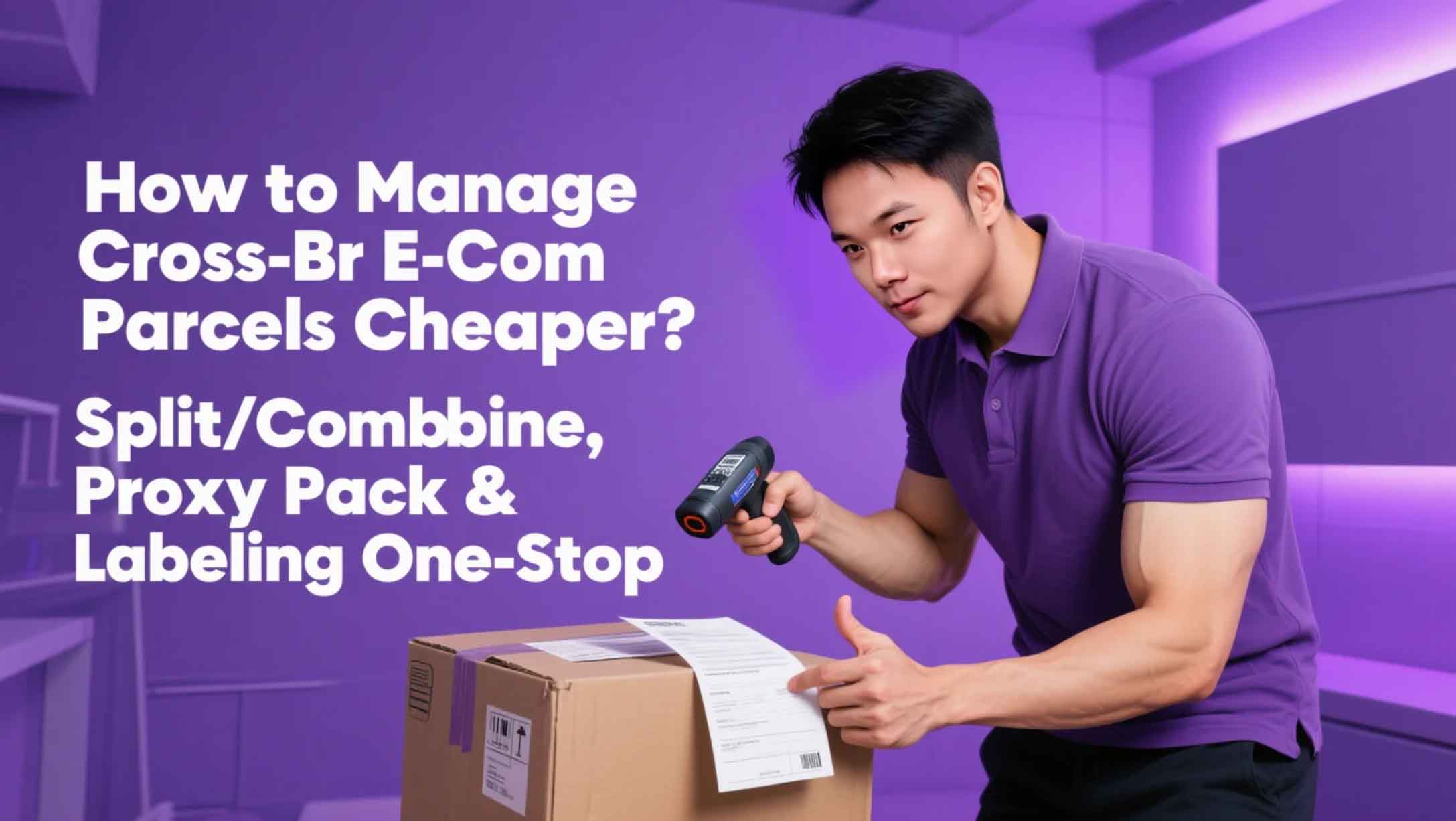
For sellers engaged in export e-commerce, package handling is never as easy as simply "packing or bagging and sending". Inconsistent product specifications, large fluctuations in order volume, and different channel requirements may increase transportation costs and make it easy to send or miss shipments.
In order to reduce these problems, more and more sellers are entrusting the process of package splitting and merging, packaging and labeling to cross-border cloud warehouses, making the processing more stable, faster, and controllable.
Many sellers operate multiple platforms simultaneously, such as Amazon, eBay, Shopee, AliExpress, TikTok Shop, etc. The weight, size, and label specifications of orders on different platforms vary.
If handled by a regular warehouse, manual verification is often required, which is inefficient and difficult to avoid errors. The advantage of cross-border cloud warehouses lies in standardizing and systematizing this series of work, allowing the outbound process to be automatically executed according to rules, without relying on personal experience and temporary judgments.
1:Package splitting for on-demand processing to avoid additional costs
Some products are relatively lightweight when shipped individually, but when combined, they can easily become overweight, increasing logistics costs. After receiving the goods, the cloud warehouse will split them according to the seller's instructions and logistics channel rules to ensure that each package can be shipped in a more reasonable weight range.
When splitting, SKU attributes, fragility, and platform packaging standards will be compared to avoid additional costs for sellers due to increased volume and weight.
2:Merge packages to reduce the number of tracking numbers and improve freight utilization
Cross border sellers often encounter a situation where if multiple small items are shipped independently from the same destination country, the shipping cost is often more expensive than the goods themselves.
Consolidating packages is a more cost-effective way. As long as the platform allows, cloud warehouses can combine multiple orders into one package, reducing transportation batches and improving unit cost utilization.
From receiving instructions to outbound, the system will automatically record the trajectory of each SKU to avoid incorrect or missing shipments, while allowing sellers to view inventory and the size and weight after packaging in real time.
3:Standardized handling of proxy packaging provides peace of mind
Many sellers are worried that they may not be on site and may not know if the warehouse is operating as required. The packaging process of professional cloud warehouses usually records packaging specifications, packaging material types, operation time, and other information through the system, and selects corresponding packaging methods according to the requirements of different platforms.
For example, environmentally friendly express bags are commonly used for cross-border light and small items, thick bubble protection is required for fragile items, and cardboard boxes or reinforced packaging are arranged for large and durable items. Standardized implementation can reduce the damage rate during the explosive season and maintain stable store ratings.
4:Proxy posting, reducing errors and improving outbound speed
From Amazon's FNSKU labels, to Shopee's waybills, to TikTok's dual label requirements, the formats vary greatly across different platforms. Sellers often need to spend a lot of time dealing with it themselves.
The proxy label service can be accurately attached by warehouse personnel after the system automatically matches the labels, reducing the occurrence of errors, omissions, and other situations. After pasting, it will be scanned and uploaded immediately, and the backend will automatically send it back to the platform, allowing buyers to see the logistics trajectory as soon as possible.
Sellers only need to send the goods to the cloud warehouse in advance, and the system will automatically store and list them based on SKU. Afterwards, all splitting, packaging, labeling, channel selection, and outbound can be completed according to the process, reducing various unexpected situations.
On the road of cross-border e-commerce, every detail affects the final result, and knowing how to use more efficient processing methods often leads to a more stable and faster journey.
SERVICE
Copyright © 2026 TakeSendShip. All rights reserved


