

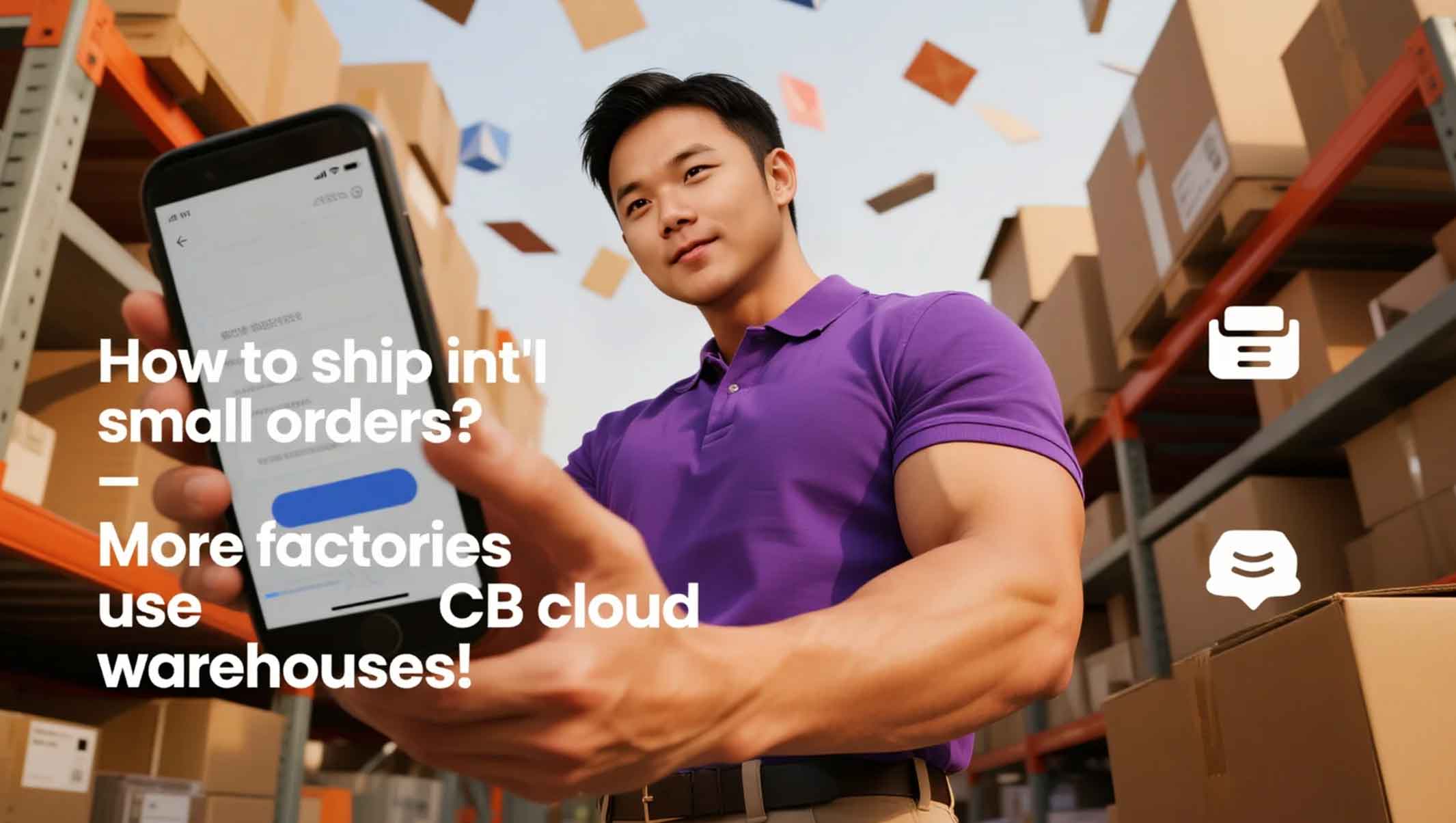
Many factories have long focused on OEM and bulk shipping, with products mostly delivered to foreign trade companies or traders who are responsible for export and logistics. But in recent years, more and more factories have started to directly contact overseas customers, some of whom are independent website sellers, and some are buyers who do dropshipping mode. The ordering method is more inclined towards small batches and multiple frequencies.
The foreign order arrived, but it was found that shipping had become a problem.
For most factories, they are accustomed to shipping in full containers and pallets, and rarely handle single piece packaging, labeling, and shipping on a ticket by ticket basis. The requirements put forward by foreign customers are very clear. The goods will be produced centrally first, stored in the warehouse, and sent to overseas buyers one by one according to the front-end order situation. This model poses a new challenge to the warehousing and shipping system of traditional factories.
1:The factory issues individual orders on its own, which incurs significant costs and operational pressures
If factories handle such orders on their own, they often need to temporarily allocate warehouse personnel, purchase packaging materials, coordinate with multiple logistics channels, and handle details such as order information, address formats, and customs clearance documents.
When the order quantity is not large, the unit logistics cost is actually higher. Once there is an error, it is also easy to trigger customer complaints or refunds.
In dropshipping mode, customers are more concerned about shipping speed and stability rather than simply low prices. If the factory cannot respond quickly, it will be difficult to retain long-term overseas customers.
2:Cross border cloud warehouse dropshipping, more suitable for individual order mode
The emergence of cross-border cloud warehouses provides factories with a more realistic solution. After the product is produced, it can be directly sent from the factory to the cloud warehouse for unified storage, counting, and shelving.
Whether it is a one-time delivery or a batch delivery, it can be operated according to the customer's order rhythm.
Cloud warehouses usually have mature packaging, ordering, and channel docking capabilities, which can match suitable international logistics methods based on the attributes of goods. Factories only need to focus on production, without having to repeatedly coordinate for each order.
3:The transition from non delivery to stable delivery
For many factories, using cross-border cloud warehouses does not change their business model, but rather fills the gap in shipping. Through cloud warehousing, dropshipping is no longer a burden, and small orders can be efficiently processed, meeting the needs of overseas customers while avoiding excessive operational pressure.
In practical operation, service models like Taijia Cloud Warehouse are often used by factories as extended warehouses. The goods are centrally managed domestically and automatically shipped out after the order is triggered, enabling the factory to face overseas orders without increasing fixed costs.
When the connection between the production end and the delivery end is smooth enough, the factory can truly focus on the product and delivery itself, rather than being led by scattered orders.
Factory cross-border cloud warehouse dropshipping, factory overseas individual logistics, cross-border cloud warehouse dropshipping service, factory direct overseas orders
SERVICE
Copyright © 2026 TakeSendShip. All rights reserved


