

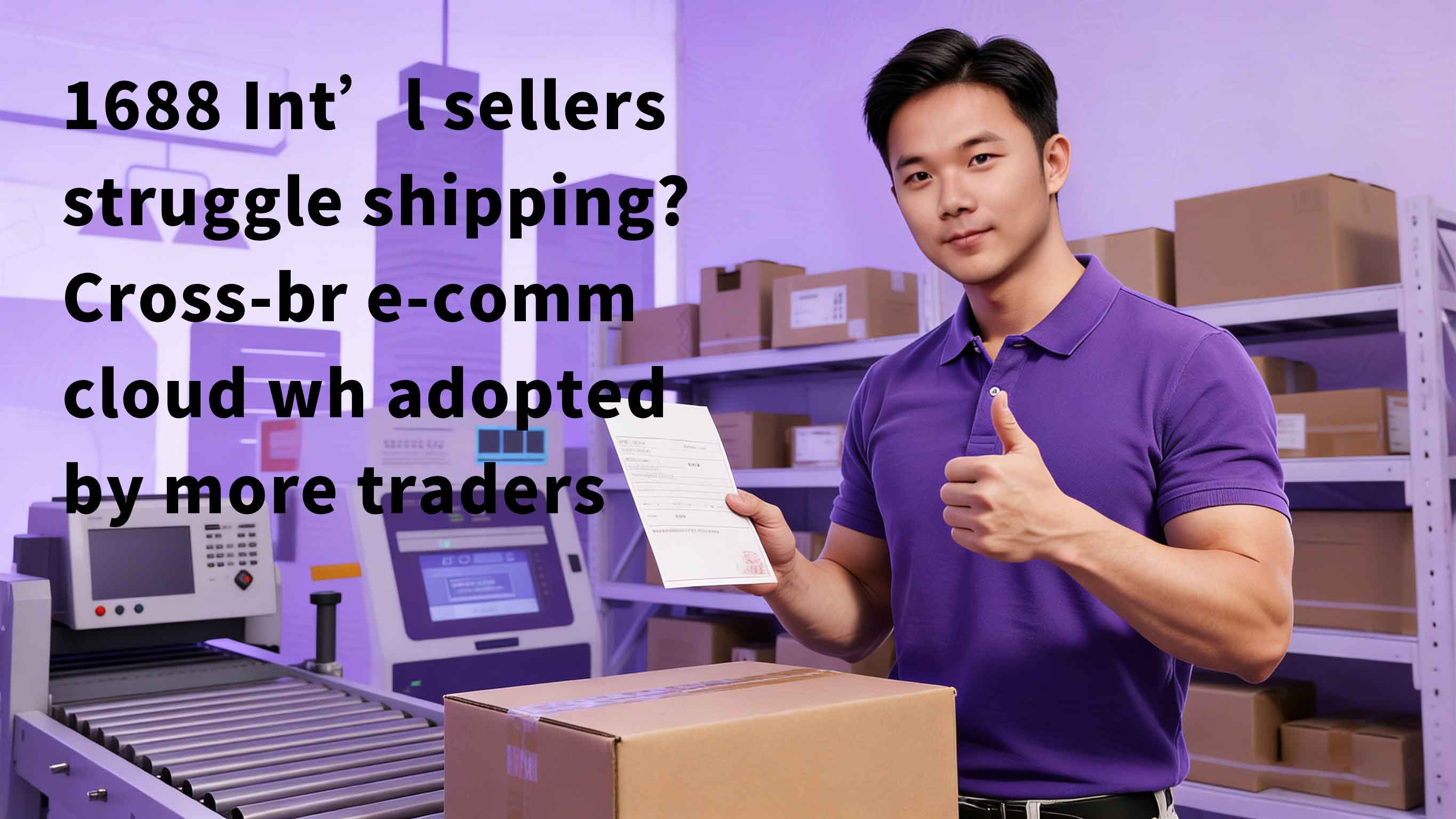
In recent years, foreign traders who do business on 1688 International Station have increasingly complex feelings about "shipping". The sources of inquiries are more dispersed, with small but frequent orders, and customers from different countries have significantly different requirements for delivery time.
Customers hope to receive logistics information feedback to buyers as soon as possible, but they are also very sensitive to shipping costs, which makes many sellers repeatedly weigh between quotation and performance. In the shipping process, it has gradually become the easiest step for many international sellers to get stuck.
1:Fragmentation of orders makes traditional shipping methods increasingly difficult
Many foreign trade merchants still use their past shipping habits, waiting for the goods to be ready before arranging for unified shipment, or temporarily finding freight forwarders to consolidate shipments. However, international orders are often not concentrated. Some customers require partial shipments, while others only place trial orders. The warehouse frequently experiences unpacking, repackaging, and labeling.
It is difficult for self owned warehouses to adapt to this rhythm in terms of personnel configuration and operational processes in the long term. Once the peak of shipment overlaps, the probability of shipment delays and information errors will significantly increase.
2:Cross border e-commerce cloud warehouse is becoming a new shipping option
The emergence of cross-border e-commerce cloud warehouses is essentially the centralized processing of complex shipping operations. Goods can be directly shipped from the factory to the cloud warehouse, where they will be counted, shelved, split, and labeled. Then, they will be arranged to be shipped out of the warehouse according to the order requirements.
This model is very friendly to sellers on 1688 International Station. Whether it is a single shipment or multiple batches of shipments, it can be executed according to the order rhythm, no longer subject to the minimum shipping volume limit. The seller only needs to confirm the order information, and the subsequent operations will be completed by the cloud warehouse, making the overall execution more stable.
3:More flexible shipping and better customer experience
In terms of channel selection, cloud warehouses usually differentiate and process goods based on their attributes. General goods, electrified products, and branded goods can be matched with corresponding transportation methods before shipment, reducing delays or returns caused by inappropriate channels.
Many foreign traders have found that small orders are no longer a burden after using cloud warehouses, but instead increase the flexibility of accepting orders. Customers can send samples separately and arrange for restocking at any time, making the overall delivery pace more in line with the expectations of international buyers.
The service model like Taijia Cloud Warehouse solves the problems of delivery efficiency and stability for foreign traders without changing the sales structure through the standardized process of door-to-door pickup nationwide. For 1688 International sellers, this adjustment is not a transformation pressure, but rather leaving more flexibility for the business.
When the order structure changes, a shipping system that can quickly adapt is often more likely to win the trust of long-term customers.
SERVICE
Copyright © 2026 TakeSendShip. All rights reserved


