

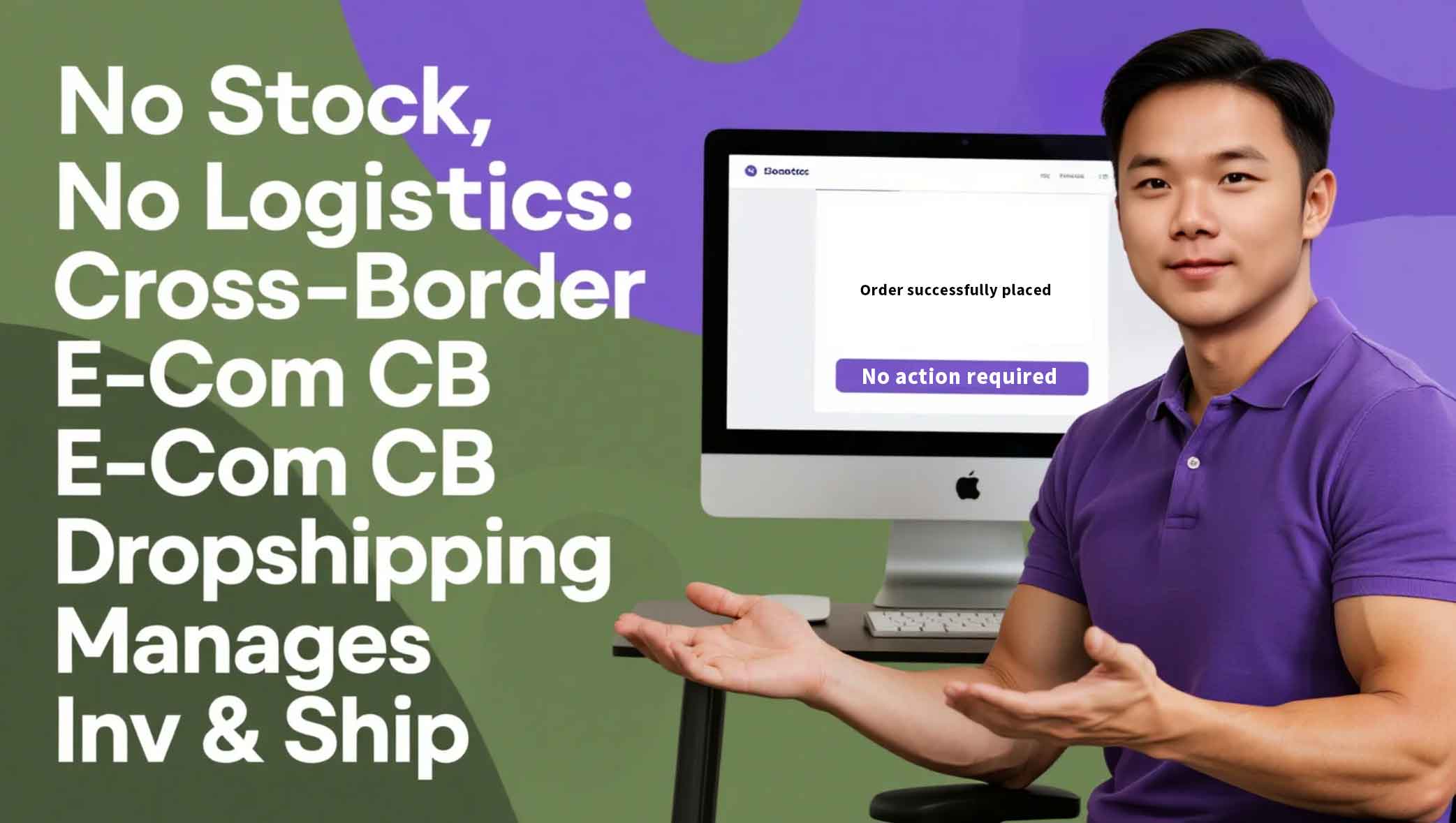
Many foreign trade e-commerce operators encounter similar situations in their initial stages. They have selected the products and negotiated the prices, and initially try to purchase a batch of goods to sell gradually. However, after actually obtaining the goods, they discover that warehousing and shipping become unavoidable issues.
The cost of renting a warehouse is high, and it's not practical to store goods at home. If there are only a few orders a day, it's fine. However, once orders start to come in steadily, packing, labeling, and contacting logistics will take up a lot of time.
For foreign trade e-commerce businesses that focus on product selection and operation, these tedious tasks can easily slow down the pace.
1: The practical dilemma of not having or not wanting to rent a warehouse
Many foreign trade sellers are not specialized in logistics and are not familiar with warehouse management. If the storage environment for goods is not suitable, goods are prone to being overstocked or damaged; inventory quantities are recorded manually, which is prone to errors over time. Once there is overselling or missed delivery, it not only affects customer experience but also increases after-sales costs.
The more realistic issue is that selling slowly does not mean having low shipping requirements. Overseas buyers have high expectations for logistics timeliness and package integrity. If self-shipment cannot keep up with the pace, both platform ratings and repeat purchases will be affected.
2: The idea of outsourcing warehousing and shipping
At this time, a more flexible approach is gradually being adopted by more foreign trade e-commerce companies, which is to directly deliver the goods into the third-party warehousing system, with a professional team responsible for storage and shipment.
The one-item drop-shipping model of cross-border e-commerce cloud warehouses perfectly addresses the issue of needing to gradually sell products without having a warehouse. Sellers simply need to consolidate their goods and ship them to the cloud warehouse, and the subsequent storage, inventory checking, picking, packaging, and delivery are all handled by the warehouse system in a unified manner.
After an order is generated, the system automatically synchronizes the shipping information, eliminating the need for the seller to repeatedly go through the shipping process every day.
3: Selling slowly does not equate to low efficiency
Many people mistakenly believe that a slow sales pace means a less comprehensive shipping system is necessary, but the reality is quite the opposite. The more unstable the order pace, the more a responsive shipping end is needed.
The advantage of cross-border cloud warehouses lies in their flexibility. Whether one order is dispatched daily or dozens of orders are dispatched, there is no need to temporarily add staff. The inventory quantity is clearly traceable, allowing sellers to know at any time how many goods are left and whether replenishment is necessary, thus avoiding ineffective capital occupation.
For foreign trade e-commerce, this model is more in line with the pace of testing products and gauging market response.
4: The natural transition from trial sales to mass production
When a certain product starts to generate stable orders or even enters the volume expansion stage, the cloud warehouse model can still be continued without the need to frequently change the shipping method. This saves foreign trade e-commerce businesses from having to repeatedly incur adjustment costs during their growth process.
Some cross-border cloud warehouses also offer multiple channel options, matching appropriate transportation solutions based on different countries and product attributes, allowing sellers to control costs while maintaining stable fulfillment.
Under this model, foreign trade e-commerce businesses do not have to be constrained by warehousing and shipping, but can instead focus more on products and customers themselves.
5: The asset-light model is more suitable for long-term operations
Not having a warehouse does not mean you lack the ability to excel in foreign trade e-commerce. The key lies in choosing the right collaboration approach. By entrusting professional tasks to professional systems, it is easier to stabilize your business.
When warehousing and shipping become clear and controllable, selling at a leisurely pace is no longer a passive choice, but a more relaxed cross-border e-commerce operation strategy.
SERVICE
Copyright © 2026 TakeSendShip. All rights reserved


