

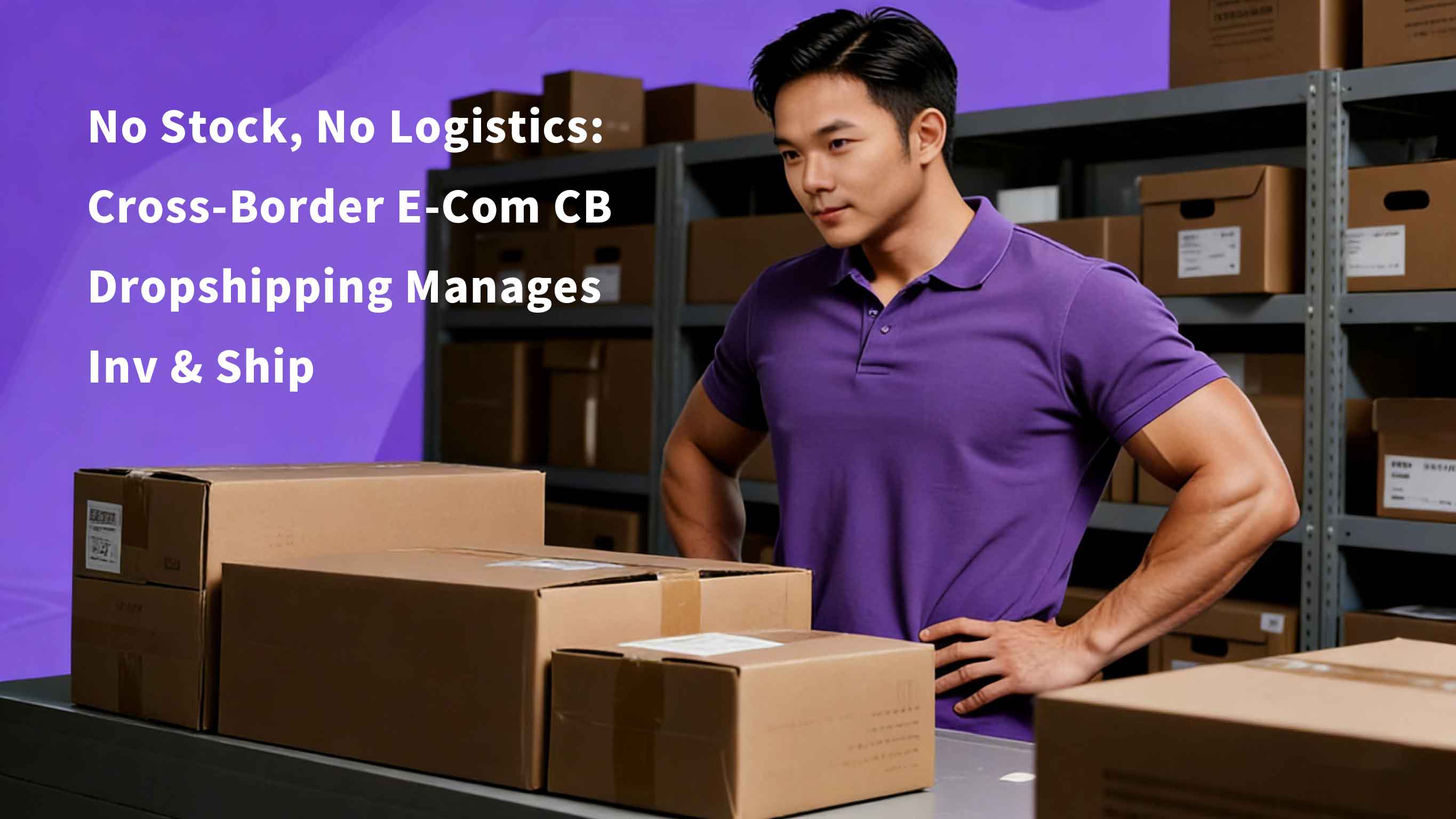
Many foreign trade merchants and cross-border sellers encounter a seemingly contradictory yet common situation after their business has developed to a certain stage: despite having a significant volume of goods, even reaching the point where they can be shipped in full containers, the sales end is characterized by highly fragmented small-order transactions that require individual orders to be shipped to different countries and different buyers.
The goods arrived in a full container, but the shipment was made in [1] fragmented orders. This model may not seem complicated on paper, but the difficulty it poses when it comes to implementation is far beyond imagination.
1: The real difficulties of distributing small items in full containers
Full container loads (FCL) often feature large volumes, numerous SKUs, and inconsistent packaging specifications. Once the containers are unpacked, a meticulous warehousing management process is required, including categorized storage, quantity verification, batch differentiation, and so on.
Without a professional warehouse, just the unloading and placement of goods can be a hectic task. What's more troublesome is the subsequent one-piece delivery process.
Every order requires goods picking, verification, packaging, labeling, and logistics information entry. Any mistake in any of these steps may lead to missed deliveries, incorrect deliveries, or customer complaints. Once the order volume increases, manual operations become almost uncontrollable.
For sellers without a mature warehouse and distribution team, such work is not only tedious and prone to errors, but also extremely draining.
2: Why self-handling doesn't work
Many people initially attempt to handle it themselves, renting temporary warehouses, finding workers, and coordinating logistics on their own. However, they soon realize that this approach is costly, inefficient, and unsustainable.
And it remains to be seen whether the warehouse space will be sufficient in the future, whether the staff turnover will remain stable, and whether the warehouse can handle peak order volumes.
Once a certain link falls behind, the entire delivery chain will be slowed down. No matter how good the front-end sales are, if the back-end cannot keep up, it will be useless.
3: The intervention value of cloud warehouse one-piece delivery
This scenario of distributing small items in full containers is one of the typical applications of cross-border cloud warehousing with one-item dispatch. After the arrival of the full container of goods, it can be directly transferred to the cloud warehouse, where the warehouse completes the unpacking, counting, shelving, and system entry.
The core advantage of cloud warehouses lies in their scalability and systematicness. Large-scale storage space can accommodate full container loads, with multi-SKU management relying on systems to ensure clear and traceable inventory status. Once an order is generated, the system automatically assigns picking tasks, and the processes of packaging, labeling, and dispatching are highly standardized.
Even if the order volume surges in a short period of time, there is no need to temporarily expand the workforce, as the warehouse can handle it through optimized processes and equipment.
4: Fine operation under huge orders
Consolidated small-item shipments may seem like merely breaking down larger items into smaller ones, but in reality, they demand extremely high operational precision. Different orders correspond to different addresses, channels, and packaging requirements, and any confusion can be magnified.
Mature cloud warehouses typically complete multiple rounds of verification during the warehousing stage and establish a re-inspection process during the delivery stage to reduce the probability of human error. Such meticulous processing is difficult for individuals or small teams to maintain over the long term.
If the volume of goods has reached the level of a full container load, but the sales end still primarily focuses on direct shipments of small parcels, and lacks stable warehouse and distribution capabilities, then cloud warehousing with one-piece drop shipping is not a temporary solution, but a more realistic long-term plan.
When complex warehousing and fulfillment tasks are properly undertaken, cross-border businesses involving full containers and small parcels can actually run more stably.
One-piece small item drop shipping for full containers, full container splitting in cross-border cloud warehouses, bulk goods drop shipping services in cloud warehouses, cross-border warehousing order packing and labeling, and cloud warehouse solutions for foreign trade sellers
SERVICE
Copyright © 2026 TakeSendShip. All rights reserved


