

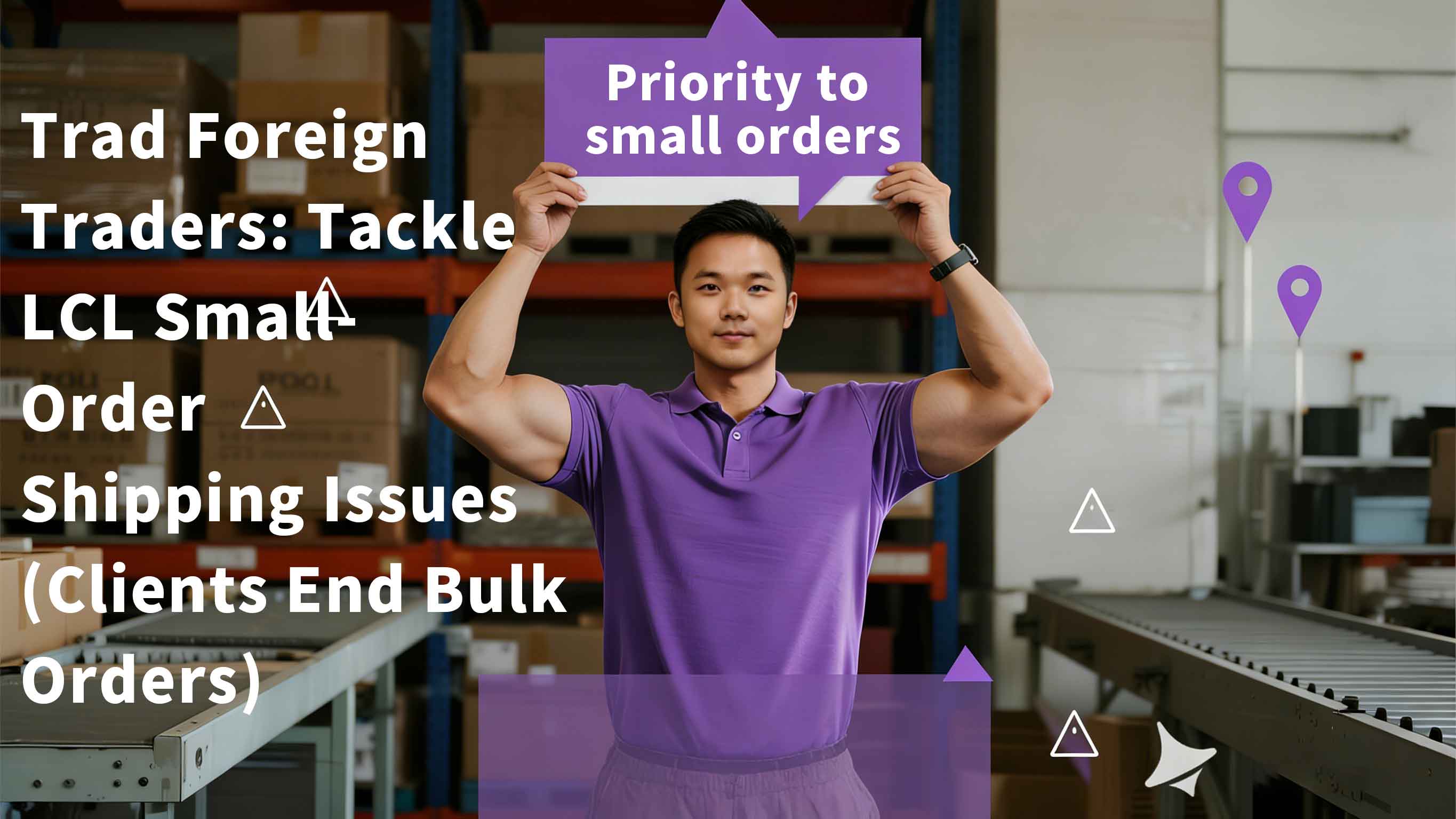
In the past, traditional foreign trade merchants were accustomed to facing large orders of full container loads and pallets. One contract, tens of thousands of goods, unified container loading and shipping, clear process and controllable rhythm.
But in the past two years, more and more foreign traders have noticed a significant change: the way customers place orders has changed.
Foreign customers no longer hoard goods at once, but instead purchase separately, replenish in batches, and even directly request to be sent to end customers one by one according to orders.
The order quantity seems to be considerable, but the shipping method has shifted from bulk thinking to scattered delivery. Many traditional foreign traders feel powerless in this transformation.
1:There are more and more bulk cargo orders, but the shipping methods cannot keep up
For many foreign trade enterprises, product production itself is not difficult, but the difficulty lies in backend delivery. Bulk cargo manifest means frequent packaging, frequent outbound shipments, and frequent waybills, with each shipment requiring reprocessing.
Self built warehouses not only have high costs, but also require manpower, systems, and management experience. Once the order rhythm is unstable, the warehouse becomes a burden.
A more realistic problem is that traditional foreign trade merchants are not familiar with operating methods such as small package delivery, cross-border direct mail, and order splitting. Trying them casually often encounters problems such as slow delivery, high costs, and numerous after-sales disputes.
2:Self delivery costs are high, but efficiency is difficult to improve
Many foreign traders have tried to handle bulk cargo orders on their own, such as setting up temporary shipping areas in factories or entrusting third-party temporary packaging. But this approach often has problems.
With a large number of orders, it is easy to make mistakes when placing orders, and inventory cannot be monitored in real time. There may also be situations where wrong or missed shipments are made. Over time, not only will labor costs remain high, but it will also affect customer experience.
For enterprises accustomed to doing bulk foreign trade, this fragmented shipping model is difficult to support with the existing system.
3:Cross border e-commerce cloud warehouse is being accepted by more foreign traders
It is in this context that more and more traditional foreign trade merchants are paying attention to cross-border e-commerce cloud warehouse services.
The logic of cloud warehousing is not to change the customer structure of foreign traders, but to outsource the complex shipping process, allowing enterprises to continue to focus on production and customer communication.
The goods can be sent in batches to the cloud warehouse for unified management, and the warehouse will complete the warehousing, sorting, packaging, labeling, and shipping. After the customer places an order, the cloud warehouse processes it one by one according to the order requirements, which can support small order shipping without affecting the overall shipping rhythm.
4:Transition plan from bulk shipment to flexible outsourcing
For foreign traders in the transition period, cloud warehouses provide a transitional solution. It can meet the diverse shipping needs of customers without the need to immediately rebuild the logistics system or bear high warehousing investment.
In practical operation, some cloud warehouses can flexibly match different logistics routes based on order destinations and product attributes, helping foreign trade merchants to control costs while balancing timeliness and stability.
Cross border e-commerce cloud warehouse service providers assist foreign traders in handling bulk cargo, small orders, and batch delivery issues through domestic cloud warehouse outsourcing, enabling traditional foreign trade models to more smoothly integrate with current procurement trends.
5:The foreign trade model is changing, and the shipping method should also change accordingly
Customers no longer place bulk orders, not because business has decreased, but because transaction methods have become more flexible.
For traditional foreign trade merchants, instead of passively coping, it is better to leverage mature cross-border e-commerce cloud warehouse services to make the shipping process a controllable and replicable part.
When the production side remains stable and the delivery side has flexibility, foreign trade business can continue to operate in the face of changes.
SERVICE
Copyright © 2026 TakeSendShip. All rights reserved


