

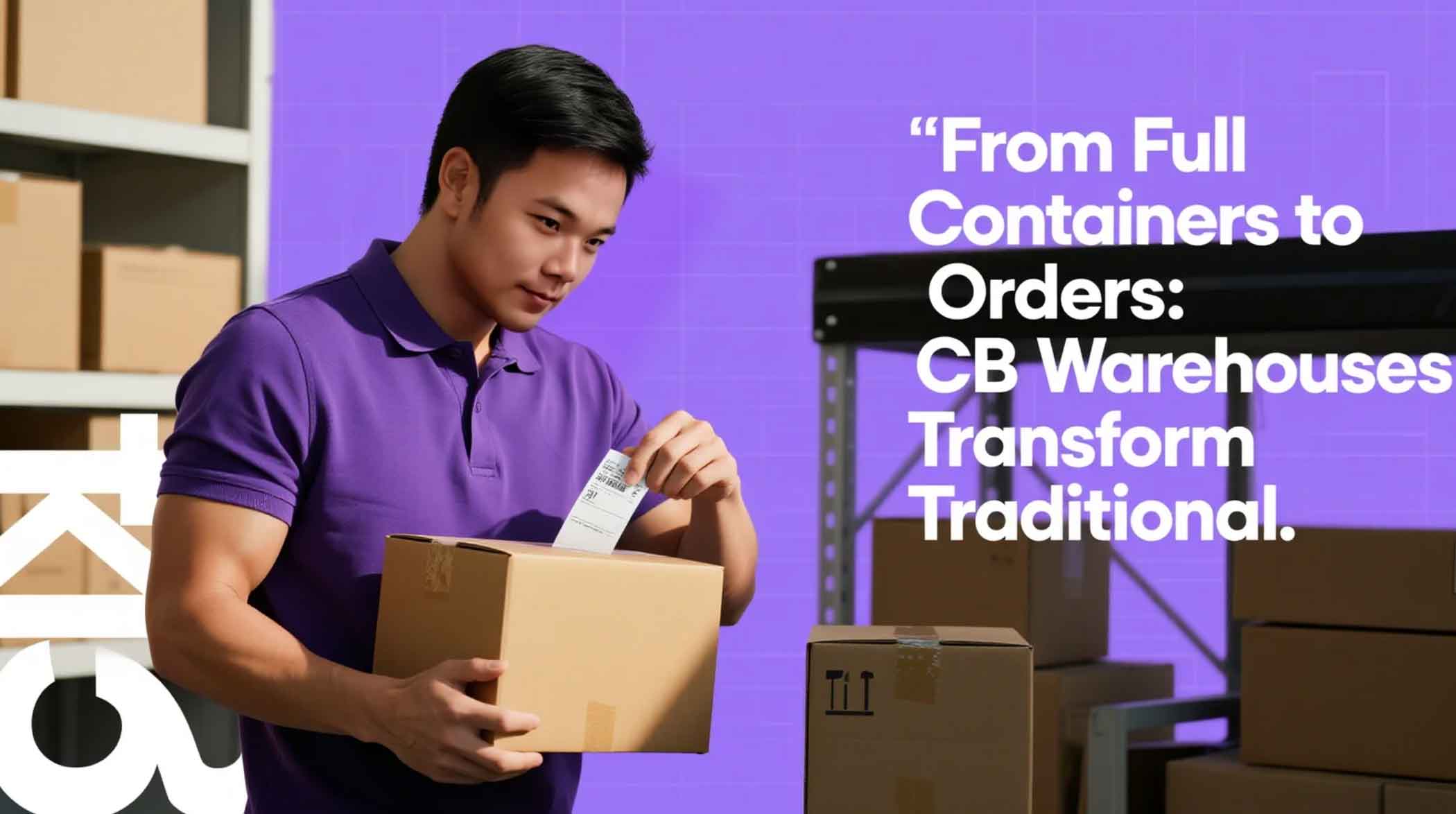
In the memory of many foreign traders, shipping has always been a relatively simple matter. Customer orders, factory production, booking and container loading, and one full container of goods is directly shipped to overseas warehouses or customer designated locations.
The entire operation process is fixed, personnel division is clear, and there is almost no need to worry extra about shipping. But in the past two years, this model has been frequently broken.
1,Full container shipping is no longer applicable to all order structures
More and more overseas customers are no longer purchasing full container loads at once, but placing orders in batches based on market feedback. Some customers operate multiple platforms simultaneously, while others engage in distribution or dropshipping, requiring them to split the same batch of goods into different orders and send them to multiple countries.
Full container shipping still exists, but more often than not, it is just a "procurement method" rather than the final shipping method.
For foreign traders, an increase in the number of orders and a decrease in the number of tickets may appear to make their business more flexible, but in reality, the difficulty of operation has significantly increased.
The original full container shipping process cannot cover the stages of splitting, restructuring, and shipment by shipment, resulting in a significant capacity gap at the shipping end.
2,The real shipping pressure brought by scattered orders
When orders go from full containers to dozens, hundreds, or even more small packages, the problem is not just an increase in the number of packages. Customs clearance rules vary in different countries, and different platforms have different requirements for waybill and label formats, making manual processing prone to errors. Once the wrong label is sent or the wrong channel is selected, it can result in delays, returns, or even additional costs.
Many foreign traders have tried to complete these operations in factories or self built warehouses, but soon found it impractical. The warehouse space needs to be re planned, personnel training is required, and the system needs to interface with platform orders. The time and cost invested far exceed expectations.
The shipment process has gradually shifted from an auxiliary link to a business bottleneck.
3,How to undertake the splitting work after full container load in cross-border cloud warehouses
At this point, the value of cross-border cloud warehouses begins to emerge. The goods can still be stored in full containers or batches, but the subsequent splitting, sorting, packaging, and shipping will be completed by the cloud warehouse. Foreign traders only need to arrange the outbound according to the order rhythm, without having to repeatedly coordinate specific operational details.
Through cross-border e-commerce cloud warehouses, inventory status can be clearly recorded, with different orders corresponding to different outbound instructions, avoiding manual bookkeeping and duplicate verification.
For foreign traders who require multi platform shipping, this centralized management approach significantly reduces the probability of errors and makes the shipping pace more controllable.
4,Changes from shipment execution to overall efficiency
When the shipping process is dismantled and handed over to a professional team for processing, the role of foreign traders also changes accordingly. No longer need to repeatedly confirm labels, no longer disrupt plans for temporary orders, more energy can be focused on customer communication, product planning, and market expansion.
Cross border cloud warehouses do not replace the original foreign trade model, but allow full container and scattered orders to coexist. The whole container is still used for centralized goods preparation, and small orders are fulfilled through cloud warehouse. The two methods complement each other, so that foreign trade shipment is no longer subject to a single mode.
The order structure is changing, and the shipping method also needs to evolve. Truly stable foreign trade growth often comes from early adaptation to changes, rather than passive response.
SERVICE
Copyright © 2026 TakeSendShip. All rights reserved


