

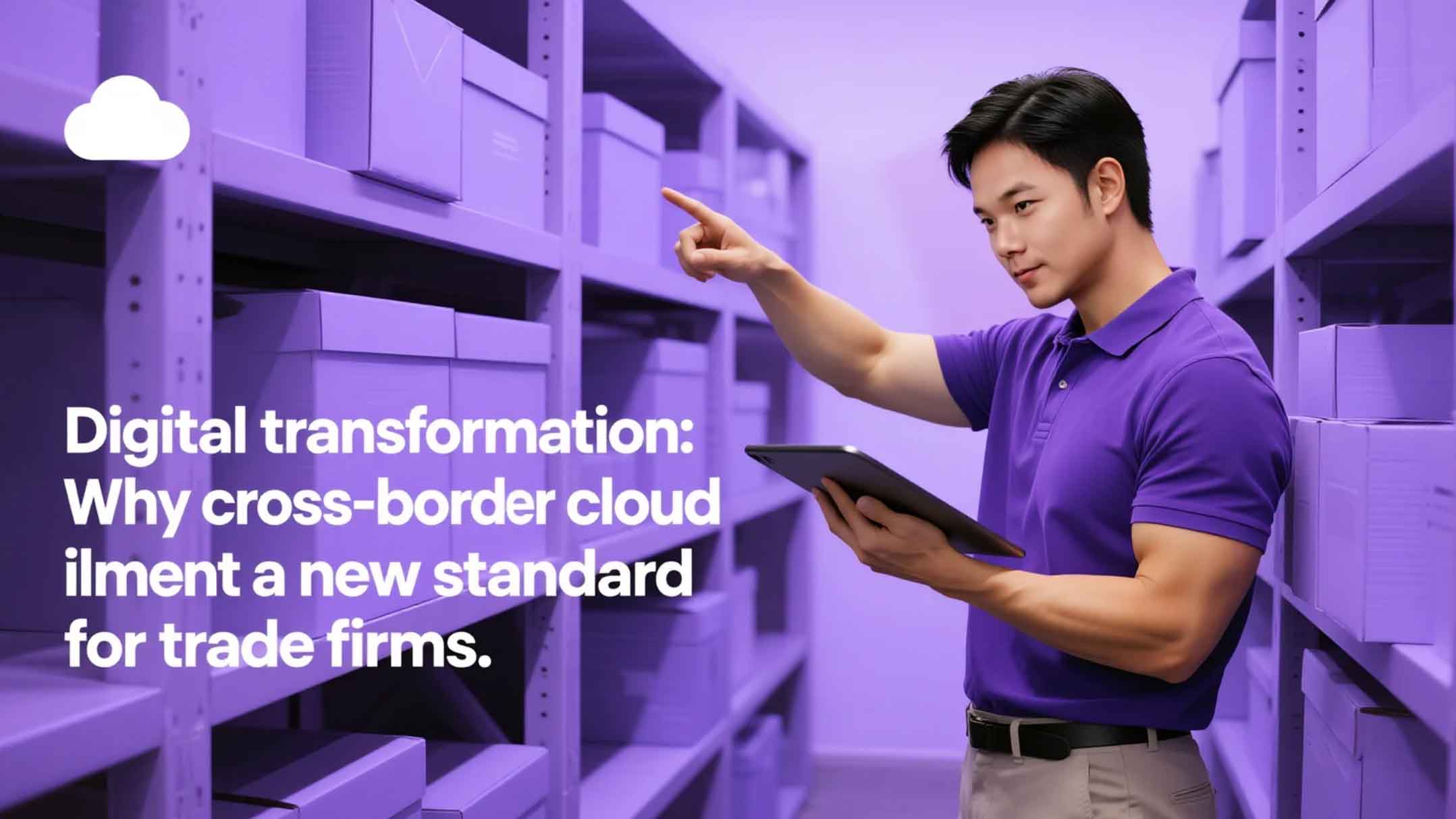
More and more foreign trade enterprises are starting to talk about digital transformation. The trade structure that used to be dominated by bulk orders is being replaced by more flexible cross-border retail and multi-channel orders.
The dispersion of customer sources, the reduction of order batches, and the increase in shipping frequency have made traditional warehousing and shipping methods gradually appear cumbersome. How to improve performance efficiency while maintaining cost control has become a problem that enterprises must face in the process of upgrading.
Cross border e-commerce cloud warehouse delivery is gradually being seen as a new infrastructure. Many foreign trade e-commerce companies, when adjusting their business structure, entrust the warehousing and shipping processes to a professional cloud warehouse system management, allowing internal teams to focus on the market and products.
1:Changes in order structure drive warehouse upgrades
Traditional foreign trade mainly relies on bulk shipments, with buyers responsible for distributing products after they are loaded into containers. After the rise of cross-border e-commerce and independent website models, orders have become more fragmented. A product may generate orders in different countries simultaneously, and each order needs to be individually packaged and logistics arranged.
If the company still relies on internal warehouses for processing, personnel and processes are easily slowed down. When the order volume increases, temporarily adding operators cannot fundamentally solve the problem, but may instead lead to management confusion.
2:Process optimization brought by cloud warehouse outsourcing
The value of a cloud warehouse system lies in integrating warehousing, inventory, and order processing into one system. After the goods are stored, unified coding and shelving management are completed. Orders are synchronized into the warehouse operation process through the system, and a dedicated team completes picking, review, and packaging.
This method makes the shipping process clearer. Inventory changes, order status, and logistics information can all be viewed in real-time, reducing errors caused by manual recording. Enterprises do not need to maintain large warehousing teams to maintain stable performance capabilities.
3:Simultaneously achieving cost reduction and efficiency improvement
For many foreign trade enterprises, building their own warehouses means long-term investment in rent, equipment, and labor. When the order size is unstable, it is difficult to evenly allocate these costs. Cloud warehouse dropshipping is configured according to actual business volume, providing more flexibility in storage space and operational capabilities.
After standardizing the shipping process, the problem of wrong or missed shipments has significantly decreased, and the after-sales cost has also been reduced accordingly. In addition, the integration ability of logistics channels can also enable different products to match more suitable transportation solutions, optimizing the overall cost structure of shipping.
4:The role of warehouse distribution in digital transformation
When enterprises are promoting digital transformation, they often focus on sales systems and customer management systems, and the warehousing execution process also needs to be upgraded synchronously. Cloud warehouse services integrate inventory management, order processing, and logistics integration into a unified system, allowing enterprises to maintain stable performance capabilities when expanding their markets.
For cross-border sellers and foreign traders, this model not only solves the problem of shipping, but also makes business expansion easier. When the number of orders increases, there is no need to rebuild the warehousing system, just adjust the inventory and shipping strategy.
As warehousing and logistics become increasingly digitized, the pace of enterprise operations will also become clearer. The reason why Taijia Cloud Warehouse dropshipping has become a new standard model is not because of its innovative concept, but because it can continuously improve efficiency in real operations.
When the process is streamlined, growth no longer relies on luck, but is built on a stable system.
SERVICE
Copyright © 2026 TakeSendShip. All rights reserved


