

Many cross-border sellers choose cloud warehouses initially to achieve dropshipping and liberate themselves. After working together for a period of time, I realized that shipping is only the last step in the entire order process.
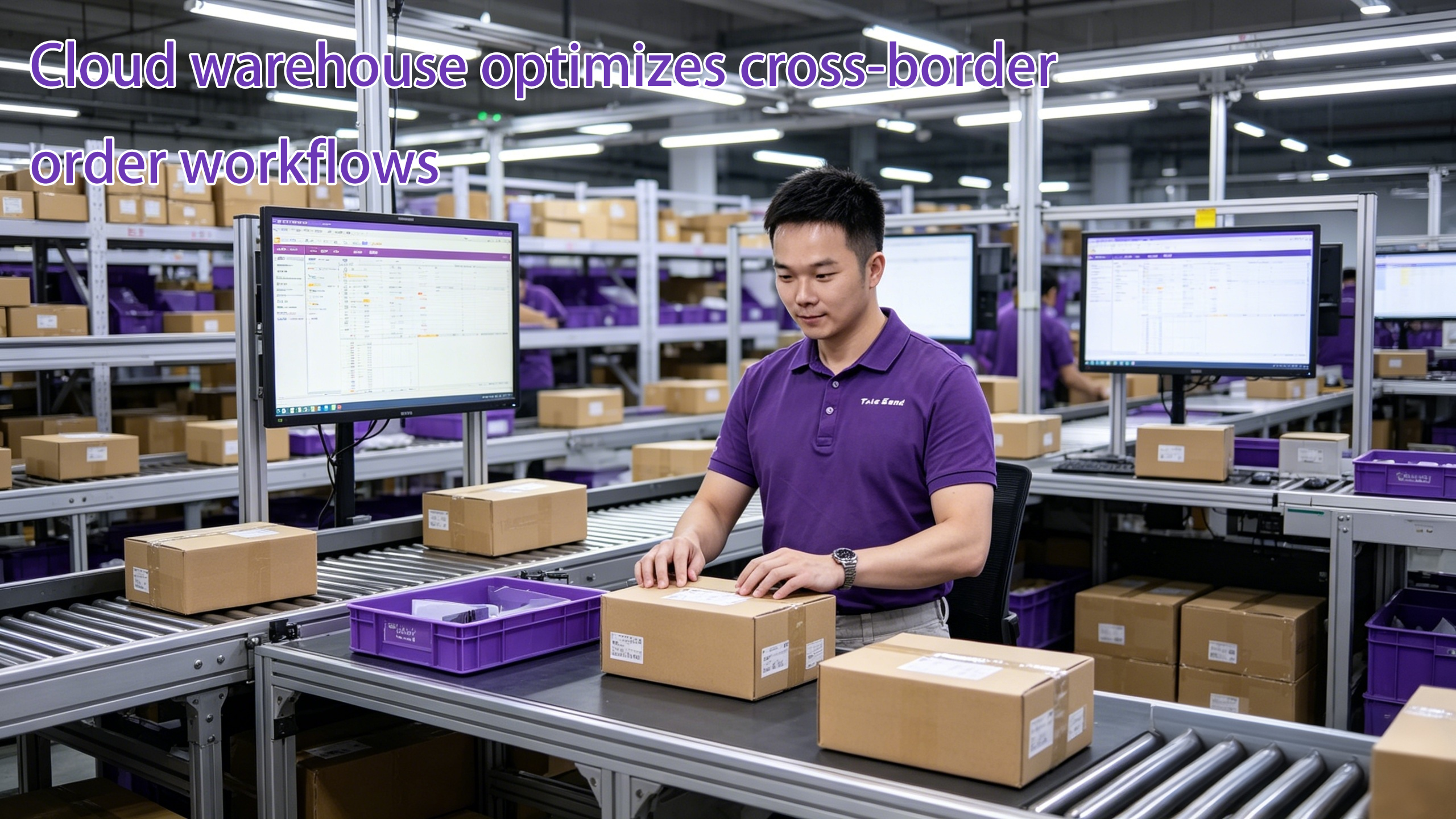
After an increase in orders, more SKUs, and synchronized sales across multiple platforms, the real factors that affect operational efficiency are often order processing, inventory management, and personalized operational capabilities. If these processes still rely on manual labor, not only will the delivery speed be affected, but errors, omissions, and repetitive operations will also increase.
The services provided by cross-border cloud warehouses have covered multiple aspects such as warehouse management, order processing, and packaging customization. For independent websites, Amazon, TikTok Shop, and foreign trade enterprises, these are becoming the support for daily operations.
1:Splitting and merging orders makes order processing more flexible
The order requirements for different platforms are not the same. Some customers purchase multiple products at once and wish for unified shipping. Some orders need to be split and shipped separately to different addresses. Some customers will place additional orders and hope to ship them together with their previous packages.
If relying on manual processing, it is not only time-consuming, but also prone to omissions. Through the order management system, Cloud Warehouse can complete operations such as splitting and merging orders based on shipping rules, allowing different orders to execute shipping plans according to actual needs.
For sellers operating on multiple platforms, this approach can reduce duplicate packaging and facilitate control of logistics costs.
2:Product repackaging to meet different sales needs
The packaging used for the same product may not be the same across different sales channels. For example, independent website customers pay more attention to brand packaging, Amazon products need to meet platform requirements, and some foreign trade orders also need to replace the outer box or adjust accessories according to customer requirements.
If we return to the factory for reprocessing every time, it will not only increase transportation costs but also affect delivery time. After entering the cloud warehouse, products can be repackaged, replaced with accessories, and repackaged according to order requirements, allowing different channels to use different packaging solutions and reducing intermediate circulation links.
3:Customized branding helps sellers establish their brand image
Many cross-border sellers have started to layout brand operations. Product packaging, brand labels, and logistics identification have gradually become a part of customer attention.
For sellers who do not have their own warehouses, the flexibility is not high if each batch of goods is labeled at the factory. Cloud warehouse can complete operations such as brand stickers, label replacement, and customized packaging according to order requirements. It can meet different market demands and also facilitate sellers to flexibly adjust product packaging according to activities and channels.
4:Value added services are connecting warehousing and order fulfillment
Many sellers believe that value-added services are just additional operations. In fact, these services have become a fundamental component of warehouse management.
Order synchronization, inventory management, splitting and merging orders, product repackaging, OEM processing, and finally packaging and shipping, each link will affect the overall performance efficiency.
The more complete the warehousing system, the less manual intervention, and the more stable the order processing will be.
5:Integrated cloud warehouse services are more suitable for long-term operations
After the development of cross-border business to a certain scale, sellers are no longer only concerned about the speed of delivery, but also whether the entire fulfillment process is smooth.
Whether inventory is accurate, orders can be processed quickly, and packaging meets channel requirements all affect operational efficiency and customer experience.
For example, in addition to warehousing and shipping services, Taijia Cloud Warehouse can also provide supporting services such as inventory management, order splitting and consolidation, product packaging replacement, customized labeling, labeling replacement, order sorting, and first mile logistics connection.
After the goods enter the warehouse, corresponding operations can be completed according to different platforms and order requirements, and then the shipment plan can be arranged to reduce errors caused by repeated handling and manual processing.
FAQ
Q1: Which sellers are suitable for cloud warehouse split and combined orders?
Sellers who operate on multiple platforms, have multiple order types, or need to split and ship orders together are more suitable.
Q2: What requirements can be addressed for product packaging replacement?
Support the replacement of outer boxes, adjustment of accessories, repackaging, and packaging processing according to channel requirements.
Q3: What is the purpose of customized branding?
It can unify brand identity, improve product recognition, and also facilitate adaptation to packaging requirements of different sales channels.
SERVICE
Copyright © 2026 TakeSendShip. All rights reserved


