

Many sellers who come into contact with cross-border cloud warehouses start with dropshipping. After the business gradually stabilized and the replenishment frequency increased, it was discovered that the cloud warehouse could still undertake another important task - FBA transit.
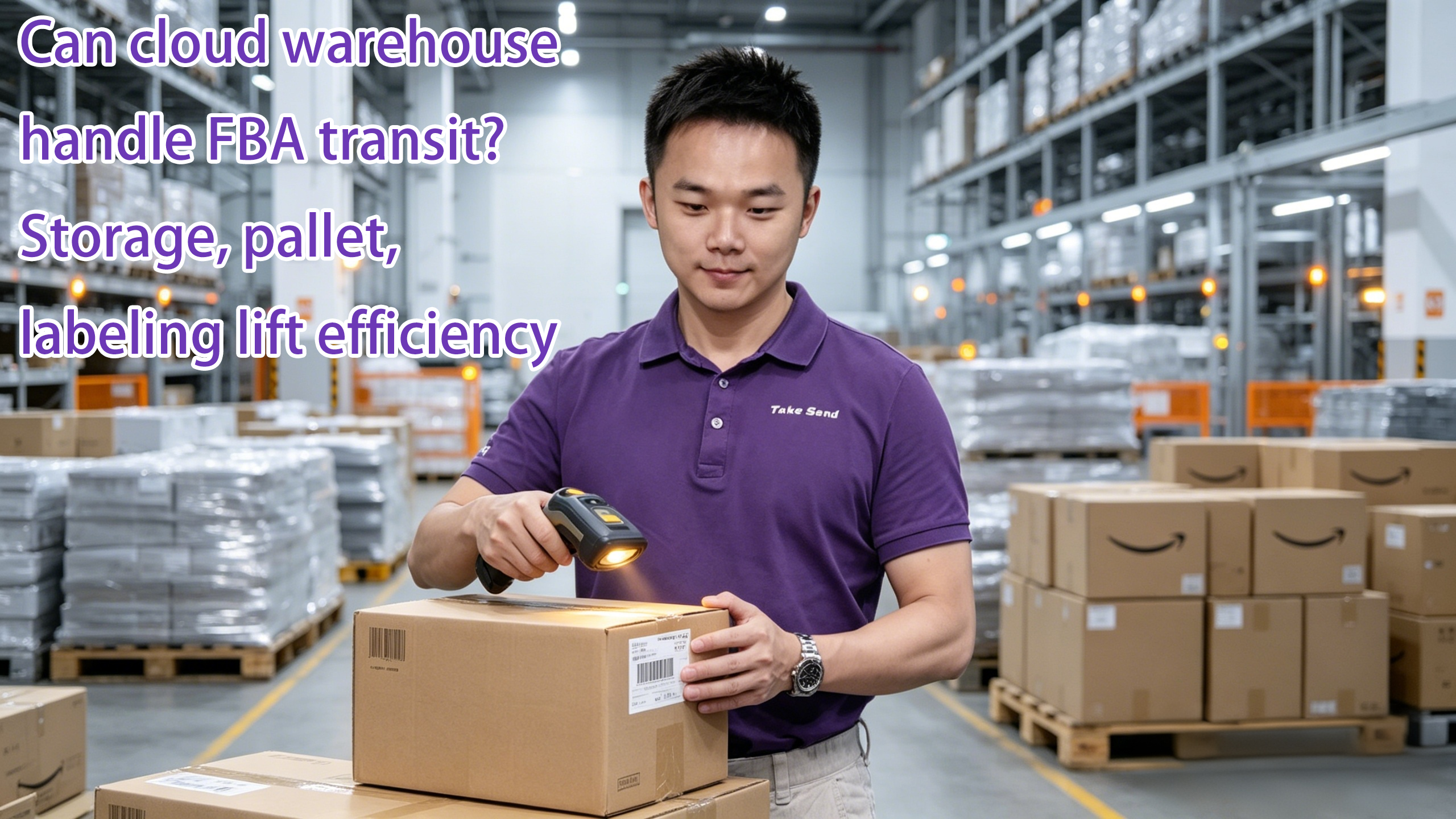
Many sellers may encounter a situation where the factory produces a large quantity at once, but Amazon's warehouse limits the quantity of goods entering the warehouse and can only replenish them in batches. Or it may be necessary to stock up in advance before the peak season arrives, and there is concern that inventory will be stored in FBA warehouses for a long time, which will increase storage costs.
If cloud warehouse dropshipping can be combined with FBA transit, it will make inventory arrangements more flexible. From temporary storage, palletizing to label replenishment, every step is related to the efficiency of subsequent shipments.
1:Temporary storage service makes replenishment rhythm easier to control
Let's understand one thing first: Amazon inventory is not necessarily better with more inventory.
Excessive stocking can occupy funds and increase storage costs; Insufficient inventory and easy impact on sales due to replenishment cycles. Many sellers will temporarily store a portion of their inventory in domestic cloud warehouses. After the production of the product is completed, it will first enter the warehouse and be shipped in different batches according to sales data.
This not only preserves safety stock, but also allows for timely adjustment of replenishment plans based on market changes, without the need to send all inventory to FBA warehouses at once.
2:Palletizing service improves transportation efficiency
Before using FBA first mile logistics, some products need to be palletized according to entry standards and transportation requirements.
If the standardized palletizing is completed in advance for large products, heavy goods, or bulk transportation, it not only facilitates forklift loading and unloading, but also reduces the risk of collision during transportation.
Different logistics channels have different requirements for pallet size and packaging methods. Completing palletizing in the cloud warehouse in advance can reduce temporary rework and make subsequent container loading and transportation smoother.
3:Labeling replenishment reduces repetitive operations
FBA shipments cannot do without label management. Outer box labels, product labels, and FBA labels all need to be pasted according to platform requirements.
If the product is returned to the factory for re labeling every time, it not only increases transportation costs, but also easily affects the replenishment time. Cloud warehouse can complete labeling, replacement, and review according to the replenishment plan, and then arrange shipment according to the corresponding batch.
Sellers only need to submit a replenishment plan based on inventory changes, and the warehouse can complete subsequent operations, reducing manual involvement.
4:Transfer inventory management in FBA is more flexible
Many sellers understand cloud warehouses as places for temporary inventory, but in reality, FBA transit is more like an inventory adjustment center. After the goods enter the warehouse, they can be managed in batches according to different sites, SKUs, and sales plans.
When replenishment is needed, the corresponding quantity can be directly arranged to be sent to the FBA warehouse without the need to reorganize the source of goods. This not only helps to control inventory, but also facilitates handling different business scenarios such as promotional activities, peak season stocking, and new product testing.
5:The integrated warehousing and transit model is more in line with long-term operational needs
Whether inventory is sufficient, labeling is accurate, and replenishment is timely will all affect the pace of store operations. Many sellers will transfer a package for dropshipping and FBA to the same warehousing system for management.
For example, in addition to supporting cloud warehouse dropshipping, Taijia Cloud Warehouse can also provide services such as inventory temporary storage, palletizing and reinforcement, FBA labeling, replenishment transfer, order processing, and first mile logistics connection.
After the goods enter the warehouse, they can be flexibly arranged for outbound according to the store's inventory and replenishment plan, without the need for frequent round trips to the factory for processing.
For sellers who operate Amazon, independent sites, and multiple sales channels, collaborative management of warehousing, transit, and first mile not only reduces repetitive operations but also makes inventory turnover more manageable.
FAQ
Q1: Which sellers are suitable for FBA transit?
Amazon sellers with high inventory, frequent restocking, or limited warehouse capacity are more suitable.
Q2: What is the purpose of palletizing service?
Facilitating loading, unloading, and transportation, improving cargo stability, and reducing the risk of cargo damage during transportation.
Q3: Can cloud warehouse directly complete FBA labeling?
Sure, complete labeling, replacement, and review according to the replenishment plan, and then arrange for shipment to the corresponding FBA warehouse.
SERVICE
Copyright © 2026 TakeSendShip. All rights reserved


