

Many cross-border sellers encounter the same situation: the same product is sold to multiple countries such as the United States, the United Kingdom, Germany, Australia, etc. If all orders go through the same logistics channel, either the shipping cost is high or the delivery time in some countries is not ideal.
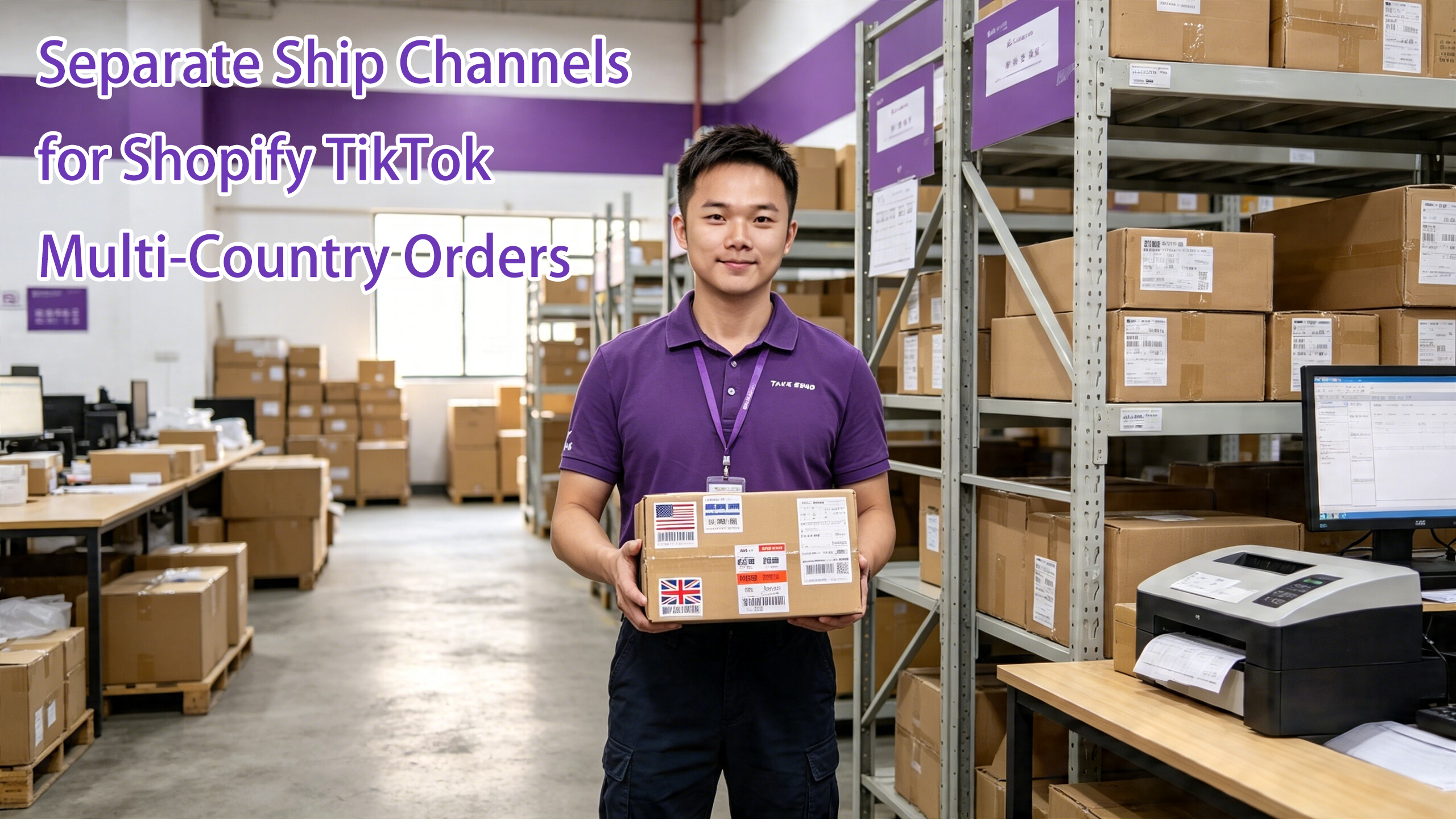
The value of splitting cloud warehouses into multiple channels lies in the fact that one product and one set of inventory can automatically match different cross-border shipping channels based on the destination country of the order, making it easier to balance logistics costs and transportation efficiency.
1:Why is it not recommended to use only one logistics channel for the same product
Each logistics channel has its own advantages, and there is no one solution that is suitable for all countries. The US dedicated line has stable delivery time in the North American market, and may require transit to Europe. Some economic channels are suitable for light and small items, but not for high-value goods.
If all orders use the same channel, it is easy for some countries to have high shipping costs or long delivery cycles. Cross border cloud warehouses can automatically allocate the same SKU based on the receiving country, product attributes, and platform requirements.
For example, for US orders, the US line is arranged, for UK orders, the UK line is selected, for German orders, the European channel is matched, and for Australian orders, the Australian line is used. Sellers do not need to repeatedly export orders and manually classify them.
2:Orders on the same platform can also be shipped using different shipping methods based on the country
Many people believe that a Shopify store can only correspond to one logistics solution. In fact, the orders generated by the same platform every day can be automatically allocated channels according to the destination country.
For example, Shopify generates 300 orders per day, including 180 in the United States, 60 in the United Kingdom, 40 in Germany, and 20 in Canada.
After the order is synchronized into the cloud warehouse, the system can automatically match the corresponding logistics channel according to preset rules. After the warehouse completes the packaging, it is directly handed over to different carriers without the need for manual order splitting throughout the process.
3:Warehouse quality inspection can also be freely selected according to product requirements
Splitting and utilizing is not only reflected in the shipping process, but also in the on-demand configuration of warehousing services. When a new product is launched, appearance inspection, quantity verification, and functional sampling can be added.
If the supply of subsequent replenishment batches is stable, only the quantity acceptance can be retained, and there is no need to repeat the complete quality inspection process. This method can ensure the quality of new products without affecting the efficiency of warehousing due to the implementation of the same standards for each batch of goods.
4:Splitting cloud warehouses is more suitable for synchronous operation across multiple platforms and countries
After the development of cross-border business to a certain scale, a product often appears simultaneously on multiple sales channels such as Amazon, Shopify independent sites, TikTok Shop, etc.
Inventory is still stored in the same cloud warehouse, but orders from different platforms and countries can be selected according to pre-set rules to achieve one inventory serving multiple markets.
Taijia Cloud Warehouse supports flexible combinations of warehousing, quality inspection, packaging, and cross-border shipping. Sellers do not need to prepare inventory for different countries separately, nor do they need to connect multiple warehousing systems. They only need to maintain one set of inventory data, and can automatically match corresponding logistics channels according to different destination countries such as the United States, the United Kingdom, Germany, Japan, Australia, etc., making the fulfillment process more efficient.
FAQ
Can a product correspond to multiple logistics channels?
Sure, the system will automatically allocate corresponding channels based on the destination country.
Do different countries need to stock up separately?
No need, one set of inventory can serve orders from multiple countries.
Can different platforms share the same cloud warehouse?
Sure, orders from multiple platforms can be managed and shipped uniformly.
A truly mature cross-border cloud warehouse delivery service is not about adapting orders to logistics, but about proactively adapting logistics to every order.
SERVICE
Copyright © 2026 TakeSendShip. All rights reserved


