

When a cross-border store only has dozens of orders per day, manually exporting orders and updating inventory can still be managed. However, once the orders grow to hundreds, the time-consuming task is often not shipping, but repeatedly synchronizing data.
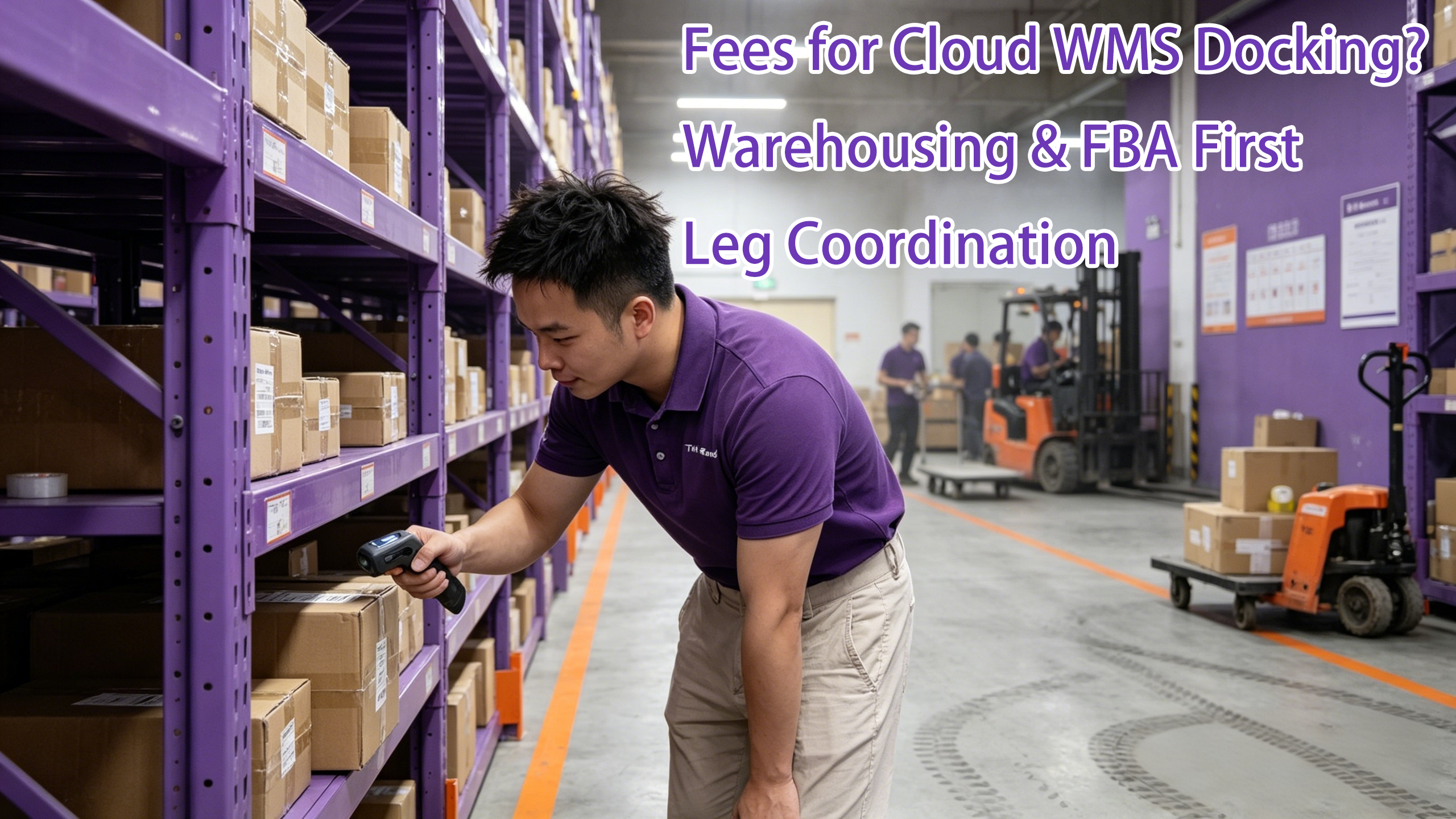
Many sellers have started to pay attention to cloud warehouse WMS systems, hoping to automate the flow of orders, inventory, and shipping information, thereby reducing errors caused by manual operations.
1:Will there be a fee for integrating with the cloud warehouse WMS system
When many sellers first inquire about cloud warehousing, they often ask whether system integration requires separate charges. There is no unified answer to this question, as different cloud warehouses have different cooperation models. However, most of them are free to use for users.
Some companies include basic system integration in their warehousing and hosting services, while others charge fees based on the number of interfaces, development requirements, or special features.
The focus is not on whether to charge a fee, but on how much operational time can be saved after integration. If hundreds of orders need to be processed daily, the labor costs incurred by manual order routing, inventory updates, and logistics information feedback are often higher than the system integration costs.
2:Which tasks can be automatically completed after the integration with the WMS system
After completing system integration, there is no need to repeatedly export orders before sending them to the warehouse. New orders from Shopify, TikTok Shop, or other sales platforms can automatically enter the WMS system, with inventory being synchronously deducted. After shipment is completed, logistics information can also be automatically uploaded back to the store's backend.
For sellers with a large number of SKUs, this automatic synchronization can reduce the issue of inventory data being out of sync.
For example, when the same product is sold on two platforms simultaneously, when an order is placed on one platform, the inventory on the other platform will be updated synchronously, reducing the risk of overselling.
3:Why is it recommended to plan warehousing and custody together with FBA first-leg transportation
Many sellers tend to manage daily orders and FBA replenishment separately, resulting in inventory scattered across different locations, which can easily affect the replenishment plan.
After combining warehousing and custody with FBA first-leg transportation, a single inventory can support daily shipments for the store, and also arrange Amazon replenishment according to the sales pace.
For example, once the inventory reaches a preset quantity, the system can combine sales data to arrange a replenishment plan in advance. After the goods that need to enter the FBA warehouse are sorted and labeled, appropriate first-leg channels should be selected according to the time constraints, avoiding arranging transportation only when stockouts are imminent.
4:How can multiple logistics options make replenishment plans more flexible
Different products and sales cycles have varying requirements for logistics timeliness. During the promotion of new products, more attention is paid to the speed of replenishment. For regular best-sellers, the overall logistics cost is a greater concern.
It is not necessarily suitable for long-term operations to rely solely on one mode of transportation for all replenishment deliveries.
Many cross-border sellers entrust their inventory to Taijia Cloud Warehouse, where they manage orders and inventory through the WMS system. Based on replenishment time, product attributes, and the destination warehouse, they flexibly choose different FBA first-leg channels.
FAQ
Can the WMS system integrate with multiple sales platforms
With majority support, order and inventory data can be synchronized uniformly.
Do we still need to manually export orders after system integration
After the integration is completed normally, most orders can be automatically synchronized.
Can warehousing and hosting services support FBA replenishment simultaneously
Yes, one set of inventory can accommodate both daily shipments and FBA replenishments.
Efficient warehouse management involves not just placing goods properly, but also ensuring that every piece of data precedes the orders.
SERVICE
Copyright © 2026 TakeSendShip. All rights reserved


