

After many Chinese sellers enter overseas markets, a single platform can initially meet their sales needs. However, as their business expands to multiple countries and sales channels, inventory, order, and logistics management gradually become new pressures.
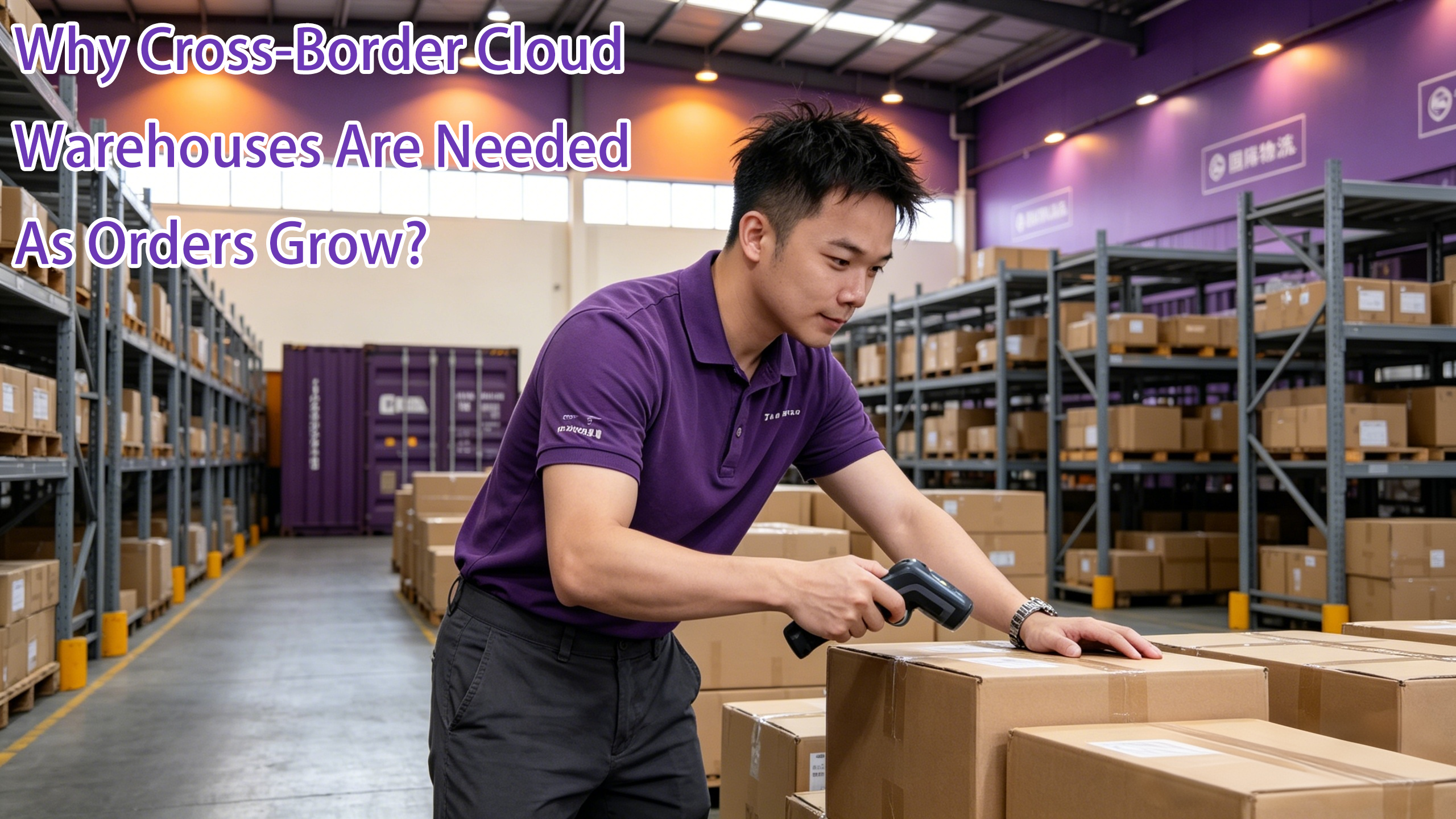
If a seller operates Amazon US, AliExpress Europe, Shopee Southeast Asia, and Mercado Libre Latin America simultaneously, the order rules, delivery requirements, and customer needs of different platforms will vary.
Relying solely on manual processing in domestic warehouses can easily lead to slow inventory synchronization, backlog of orders, and extended delivery times. The role of cross-border cloud warehouses is to centrally manage scattered platform orders, product inventory, and logistics arrangements, allowing sellers to maintain stable fulfillment capabilities when facing multiple markets.
1:Why is inventory management chaotic when selling on multiple platforms?
Many sellers have a small initial sales scale and inventory issues are not obvious. Dozens of SKUs, dozens of orders per day, can be maintained through table recording. But when the number of products increases to several hundred SKUs and multiple overseas platforms are operated simultaneously, the speed of inventory changes will significantly accelerate.
For example, a seller specializing in home furnishings, while also expanding into Amazon, Etsy, and Wayfair. A certain product saw an increase in sales on Amazon, but the warehouse did not synchronize inventory in a timely manner, resulting in the Etsy store still displaying a purchasable status, ultimately leading to out of stock and order cancellations.
Different platforms have independent backends, and without a unified inventory system, it is difficult for sellers to quickly grasp the actual inventory situation. Cloud warehouse can reduce data differences between multiple platforms by managing product inventory, inventory changes, and order information through the system.
2:Why do cross-border sellers need to adjust their shipping methods after an increase in orders?
Many sellers are accustomed to shipping directly from China in the early stages of entrepreneurship, which is suitable for testing the market. However, as orders stabilize, logistics processing pressure will gradually increase.
Selling small items on Temu, TikTok Shop, and Ozon, when there are only 30 direct orders per day, manual processing is not a big problem. But when promotional activities bring in 300 orders per day, product picking, packaging, and printing waybills all take up a lot of time.
After an increase in orders, the problem is often not that there are no products available, but that the products cannot be quickly processed afterwards. Cross border cloud warehouses can receive goods in advance, complete warehouse inspection, classified storage, and order preparation.
3:Why do different markets in different countries require different logistics arrangements?
Chinese sellers often face multiple regions simultaneously when entering overseas markets. For example, there are significant differences in shopping habits and logistics needs among consumers in Europe, Southeast Asia, North America, and Latin America.
If operating Amazon Germany, Shopee Malaysia, and Mercado Libre Mexico simultaneously, different orders have different requirements for shipping speed, cost, and delivery methods.
Cloud warehouses can match different international logistics channels based on order destinations, product characteristics, and customer needs. Orders with high timeliness requirements can choose commercial express delivery, while goods that require cost control can be arranged through suitable dedicated channels, making logistics channel selection more flexible.
4:How can cloud warehouses help multi platform sellers achieve unified shipping?
The biggest change in multi platform operations is the increasing dispersion of order sources. Sellers may manage multiple sales channels simultaneously, including Amazon, AliExpress, Shopee, Lazada, SHEIN, Walmart Marketplace, and each platform has its own order system.
Some cross-border sellers choose Taijia Cloud Warehouse for warehouse management, which synchronizes orders from multiple sales platforms through the system, connecting product inventory, order processing, and shipping processes.
Sellers can store their products in the cloud warehouse in advance, and after the order is generated, the warehouse will complete the packaging and shipping based on the order information. Simultaneously combining multiple international logistics channels, freely choosing transportation modes according to different national markets.
European orders can choose suitable delivery methods based on demand, Southeast Asian orders can match local market characteristics, and North American orders can arrange transportation rhythm according to sales cycles, allowing different markets to have more suitable fulfillment plans.
5:Why is stable supply chain management necessary after expanding cross-border business?
Cross border e-commerce competition has shifted from simply selling products to competing in overall operational capabilities.
Product quality, inventory management, order processing speed, and logistics stability all affect the long-term development of sellers. For sellers who are just starting to test the market, cloud warehouses can help reduce storage pressure.
For mature sellers who place hundreds of orders every day, cloud warehouses can improve order processing efficiency. For brand sellers with layouts in multiple national markets, cloud warehouses can help establish a more stable supply chain management model.
A truly mature cross-border operation does not rely on a single platform to achieve growth, but rather has the operational capability to adapt to changes in different markets.
FAQ
Question: Is it necessary for small sellers to use cross-border cloud warehouses?
Answer: When there is an increase in orders, multi platform sales, or a need to improve shipping efficiency, it can be considered for use.
Question: Can cloud warehouses manage orders from multiple platforms?
Answer: Some cloud warehouses support order synchronization and unified processing across multiple sales platforms.
Question: Can different logistics channels be selected for cloud warehouse shipments?
Answer: Yes, choose the appropriate channel based on the country, product, and delivery requirements.
SERVICE
Copyright © 2026 TakeSendShip. All rights reserved


