

More and more cross-border e-commerce platforms are adopting semi custodial and fully custodial models, but the new operating methods have also brought new supply chain pressures.
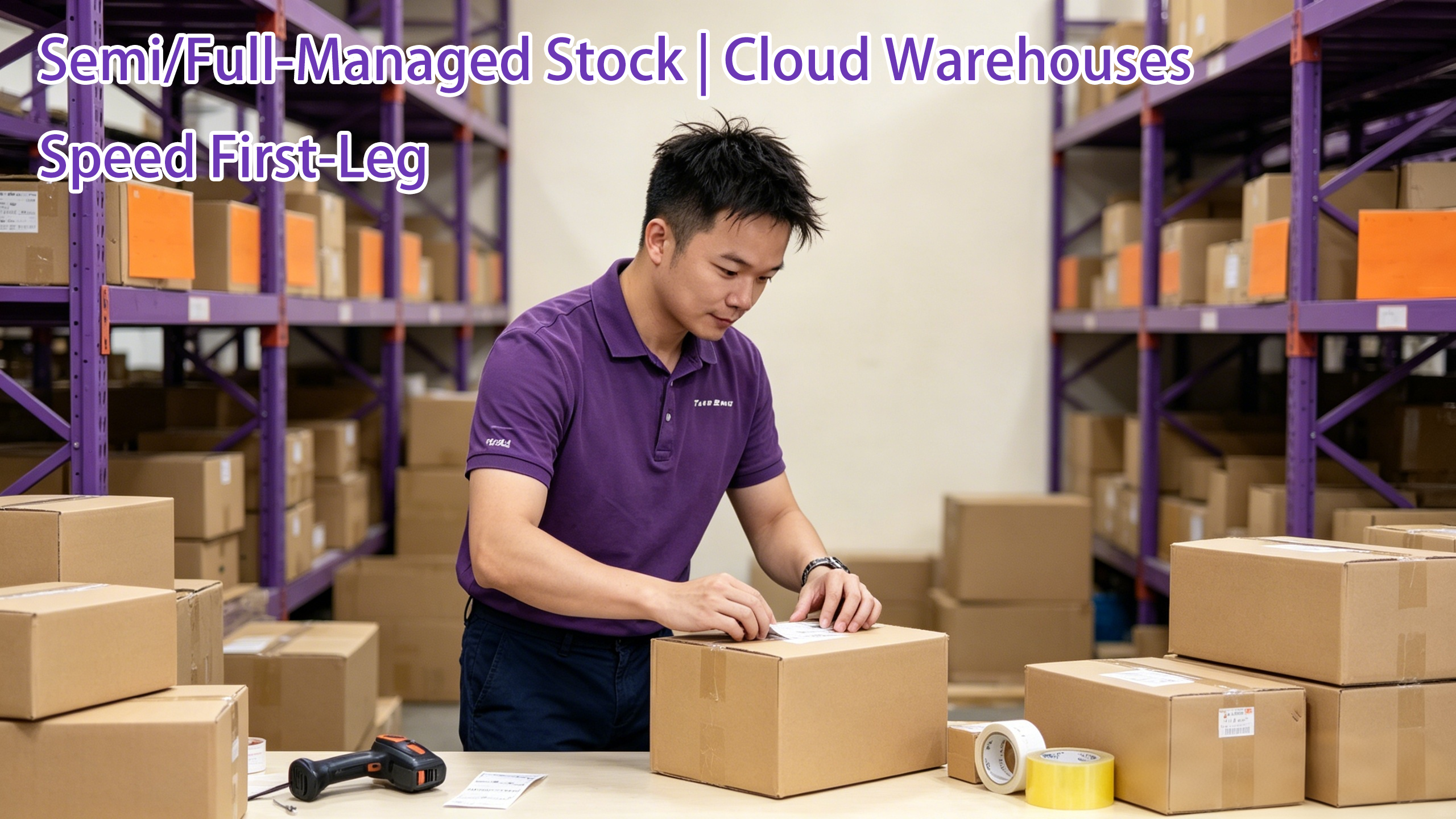
After taking charge of some sales and fulfillment processes, the platform has put forward higher requirements for sellers' stocking speed, product warehousing time, and inventory response capability.
The problem encountered by many sellers is that the factory has already completed production, but the platform warehouse has entry time requirements. Temporary arrangements for international transportation may encounter situations such as tight cabin space, insufficient preparation of materials, and warehouse queues.
Pre storage of goods in cross-border cloud warehouses allows for early preparation for storage, classification, and packaging.
1:Why do semi custodial and fully custodial models require more advance stocking?
The semi custodial and fully custodial models are different from traditional store operations, as sellers not only wait for orders to be generated, but also need to prepare inventory in advance according to the platform's sales plan.
For example, Temu semi custodial sellers need to deliver goods to designated warehouses according to platform requirements. SHEIN platform merchants and sellers need to maintain stable inventory supply. AliExpress semi custodial sellers also need to arrange stocking based on sales performance.
If the product still stays in the domestic factory and is arranged for transportation after being notified by the platform, it will go through multiple stages such as procurement, quality inspection, packaging, booking, and transportation, and it is easy to miss the warehouse entry time.
Storing goods in cross-border cloud warehouses in advance is equivalent to pre managing inventory. When the platform needs to restock, it can reduce the waiting time in between.
2:Why do many sellers encounter delays when sending their first mile logistics?
In the platform mode, the pressure on sellers often focuses on the warehousing node. The product did not enter the designated warehouse on time, which may affect subsequent sales arrangements.
A seller is preparing to participate in an overseas promotion and has produced 3000 items in advance. If transportation is arranged only after the platform confirms the demand, there may be tight flight resources, logistics price adjustments, or insufficient space during this period.
Especially during peak season, many sellers arrange restocking at the same time, which can lead to fluctuations in international logistics resources. After receiving the goods in advance, the cloud warehouse can first complete the sorting of the goods.
After the platform confirms the warehousing requirements, the warehouse directly packages, labels, and prepares materials according to the requirements, and then selects a suitable first mile logistics method to send out, reducing temporary operation time.
3:How can cloud warehouse stocking help sellers quickly enter the platform warehouse?
After many sellers choose the semi custodial or full custodial model, they used to focus on order growth, but now they need to pay attention to both inventory turnover and supply chain response speed.
For example, a seller in the clothing category who participates in both Temu semi custodial and SHEIN projects, has over 200 SKUs. If all products are placed in domestic factories, it will be difficult to quickly complete centralized processing when the platform requests replenishment temporarily.
Through cross-border cloud warehouse stocking, goods can be inspected, classified, and managed in advance. After the platform issues a replenishment request, the warehouse arranges packaging directly according to the requirements and transports it to the target warehouse through the corresponding first mile logistics channel.
4:How can cross-border cloud warehouses match the shipping needs of different platforms?
Different platforms have different requirements for product packaging, labeling, and warehousing information. If the seller operates multiple platforms simultaneously, relying solely on manual management can easily lead to data errors or packaging that does not meet requirements.
Simultaneously deploying Temu full hosting, Amazon, and Walmart Marketplace, different platforms have differences in container specifications, labeling, and shipping methods. If every shipment is reorganized, it will affect overall efficiency.
If choosing Taijia Cloud Warehouse for stocking management, process goods in advance according to different platform needs. After the platform generates the warehouse entry plan, it quickly arranges the outbound through the cloud warehouse system.
At the same time, cloud warehouses can combine multiple international logistics channels to select suitable methods based on destination warehouse location, quantity of goods, and delivery requirements, allowing sellers to avoid relying on a single transportation method.
5:Why do future platform sellers need to lay out cloud warehouse inventory in advance?
The semi custodial and fully custodial models have reduced some operational difficulties, but also increased supply chain response requirements. Sellers compete not only with product prices, but also with inventory preparation speed and fulfillment capabilities.
After the expansion of cross-border business scale, inventory is not only the quantity of goods, but also the ability to adjust in the face of market changes.
A stable cross-border supply chain is not about waiting for the platform to generate demand before finding solutions, but about preparing response capabilities in advance before sales opportunities arise.
FAQ
Question: Do semi custodial sellers need to stock up in advance?
Answer: Most platforms require sellers to prepare inventory in advance based on sales performance.
Question: Can cloud warehouses be directly sent to platform warehouses?
Answer: Yes, complete the packaging and arrange the first leg transportation according to the platform's warehousing requirements.
Question: Can multiple platforms share cloud warehouse inventory?
Answer: Yes, it is possible to manage the stocking requirements of different platforms through an inventory management system.
SERVICE
Copyright © 2026 TakeSendShip. All rights reserved


