

Many cross-border sellers and foreign trade enterprises will encounter a problem after business growth: as orders increase, international logistics costs and shipping management difficulties also increase.
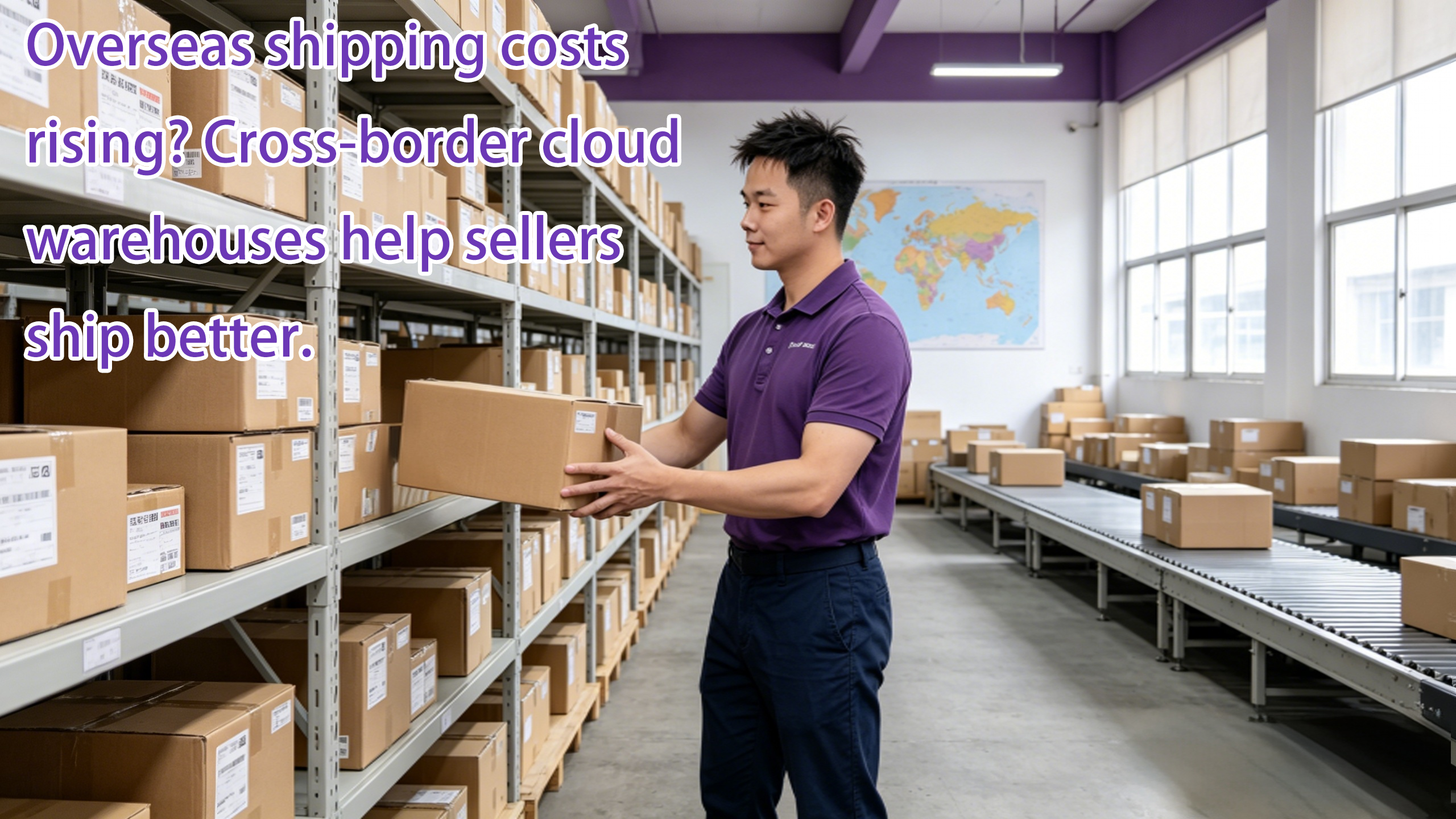
Previously, there were dozens of orders per day that could be handled directly from domestic warehouses. However, when the number of orders reached several hundred per day or when facing multiple national markets at the same time, logistics arrangements were prone to confusion.
Different products, countries, and order sizes require matching with different transportation methods. Cross border cloud warehouses can help sellers reduce duplicate operations and improve overseas order processing efficiency through advance stocking, inventory management, order processing, and multi-channel shipping.
1:Why does the logistics pressure increase after the increase of cross-border seller orders?
Many sellers in the early stages focus mainly on product selection and sales. As orders grow, warehousing and logistics gradually become important factors affecting operations.
If a seller sells household items through Temu, TikTok Shop, and AliExpress, there are only 30 orders per day in the early stage, and there is no obvious problem with direct packaging and shipping from the domestic warehouse. But when orders grow to 300 per day during the event, manual handling of inventory, printing of waybills, and arranging transportation can easily lead to delivery delays.
After the increase in orders, the problem is not that there is no stock, but that the goods cannot be quickly completed from the warehouse to the customer's hands. If storage and logistics methods are not planned in advance, sales growth may actually bring performance pressure.
2:Why do different overseas markets require different shipping methods?
Many companies are simultaneously expanding into multiple national markets, but the logistics needs vary in different regions.
For example, a factory that exports electronic components while serving European, North American, and Latin American customers. European orders may focus on customs stability, American customers may focus on delivery speed, and Latin American markets may be more concerned about transportation costs.
If all orders use the same international logistics method, it is easy to encounter problems such as high market costs and insufficient delivery time for some orders.
Cross border logistics needs to be flexibly adjusted according to the destination country, product type, and order requirements. Ordinary goods, large items, and high-value products should all be matched with different transportation plans.
3:Why do small batch foreign trade orders need cloud warehouse processing?
Many factories and foreign trade enterprises may encounter similar situations: the number of customer orders is not large, but the delivery time requirements are high.
Multiple overseas customers place orders every month, and each batch of goods may only consist of a few dozen boxes. If procurement, packaging, and logistics are arranged after each order confirmation, the entire process will be slower.
Cross border cloud warehouses can receive goods in advance and complete inventory management according to order requirements. When customers place orders or need to restock, the warehouse can directly arrange sorting, packaging, and shipping.
4:How can cross-border cloud warehouses help sellers improve overseas shipping efficiency?
Many cross-border sellers find order management increasingly complex after entering multiple platforms. Amazon、Shopee、Lazada、Walmart Marketplace、Mercado Libre Each platform has different order systems, and if we rely solely on manual processing, it is easy for inventory to become unsynchronized.
Some sellers will choose Taijia Cloud Warehouse for warehousing and order management, and handle orders from different platforms uniformly. After the goods enter the cloud warehouse in advance, they can complete warehouse inspection, inventory classification, order synchronization, and packaging and shipping.
After overseas orders are generated, the cloud warehouse can match different international logistics channels based on the destination country, product type, and delivery requirements. Sellers do not need to constantly search for shipping methods and can flexibly choose from multiple channels, including dedicated lines, commercial express delivery, etc.
5:Why are more and more companies starting to lay out cross-border cloud warehouses in advance?
After the expansion of cross-border business scale, logistics is no longer just a transportation link, but a key part that affects sales stability.
For sellers who are just starting out in overseas markets, cloud warehouses can reduce storage and manual pressure. For mature sellers, it can help manage multiple platform orders. For factories and foreign trade enterprises, it can improve the response speed of overseas orders.
Stable cross-border business does not rely on a fixed shipping channel, but rather maintains the ability to adjust in the face of order growth and market changes.
FAQ
Question: How to reduce costs when shipping from China to foreign countries?
Answer: Choose the appropriate international logistics channel based on the type of goods, country, and order size.
Question: Which enterprises are suitable for cross-border cloud warehouses?
Answer: Suitable for cross-border sellers, foreign trade enterprises, factory orders, and independent website merchants.
Question: Can cloud warehouses help ship overseas orders?
Answer: Yes, overseas order delivery can be completed through inventory management and order processing.
SERVICE
Copyright © 2026 TakeSendShip. All rights reserved


