

Previously, processing dozens of orders daily from domestic warehouses could still meet demand. But when sellers operate multiple channels such as Amazon, Temu, TikTok Shop, and independent websites simultaneously, how to allocate inventory, arrange shipments, and choose logistics channels will all affect order delivery when there are hundreds or even thousands of orders per day.
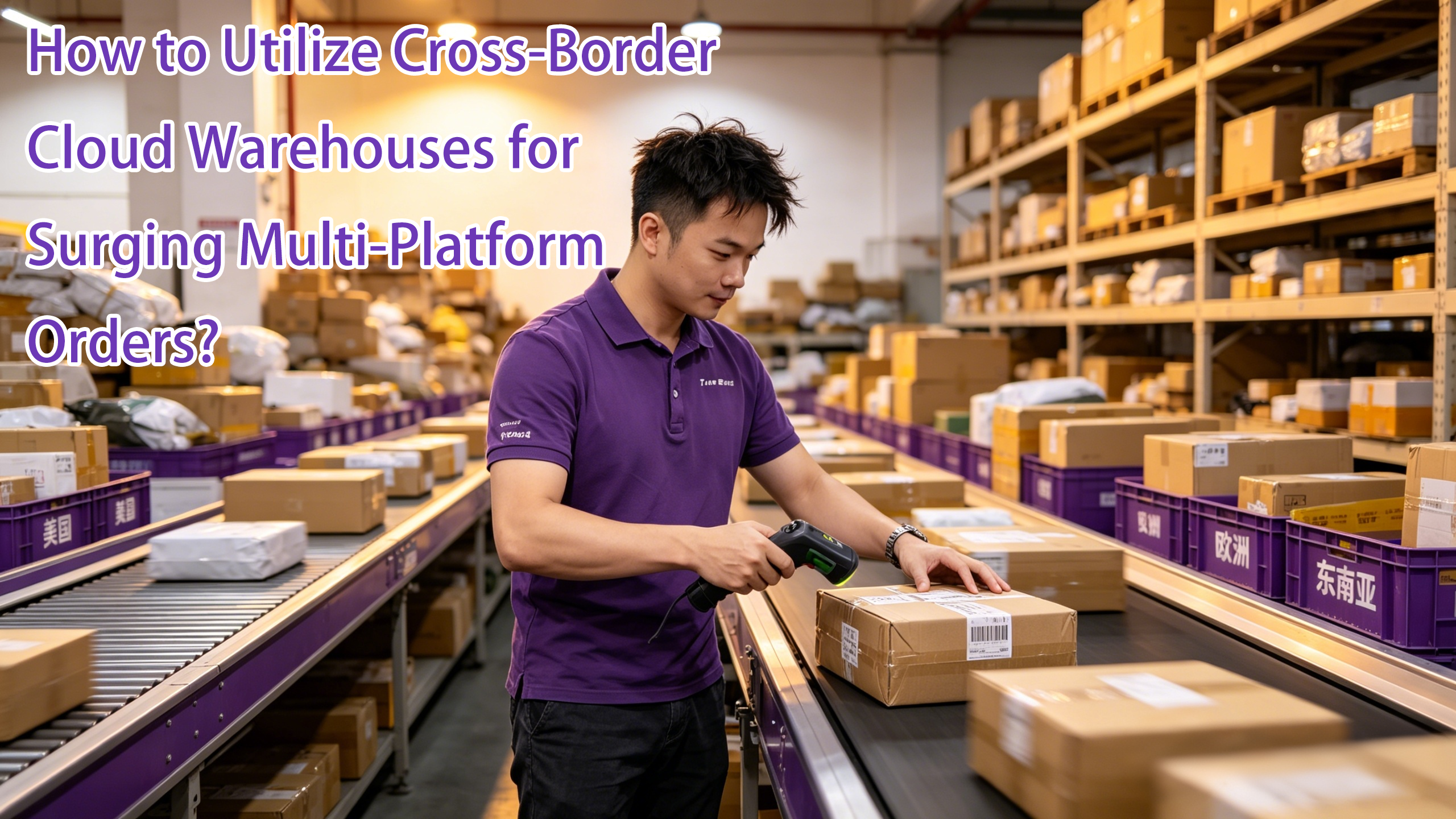
The role of cross-border cloud warehouses is not just to store goods, but to help sellers centrally manage orders from multiple platforms, and allocate different international logistics channels reasonably based on order destinations, product types, and delivery requirements.
1:Why is it easy to have shipping confusion when synchronizing sales across multiple platforms?
Many sellers have relatively simple inventory and order management during the operation stage of a single platform. But as sales channels increase, each platform will have independent sources of orders, and the speed of inventory changes will also accelerate.
A seller operating simultaneously on Amazon Europe, Temu semi hosting, TikTok Shop Southeast Asia, and Shopify independent sites may have 500 SKUs in their warehouse.
A popular product suddenly saw an increase in sales on TikTok Shop, but Amazon's backend still shows inventory. If several platforms do not have unified inventory management, there may be oversold, out of stock, or temporary restocking issues.
The shipping issue of multi platform operation can be synchronized with inventory and orders through the cloud warehouse system, allowing sellers to have a clearer understanding of the actual status of each product.
2:Why do different platforms require different logistics channels for orders?
Many sellers are accustomed to using the same shipping method for all orders, but in actual operation, the demand for different orders varies greatly. For example:
Amazon orders may need to meet the platform warehouse replenishment time
Shopify independent website orders focus more on customer delivery speed
Shopee and Lazada orders need to consider the delivery characteristics in Southeast Asia
Mercado Libre Latin American orders require attention to local customs clearance and delivery stability.
If all goods use a unified logistics method, there may be some orders with excessively high costs and some orders with excessively long delivery times.
For orders with high timeliness requirements, commercial express delivery can be arranged. For ordinary goods, dedicated channels suitable for bulk transportation can be selected. Large quantities of inventory can be replenished, and transportation methods can be planned in advance.
3:How does Cloud Warehouse assist sellers in handling multi platform orders?
Many sellers encounter the problem of arranging processing only after the order arrives. The cross-border cloud warehouse model allows sellers to deliver goods to the warehouse in advance.
Cloud warehouse completes warehousing, inventory classification, and order processing preparation. When Amazon, Temu, TikTok Shop, or independent websites generate orders, the warehouse directly completes picking, packaging, and shipping based on the order information.
This can reduce the need for sellers to repeatedly operate between multiple platform backends and improve order processing speed
4:How to effectively divide multiple logistics channels?
The choice of logistics channels is not necessarily better with more, but needs to be matched according to the business situation. For example, a seller selling electronic accessories may face the following issues when shipping:
Stable delivery is required for orders in the US market, and suitable logistics channels can be arranged for the North American market
For European orders, attention should be paid to customs clearance documents and delivery requirements, and corresponding European shipping channels can be selected
Small batch testing orders require cost control, and a more suitable method for transporting light and small items can be chosen.
Some cross-border sellers will use Taijia Cloud Warehouse for order and logistics management, synchronizing orders from multiple sales platforms through the cloud warehouse system, and selecting different international logistics channels based on destination countries, goods attributes, and order requirements.
The warehouse can arrange different shipping methods according to the requirements and destinations of different cross-border e-commerce platforms, instead of processing all orders according to a unified standard.
A truly mature cross-border operation is not about using the same method for all orders, but about finding a more suitable shipping rhythm based on different markets and order characteristics.
FAQ
Question: Can multiple cross-border platforms share a cloud warehouse?
Answer: Yes, it is possible to manage products and orders from different platforms through the inventory system.
Question: Can cloud warehouses automatically select logistics channels?
Answer: Some cloud warehouses can match different transportation methods according to order requirements.
Question: Can the cloud warehouse ship quickly after the surge in orders?
Answer: Pre stocking can reduce order processing and packaging waiting time.
The competition of multi platform operation is not only about increasing sales channels, but also testing sellers' ability to respond to changes in inventory and logistics.
SERVICE
Copyright © 2026 TakeSendShip. All rights reserved


