

Sellers with large shipment volumes in the European and American markets often encounter a practical problem: sometimes several batches of the same product can clear customs smoothly, but sometimes they are required to provide additional information due to quantity, declaration materials, labels, or packaging issues.
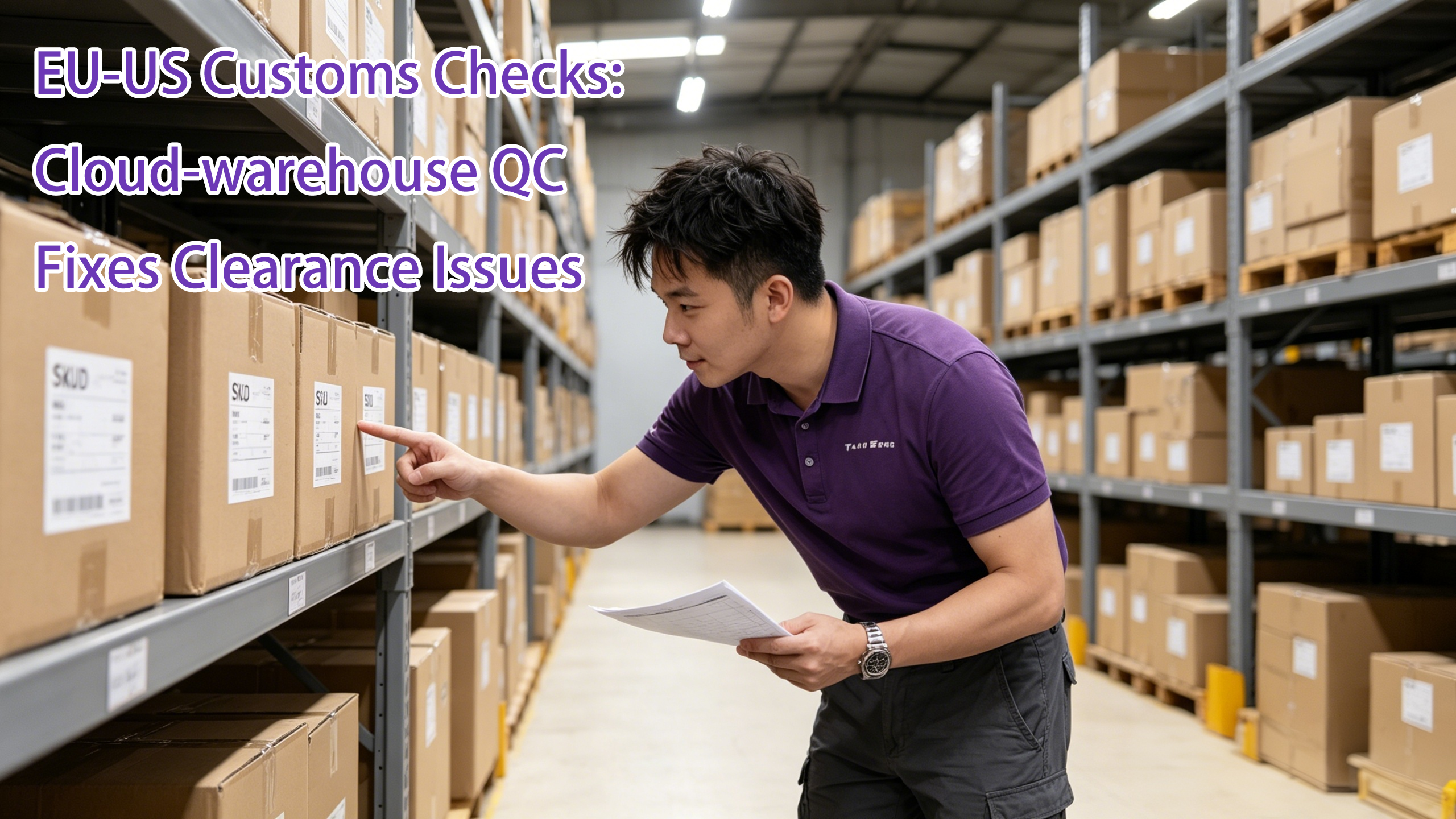
Many people attribute the reason to customs inspection itself, but some problems are already buried before the goods leave the domestic warehouse.
What cloud warehouse quality inspection can do is not to prevent customs inspection, but to verify SKU, quantity, packaging, label, and shipping information item by item before the goods enter the international transportation process.
For sellers who sell dozens or even hundreds of boxes of goods every day, this step can reduce many customs clearance exceptions caused by manual operation errors.
1:Why do European and American customs inspect cross-border goods?
Customs inspection does not necessarily mean that there are problems with the goods. Factors such as cargo declaration information, commodity category, quantity, value, import requirements, and risk management may all affect the probability of inspection.
A seller sent 500 boxes of electronic accessories to Europe, with declaration information showing 10000 pieces, but only 9800 pieces were actually packed. After there is a difference in quantity, further verification may be necessary.
Although the quantity of another batch of goods is the same, the outer box labels, product information, and declaration materials may not match, which may also result in additional processing.
So what sellers should really control is the parts they can control. Whether the product information is accurate, whether the packing quantity is consistent, whether the labels are correct, and whether the information is complete should all be checked before leaving the warehouse.
2:What are the specific inspections for the quality control of cloud warehouse storage?
After the goods enter the cloud warehouse, they can be checked for SKU, quantity, and outer packaging status based on the purchase order or delivery list.
For goods that need to be exported, product labels, outer box labeling, and packaging can also be checked according to the seller's shipping requirements.
When errors are found in product model, color, specifications, or quantity, it is much more convenient to handle them in the domestic warehouse stage than to modify them after the goods have entered the international transportation stage.
If it is special goods such as live products, liquids, powders, health products, etc., the requirements of the transportation channel for product attributes and information should be confirmed in advance, and transportation cannot be arranged directly as ordinary goods.
3:Why is pre shipment review more important than warehouse inspection?
The inbound inspection solves whether there are any problems when the goods enter the warehouse, while the outbound review solves whether the final items sent out of this batch of goods are correct.
Therefore, SKU, quantity, number of boxes, and outer box information can be checked again before shipment. For goods that require labeling, confirm that the label corresponds to the correct product. For goods that require repackaging, confirm whether the size and weight have changed after packaging is completed.
For sellers operating on multiple platforms, this step is more worthy of attention. Amazon、 The order requirements for independent websites, TikTok Shop, or overseas distributors are different, and they cannot handle all goods directly with the same set of packaging and labels.
4:Which goods require better warehouse quality inspection?
High value products, products with similar SKUs, products with special attributes, and bulk export goods are all suitable for strengthening inspections.
After the factory completes production, it is directly loaded into containers, which may seem to save a storage link. However, if the export information and actual goods are not checked item by item, problems are often discovered when it is already in the transportation stage.
Sending the goods to the domestic cloud warehouse first allows for an opportunity for inspection and adjustment before shipment.
5:How does cloud warehouse connect quality inspection and cross-border logistics?
Quality inspection does not exist alone, it ultimately falls into the shipping process.
The goods that need to be repackaged should be processed first, and the goods that need to be labeled should complete the labeling operation. After the information is confirmed to be correct, they can be shipped out according to different transportation plans. This can avoid discovering that some products need to be reprocessed after a batch of goods is fully loaded.
For FBA sellers, FBA labeling, packing, and first mile shipping can also be combined for processing. Independent sellers can choose different methods such as commercial express delivery and dedicated lines based on the order situation.
It should be clarified that cloud warehouse quality inspection cannot guarantee that goods will not be inspected by customs, nor can it replace professional processes such as customs declaration and clearance. It's more like adding a manual inspection before the goods leave the country, keeping any issues that can be detected in advance as much as possible to be resolved domestically.
FAQ
Question: Can cloud warehouse quality inspection avoid customs inspection?
Answer: We cannot guarantee. Quality inspection mainly reduces customs clearance anomalies caused by errors in quantity, labeling, packaging, and documentation.
Question: Do all cross-border goods require quality inspection?
Answer: It is not a mandatory requirement, but bulk exports, complex SKUs, or special attribute goods are more suitable for early inspection.
Question: Can Cloud Warehouse check export product information?
Answer: Basic verification can be conducted based on specific goods and channel requirements, and special compliance issues still need to be confirmed according to the regulations of the destination country.
SERVICE
Copyright © 2026 TakeSendShip. All rights reserved


