

When a product is sold to the United States, the United Kingdom, or Europe, normal orders can be shipped directly from China. However, after the buyer returns the product, new issues arise such as where the goods go, who is responsible for inspecting them, and whether they can be resold.
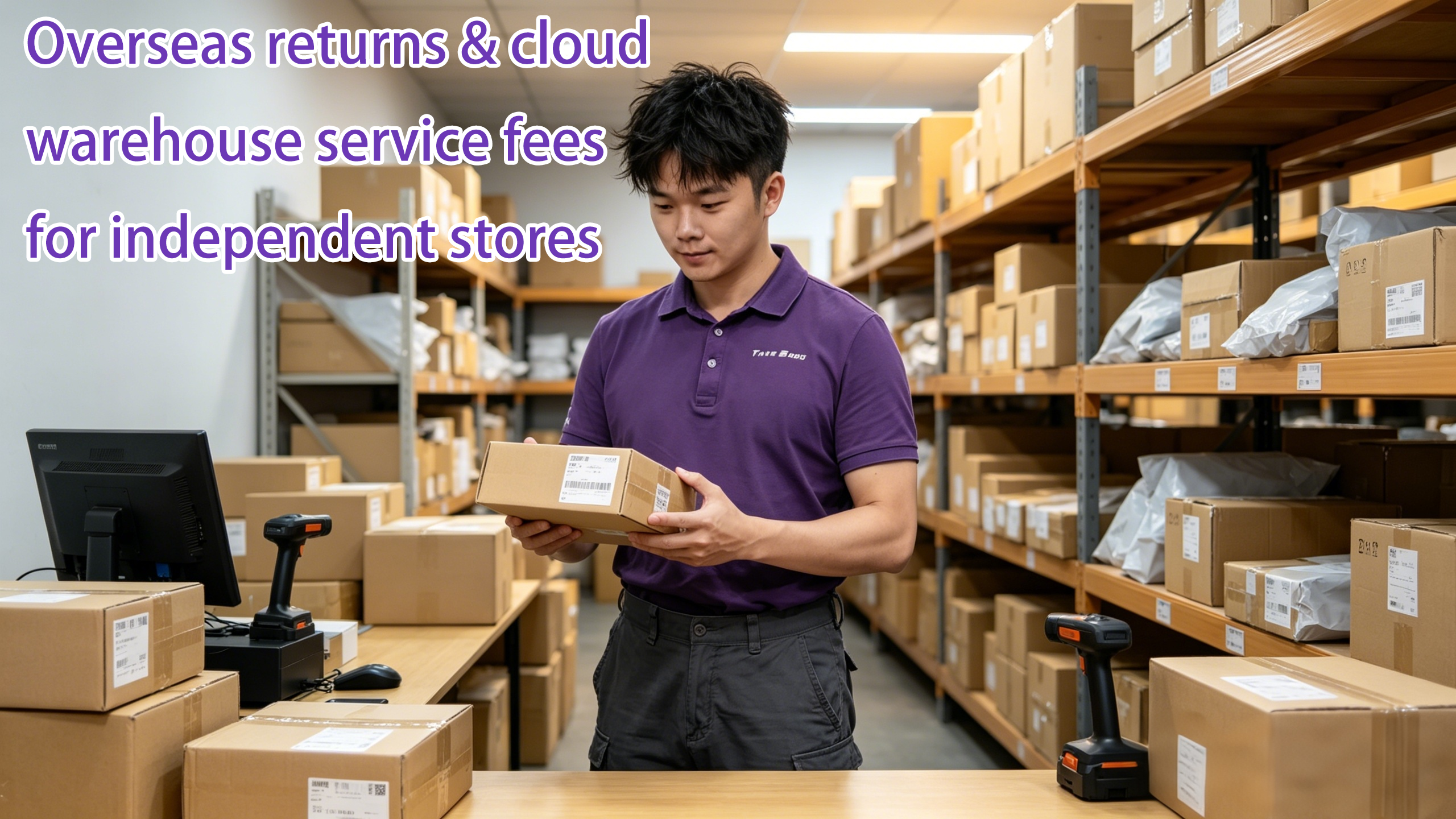
If every return is directly returned to China, not only will the transportation cost be high, but the processing cycle will also be long. For independent stations with dozens or even hundreds of orders per day, a common practice is to have overseas warehouses or cloud warehouses receive returns first, and then sort, repackage, label, and re store the goods based on their status.
1:Why is it difficult to handle overseas returns on independent websites?
Returns on independent websites are different from those on regular domestic e-commerce platforms. The return address, shipping cost, and processing time may vary depending on the buyer's country.
A Shopify seller sends 100 orders to the United States every day, and under normal circumstances, there may only be 2 to 5 returns per day. When the order quantity is small, the seller can also manually follow up. After the number of orders increases to 500 per day, dozens of returns per week will need to be processed specifically.
Not all returned goods are necessarily defective. Some products have only had their outer packaging removed, some are intact, some require repackaging, and some have traces of use. Treating everything as scrap will directly increase inventory losses.
So after returning the goods to the warehouse, the first step is not to resend them, but to first determine the status of the goods.
2:What are the general steps for handling returns in a cloud warehouse?
After the return enters the warehouse, it usually goes through several stages including receiving registration, sorting inspection, status judgment, and re storage.
If the product is in normal condition, it can be repackaged and put into sellable inventory. If only the packaging is damaged, the outer packaging can be replaced before shelving.
Electronic products require inspection of the appearance, accessories, and packaging integrity of the product. Some products still need to be tested for normal use before deciding whether to enter saleable inventory, pending inventory, or abnormal inventory.
The advantage of doing so is that the seller will not directly lose a product due to a single return, but can decide on the subsequent handling method based on the actual situation.
3:How do you usually charge for changing packaging and labels?
The cost of returns and exchanges in cloud warehouses is usually not a fixed price, but calculated based on specific operations.
The return and storage fee is generally calculated based on the number of items. After receiving the returned item, the warehouse needs to complete the receipt registration and inventory update.
The sorting inspection fee usually depends on the inspection content. If only checking SKU and appearance, the operation is relatively simple. If it is necessary to open the box, count the accessories, and test the goods, the cost may vary.
The cost of changing packaging is generally related to packaging materials and manual operations. The cost of replacing only one courier bag is not the same as reloading the cardboard box and adding cushioning materials.
The cost of changing labels is usually calculated based on individual operations. If it is necessary to tear off the old label, print a new label, and reattach it, corresponding labor costs will be incurred.
So when sellers inquire about prices, they should not only ask how much it costs to process returns. It is best to list the receipt, inspection, packaging replacement, label replacement, and re storage separately, which makes it easier to calculate the actual cost.
4:What kind of return is suitable for repackaging and reselling?
Not all returns are suitable for relisting. The warehouse needs to make judgments based on the status of the goods, and the seller should also establish inventory standards in advance.
After receiving a return on a home goods independent website, if the product has no signs of use but only the outer box is damaged, it can be repackaged and resold. If the product itself shows obvious damage, it is not suitable to re-enter normal inventory.
For clothing, footwear, and other products, it is important to focus on inspecting usage traces, tags, and accessories. For electronic products, it is necessary to add functional checks. For high-value goods, the inspection standards should be even stricter.
Classifying returns into sellable, repackaged, inspected, and unsellable states is easier to control costs than returning them all domestically.
Some cross-border sellers will use Taijia Cloud Warehouse to handle returns, sorting, packaging and label changes, while combining inventory management and order forwarding. After the product processing is completed, it can be re entered into inventory and shipped directly when subsequent orders are generated.
FAQ
Question: How does cloud warehouse return processing usually charge?
Answer: Usually, billing is based on specific operations such as returning goods to the warehouse, inspecting and sorting, changing packaging, and changing labels.
Question: Can the returned product be resent to the buyer?
Answer: It is necessary to undergo inspection to confirm that the product status and packaging meet the requirements for resale before it can be stored.
Question: Can packaging and labeling be used separately?
Answer: Yes, the billing will be based on the actual operation project, and there is no need to purchase other services at the same time.
SERVICE
Copyright © 2026 TakeSendShip. All rights reserved


