

The biggest fear for small and medium-sized sellers in cross-border e-commerce is often not the lack of products, but the backlog of goods in the warehouse that cannot be sold. Before measuring the sales volume of the new product, purchasing a few hundred pieces will occupy the funds due to inventory. If there are changes in platform rules or the product cannot be sold, the subsequent handling will be more complicated.
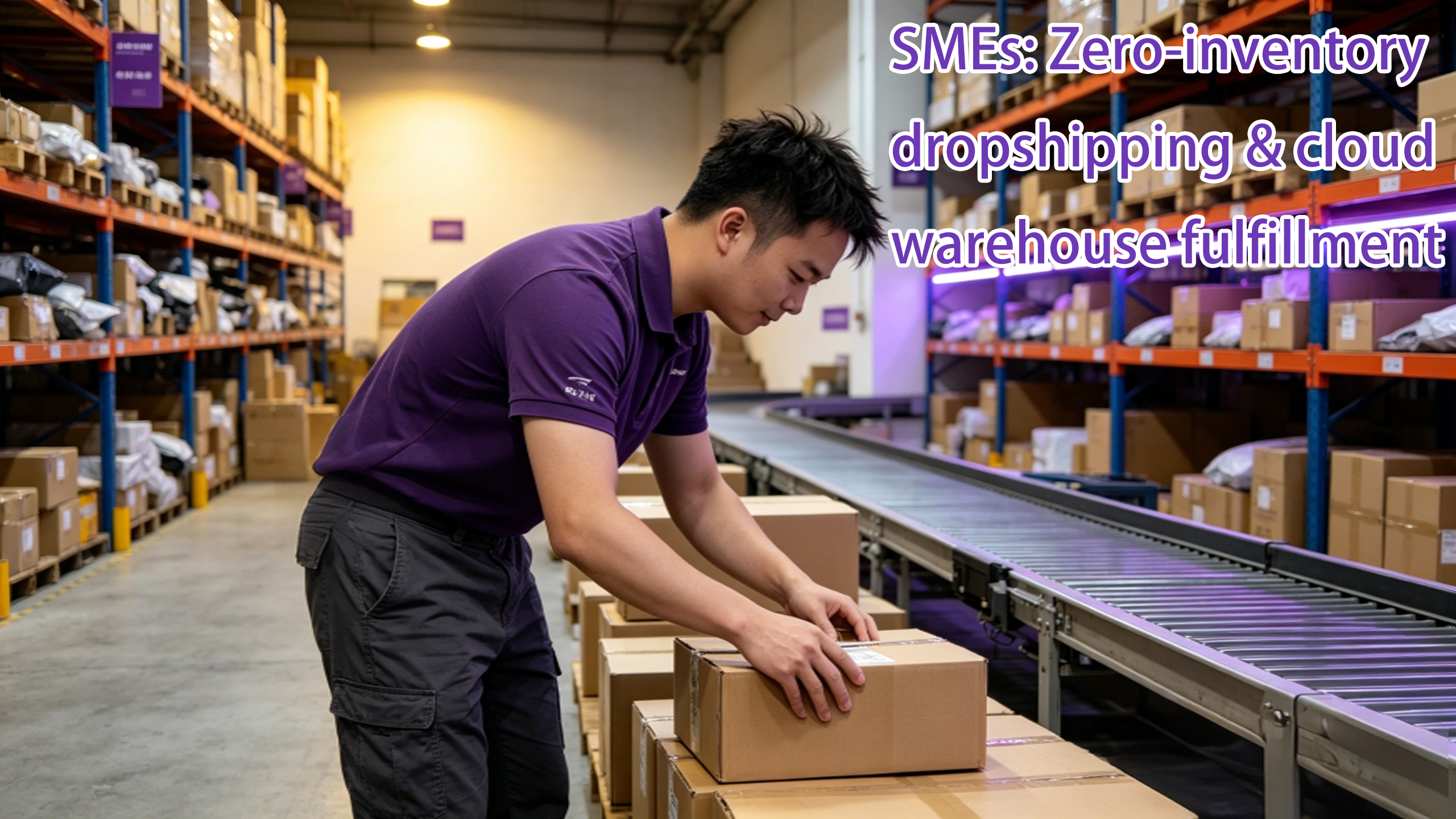
The idea of zero inventory distribution is exactly the opposite. The seller first tests the market and orders, and then purchases or adjusts the goods after the real demand appears. The cloud warehouse then completes the warehousing, packaging, and shipping.
However, this model requires higher procurement speed, warehouse response, and international logistics channels. Relying solely on suppliers for temporary processing can easily lead to situations where orders cannot be shipped out.
1:Why does zero inventory stocking actually test delivery capability more?
Zero inventory does not mean having no stock at all, but rather minimizing the large amount of inventory that sellers themselves bear. For example, if a Shopify seller lists 300 SKUs and only conducts a small amount of testing for each SKU, and suddenly 30 orders for a certain product are placed in one day, but the supplier needs 3 days to stock up, the real impact on the order is not sales, but the backend response speed.
If there are only a few orders per day, it's not a big problem for the seller to handle them themselves. After reaching 50 or even 100 orders per day, procurement, inspection, sorting, packaging, waybill, and international transportation are all squeezed together, and the delivery time is easily stretched.
So the zero inventory model actually has higher requirements for the supply chain. The purchasing end should be able to replenish quickly, the warehousing end should be able to receive goods at any time, and the logistics end should have suitable shipping channels.
2:Why don't small and medium-sized sellers necessarily need a complete set of cloud warehouse services?
Many sellers who have just entered overseas markets may only need a temporary inventory and a place to place orders on their behalf.
For example, a seller only has 20 to 30 orders per day and does not need to rent an independent warehouse for a long time. They only hope that the supplier can deliver the goods to the warehouse, and after the orders are generated, someone will help pick and pack them, and then hand them over to international logistics. In this case, using warehouse custody and order forwarding separately is sufficient.
When the sales volume grows to 200 orders per day and it is necessary to label, change packaging, pack, split or process returns, corresponding items will be added. This is more in line with the actual business rhythm of small and medium-sized sellers than purchasing all warehouse distribution services at the beginning.
Taijia Cloud Warehouse can provide single item warehousing and shipping services based on the status of goods and orders. Sellers do not have to default to purchasing all value-added operations just because they use the warehouse.
3:Why does the zero inventory model require a virtual warehouse channel?
If the seller completely adopts the methods of domestic order taking, domestic procurement, and domestic direct delivery, the logistics trajectory usually starts from China. Some overseas platforms and buyers place more emphasis on delivery time, so regular domestic direct shipping may not be flexible enough.
The virtual warehouse channel solves the connection between order fulfillment location and logistics trajectory. If the channel rules are met, the seller can set the corresponding warehouse and distribution information for the destination country in advance. After the order is generated, the domestic warehouse will complete the shipment, and the logistics trajectory will be displayed as the local delivery node of the destination country according to the carrier channel rules.
For example, if a seller sells ordinary goods in the US market, the order will be processed by the domestic cloud warehouse after it is generated, using a virtual warehouse channel that supports local delivery trajectories in the US. When the buyer checks the logistics, they can see the US end of pipe delivery information that conforms to the actual transportation process.
Here is a mailing experience that needs special attention: if the channel itself does not support local destination tracking, logistics information cannot be modified on its own. When selecting a channel, it is necessary to confirm the source of the waybill, trajectory nodes, actual transportation method, and whether the platform recognizes it.
4:How can zero inventory sellers control their procurement and logistics costs?
Firstly, select the appropriate logistics channel based on the sales market and order volume. For products with stable sales, a small amount of inventory can be prepared in advance and stored in the cloud warehouse. For new products with uncertain sales, maintain low inventory and quickly replenish through suppliers.
If a product has only 5 orders per day, there is no need to stock up on a few hundred items in advance. If it reaches 50 orders per day for several consecutive weeks, the procurement batch, warehousing costs, and transportation prices can be recalculated.
For small and medium-sized sellers, zero inventory truly tests the coordination between inventory and logistics, rather than simply pursuing a warehouse without a single item.
FAQ
Question: Do we need to use cloud warehouses for zero inventory distribution?
Answer: It's not necessary, but with stable orders, cloud warehousing can reduce the waiting time between procurement, packaging, and shipping.
Question: Can virtual warehouses display overseas local shipments?
Answer: Only when the carrier channel actually supports the corresponding destination trajectory can it be used according to the rules, and the shipping location cannot be fabricated by oneself.
Question: Can small sellers only use cloud storage for shipping?
Answer: Yes, according to actual needs, separate projects such as warehousing, order forwarding, or labeling and packaging replacement can be used.
SERVICE
Copyright © 2026 TakeSendShip. All rights reserved


