

The most common mistake many sellers make when choosing a cross-border cloud warehouse is to first look at the warehouse area and service package, without first calculating what they really need.
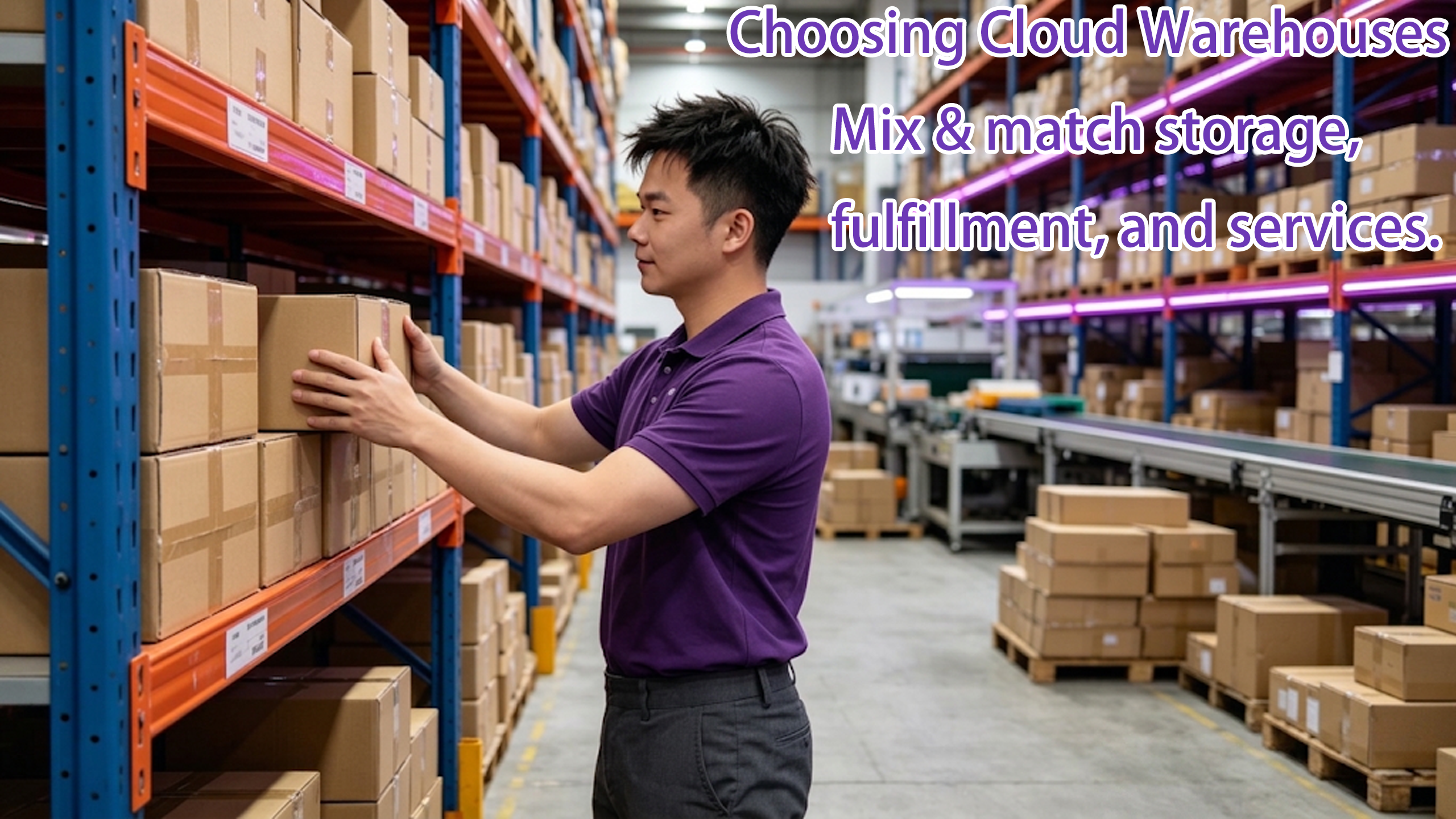
Independent sellers with only 20 orders per day and multi platform merchants with 500 orders per day require completely different warehousing and distribution methods. Some people lack inventory locations, some lack order processing, and some only need labeling and packaging when restocking FBA.
Separating warehouse custody, order forwarding, and value-added operations, and choosing based on one's own order volume and business stage, actually makes it easier to control warehousing and logistics costs. So cloud warehouses are not necessarily better with more services.
1:What kind of seller needs warehouse custody more?
The factory has already produced a batch of goods, but it is currently not suitable to send them all overseas. Storage and custody have practical uses. For example, a foreign trade enterprise has 2000 products that need to be shipped in three batches according to the delivery time of overseas customers. There is no need to rearrange the goods from the factory every time they are close to shipment.
After the goods enter the domestic cloud warehouse in advance, they can be managed according to SKU, number of boxes, and batch. When customers need it, they can arrange for it to be shipped out according to the order.
For new product testing, peak season stocking, and multiple batches of foreign trade orders, this method can reduce the trouble of temporary warehouse searching and inventory adjustment. Small and medium-sized sellers can also adopt a similar approach.
If the product is still in the testing stage and there is no need to purchase hundreds or thousands of pieces at once, a small amount of inventory can be kept in the warehouse and the purchase quantity can be increased after sales stabilize.
2:What is the difference between order forwarding and warehousing management?
Warehouse custody solves where goods are placed, while order forwarding solves who is responsible for handling orders once they arrive.
When a Shopify standalone site only has 30 orders per day, sellers may still be able to handle them by packing their own. When the number of orders increases to 150 per day, picking, printing waybills, checking SKUs, and packaging will take up a lot of time. At this point, placing the goods in the cloud warehouse and having the warehouse complete the outbound according to the order will be more convenient.
For sellers who operate channels such as eBay, TikTok Shop, and AliExpress simultaneously, the sources of orders are more dispersed. Different platforms may use different waybills and packaging requirements, and warehouse dropshipping can handle them separately according to order information. Sellers do not need to repeat a large amount of basic shipping work every day.
3:What value-added services can be used separately?
When Amazon sellers are preparing FBA restocking, they may need FBA labeling, packing, and boxing. If the packaging of a certain batch of goods is damaged, it may need to be repackaged. When selling on multiple platforms, product labels may change and may also need to be changed.
These operations can be arranged according to the actual business nodes, usually only for warehousing, adding labeling and packing when FBA restocking, and adding testing, packaging replacement, and re warehousing when encountering returns.
This on-demand usage method is more suitable for sellers with a large number of SKUs but significant order fluctuations. There is no need to bear the corresponding service costs for occasional operations in the long term.
4:What fees should small sellers consider when choosing a cloud warehouse?
To determine the price of a cloud warehouse, one cannot solely rely on the unit price of warehousing and shipping services. The actual cost usually involves warehousing, storage, picking, packaging, waybill, outbound, and other value-added operations.
There are only 20 orders per day, but there are 800 SKUs, and what really needs attention may be inventory management and picking costs. If another seller has 300 orders per day and only 50 SKUs, then order fulfillment efficiency and packaging costs may be more important.
When inquiring, you can directly explain your actual situation, including SKU quantity, monthly average inventory, daily average orders, individual weight, packaging size, and main destination, and then have the cloud warehouse calculate according to actual operations.
5:How do multi platform sellers match cloud warehouse services?
After operating on multiple platforms, it is more suitable to adopt a model of one inventory and different shipping methods.
The seller operates independent websites for Amazon, Temu, Ozon, and Shopify, with 300 SKUs in the domestic warehouse. FBA inventory needs to be replenished regularly, while independent station orders need to be shipped overseas one by one. Ozon orders also have different warehousing and distribution requirements.
At this point, you can first place the products into a service provider's cloud warehouse similar to Taijia Cloud Warehouse and manage them based on inventory status. FBA replenishment uses labeling, packing, and first mile shipping services, while independent station orders are shipped on behalf of orders, and corresponding international logistics channels are selected based on the destination.
If the subsequent order volume increases, add other operational items. In this way, warehousing, order processing, and international transportation can be gradually adjusted according to business changes, without the need to open all projects at the beginning.
Cloud warehouses follow the business, making it easier to control costs.
FAQ
Question: Is it necessary for small sellers to use cross-border cloud warehouses?
Answer: If there is a need for inventory custody, order forwarding, or FBA operations, you can choose according to the actual project and do not need to purchase the entire set of services.
Question: Can cloud storage and order forwarding be separated?
Answer: Yes, it depends on the service items and charging methods provided by the warehouse.
Question: Can FBA labeling be done separately?
Answer: Many cloud warehouses support separate operations, which need to be calculated based on the quantity of goods, label requirements, and outbound plan.
SERVICE
Copyright © 2026 TakeSendShip. All rights reserved


