

After receiving overseas orders, the biggest headache for foreign trade factories is often not production, but scattered shipments afterwards. One customer wants to ship to Germany, another customer wants to ship to the UK, and there are also orders that need to be sent to the United States and Australia. Although the quantity of each shipment is not large, they need to find new logistics, package, weigh, and arrange for shipment.
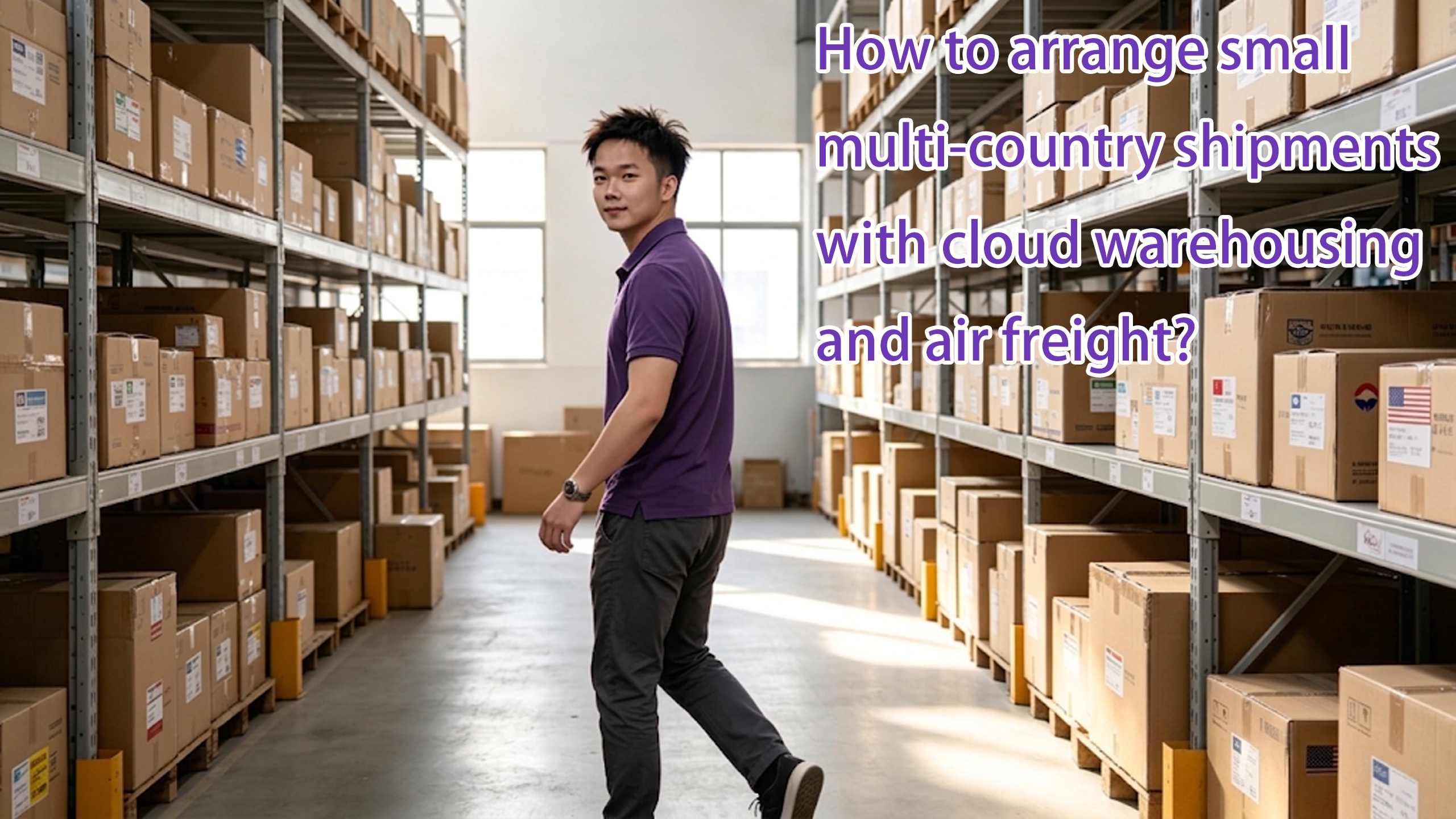
When there are few orders, the factory can still handle them on its own. When there are many orders, warehouse personnel have to repeatedly search for and ship goods every day. Put the finished product inventory in the cross-border cloud warehouse in advance, which will be managed by the warehouse, and then release it in batches according to customer orders, which can separate production and shipment processing.
1:Why are foreign trade orders not suitable for temporary shipments every time
One obvious characteristic of foreign trade small orders is the unstable quantity of goods per ticket. There may only be two cardboard boxes today, and ten more boxes of goods will arrive in a few days, with a different destination.
If temporary arrangements are made from the factory every time, warehouse personnel need to reconfirm inventory, packaging size, weight, and receiving information, and then search for suitable international logistics channels. The more scattered the order, the more repetitive the operation.
After the goods are consolidated into the cloud warehouse, they can first be stored and inventory registered. When will the customer place the order and pick the goods according to the order quantity for shipment. The factory only needs to hand over the completed goods to the warehouse, and then hand over the scattered shipments to the warehouse for processing.
2:Which foreign trade factories are suitable for cloud warehouse managed inventory
Not all factories require long-term use of overseas warehouses. For factories with variable order quantities but frequent need to send small batches of goods abroad, domestic cloud warehouses are actually more practical.
For factories with a large number of SKUs and a wide distribution of overseas customers, if they ship directly from the production workshop every time, it is easy to have inventory and orders mixed together.
Cloud warehouses can manage inventory by SKU, box count, and batch. After the customer confirms the order, the warehouse will ship according to actual needs. Goods without orders will continue to be stored and inventory will be called upon when shipment is required.
3:How to choose logistics channels for shipping small orders from multiple countries
There are differences in transportation efficiency, customs clearance requirements, and final delivery in markets such as the UK, Germany, France, the US, Canada, and Australia. When the cargo volume is small, arranging the entire batch transportation separately may not be cost-effective, and it is more suitable to choose the corresponding international dedicated line based on the destination and cargo attributes.
Another easily overlooked issue when shipping small orders is the chargeable weight. The actual weight of the goods is only a dozen kilograms, but when the outer box size is too large, the volumetric weight may be significantly higher than the actual weight.
So before the factory ships, it is best to provide the logistics party with the product weight, outer box size, number of boxes, and destination for calculation at once. Do not only inquire about the product name, otherwise the actual shipping price may differ significantly from the estimated price.
4:How to reduce the pressure on factory warehouses for scattered orders
Transferring the completed foreign trade inventory to the cloud warehouse can separate the finished products from the production process. The warehouse is responsible for inventory and outbound, while the factory continues to arrange production, eliminating the need to manually handle dozens of small packages from different countries every day.
When a customer has a new order, the warehouse picks, packages, and weighs the goods according to the order, and then selects the corresponding international logistics channel to send them out. For enterprises with long-term overseas small orders, this warehouse allocation method is easier to manage than temporary arrangements.
5:How to coordinate multiple international dedicated tax channels
The most important issue that needs to be addressed for scattered foreign trade orders is actually the problem of small quantities but multiple destinations. Taijia Logistics can match corresponding international dedicated line tax inclusive channels according to different countries and goods situations, so that factories do not need to search for new transportation methods every time an order comes.
The goods are first stored in the cloud warehouse, sorted and packaged after the order is generated, and then sent overseas through suitable dedicated channels according to the destination. For goods that require tax inclusive transportation, it is also possible to confirm whether they meet the corresponding channel requirements based on the specific product and destination.
If there is an increase in subsequent orders, Cloud Warehouse can continue to undertake inventory management and order forwarding. The factory is responsible for production and customer orders, the warehouse is responsible for goods, and logistics is responsible for international transportation. Each link does not need to be completely stored in the factory warehouse.
After the foreign trade orders truly grow, the test is not how many goods can be shipped at once, but whether dozens of small orders from different countries can still be shipped out in an orderly manner every day. Only by separating factory production and warehousing, and separating inventory and logistics, can factories allocate more energy to truly important customers and orders.
FAQ
Question: Is it suitable to store foreign trade orders in cloud warehouses?
Answer: Suitable for factories with scattered orders, multiple destinations, and frequent overseas shipments.
Question: Can cloud warehouse manage factory inventory?
Answer: Yes, after the goods are stored, they will be managed according to SKU and quantity, and they will be arranged for release when they need to be shipped.
Question: Can small batches of goods be shipped through the tax inclusive special line?
Answer: Confirmation is required based on the attributes of the goods, destination, and specific channel requirements.
SERVICE
Copyright © 2026 TakeSendShip. All rights reserved


