

Many small and medium-sized sellers use cloud warehouses not to hand over all procurement, inventory, orders, packaging, and logistics. Some sellers have already found suitable international logistics on their own, but they only lack a warehouse to assist with receiving, labeling, consolidating orders, and outbound. In this case, there is no need to directly choose full custody for several warehouse allocation operations.
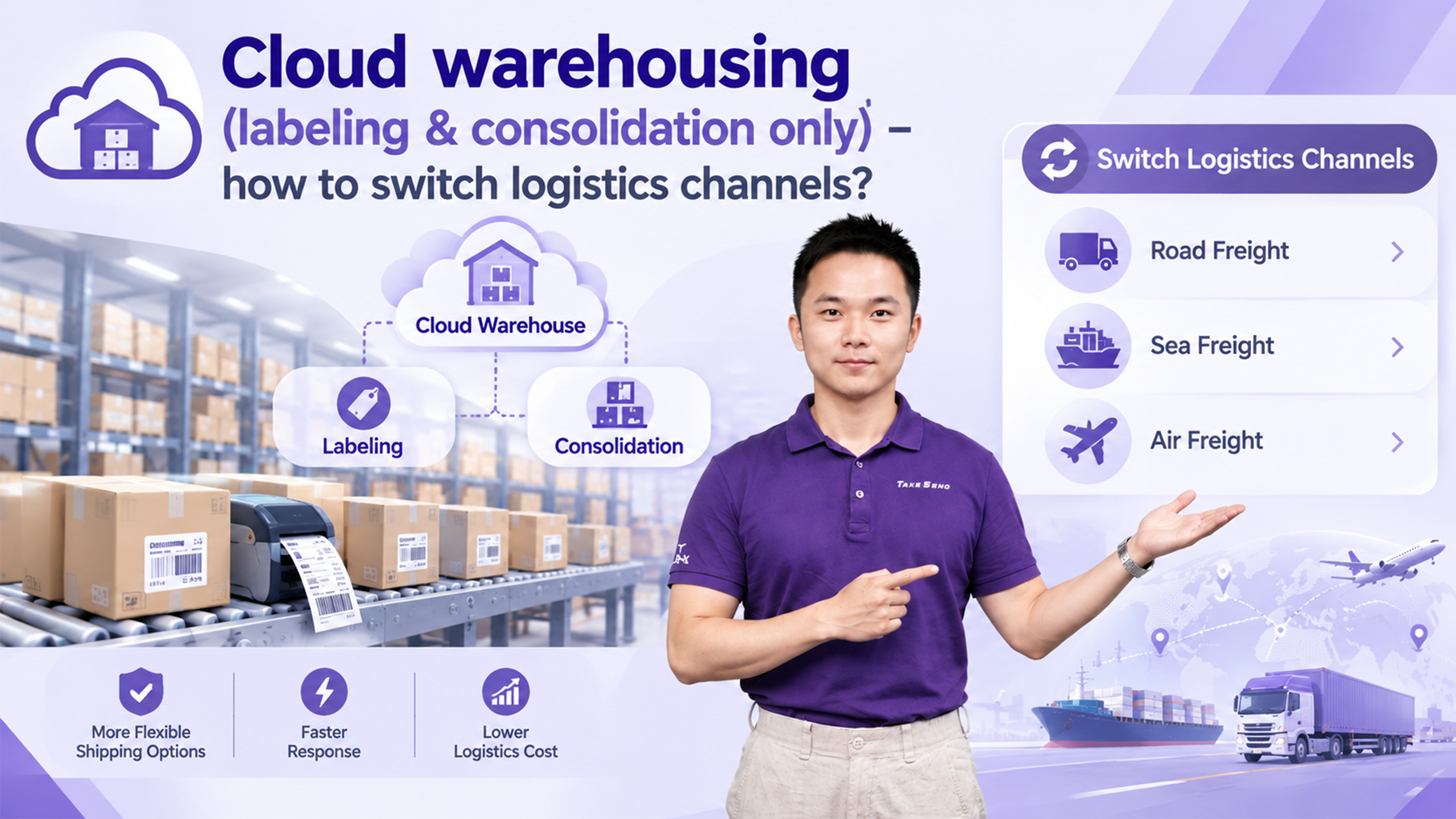
A more suitable approach is to treat the cloud warehouse as an operational node. After the goods enter the warehouse, they are counted and labeled with platform tags. Multiple small packages need to be merged into a single order, processed, and then handed over to the seller's designated international logistics channel.
In terms of operation, warehousing, handling, and transportation can be disassembled, and the seller still has the initiative in logistics selection.
1:Why don't small sellers necessarily need full custody?
Fully managed cloud warehouses are suitable for sellers who wish to outsource a large amount of warehouse allocation work, but not all stages require such complex services.
The inventory during the new product testing period may only be a few dozen pieces, and daily orders are also unstable. The seller may already have a fixed international logistics supplier, and only needs cloud warehouse to collect, label, and temporarily store the goods. If you purchase a complete warehouse and distribution service at this time, some projects may not be needed for a long time, which will actually increase costs.
For small foreign trade orders, independent website orders, and multi platform distribution, choosing services according to actual needs is more suitable. When there is a shortage of goods, do warehousing and basic operations, and then add dropshipping after the order increases, without the need to open all projects at once.
2:What problems do cloud warehouse labeling and consolidation solve respectively?
Labeling mainly solves the requirements of platforms or logistics for goods identification. When restocking on Amazon FBA, some products need to be labeled according to the shipping requirements, and the warehouse can operate based on the labels provided by the seller.
Combined orders are more suitable for scattered small packages. After multiple suppliers send the goods separately to the domestic warehouse, if each shipment is sent separately overseas, the shipping cost and number of operations will increase. The warehouse can first receive the goods, verify the information, and then merge them according to the destination and shipping plan.
After different factories or batches of goods arrive at the warehouse one after another, they can also be processed centrally according to the shipping plan to avoid arranging international transportation separately for each box of goods.
3:Why is it best not to bind logistics channels to cloud warehouses?
International logistics prices and delivery policies may change, and the suitable transportation methods for the same destination at different stages may also vary.
If the seller already has a stable logistics supplier, the cloud warehouse is only responsible for warehouse operations, and the goods can be handed over to the designated channel after processing. When it is necessary to change the carrier, there is no need to move the inventory again.
For orders sent to markets such as the United States, the United Kingdom, Germany, France, and Canada, different channels can be selected based on the weight, size, delivery time, and product attributes of the goods. What method is suitable for small orders and what method is suitable for large orders should be determined by actual transportation costs and channel requirements.
Here is a mailing experience worth remembering: when comparing logistics prices, don't just look at the price per kilogram. Volume weight, fuel surcharges, remote area fees, and end of pipe delivery may all affect the final shipping cost.
4:Under what circumstances is the labeling combined order mode particularly suitable?
Sellers with limited inventory and unstable order volumes but daily overseas shipping needs are very suitable for this approach.
Factory outsourcing is also a common scenario. After the production of the goods is completed, they will be sent to the cloud warehouse. After the customer confirms the order, labeling, consolidation, and outbound will be arranged. The factory does not need to handle scattered overseas packages every day, nor does it need to adjust the production warehouse specifically for a few orders.
5:How to do on-demand operations for cloud warehouses in a reasonable way?
Taijia Cloud Warehouse can choose warehousing, labeling, order consolidation, order forwarding and other operations according to the actual needs of sellers, without the need to default to a fully managed mode.
If the seller only needs to receive and temporarily store the goods, they can use warehousing services. When Amazon FBA labeling is required, additional labeling operations are added, and multiple packages need to be merged before being sent overseas, so a combined order is arranged.
The international transportation part can be chosen according to the destination and cargo situation, or multiple international logistics channels provided by Taijia Logistics can be used.
This combination method is more suitable for small and medium-sized sellers. The warehouse is responsible for warehouse work, while logistics is responsible for international transportation. Sellers decide how to ship based on actual orders, without having to give up their original logistics channels just because they use cloud warehouses.
Cloud storage does not necessarily require full hosting to be valuable. Removing unnecessary steps makes it easier to calculate warehouse and distribution costs.
FAQ
Question: Can Cloud Warehouse only do labeling?
Answer: You can choose a single operation based on the specific service items of the warehouse.
Question: Can multiple packages be combined and sent overseas?
Answer: Yes, it is necessary to confirm the attributes of the goods, destination, and contract requirements in advance.
Question: Do I have to use designated logistics after using Cloud Warehouse?
Answer: Not necessarily, you can confirm whether the designated logistics channel is supported based on the cooperation mode.
SERVICE
Copyright © 2026 TakeSendShip. All rights reserved


