

Many cross-border sellers, when looking for cloud warehouses for the first time, will directly ask a question: Is a shared warehouse cheaper and an independent warehouse more suitable for bulk production?
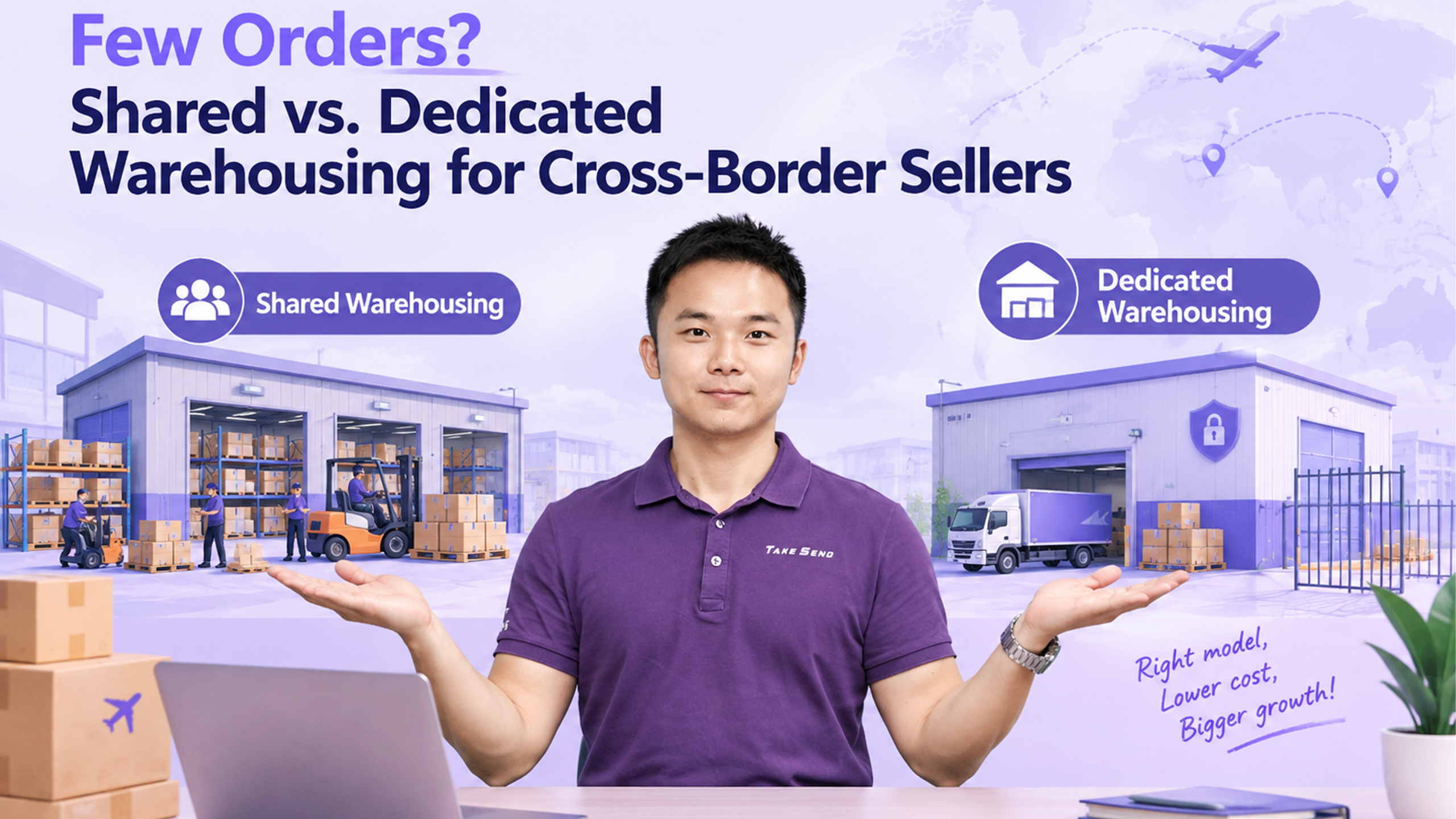
Actually, we can't just look at the size of the warehouse. What really needs to be compared are inventory levels, SKUs, daily orders, whether goods need to be classified and managed, and whether there will be FBA replenishment, label changes, unpacking, and multi platform shipping needs in the future. If you choose a larger position, leaving it empty is also a cost, and if you choose a smaller position, you will frequently change positions.
1:Why is a shared cloud warehouse more suitable when the order volume is not large
For sellers who are just starting out in cross-border e-commerce, their inventory is usually not particularly large, and their orders may only be a few to dozens of orders per day. At this stage, it is easy to rent a dedicated warehouse directly, and the warehouse rent, water and electricity, personnel, and daily management costs can be easily spread across each order.
The advantage of a shared cloud warehouse is that multiple customers share the warehouse infrastructure, but inventory can still be managed separately by customer and SKU. Sellers do not need to bear the fixed cost of a whole warehouse in advance for dozens of SKUs.
If the main needs are inventory, picking, dropshipping, posting, and packaging, shared warehouses are usually sufficient.
2:When do we need more independent storage space after the order and SKU are received
When the daily order volume significantly increases, SKUs expand from dozens to hundreds, and the types of goods become more complex, warehouse management methods need to change accordingly.
Sellers who operate multiple stores simultaneously may have different packaging, labeling, and shipping requirements for different channels. Mixing goods in one area will increase the time for manual searching, inventory, and review.
If a brand's inventory is already relatively stable and there are continuous shipments every day, the value of exclusive storage space begins to be reflected. Goods can be categorized by brand SKU、 Dividing batches and even sales channels into regions makes it easier to arrange replenishment and outbound.
3:Shared warehouses and exclusive warehouses cannot be compared solely based on warehouse rent
The unit price of a shared warehouse may seem low, but it still depends on how the costs of warehousing, storage, picking, packaging, labeling, etc. are calculated. Sellers with large order volumes may not necessarily save more than dedicated warehouses if each operation is charged separately.
The larger the exclusive warehouse, the better. If only a few hundred square meters are actually needed, but a larger area is rented at once, vacant space will also swallow up profits.
When comparing, you can directly calculate one account: monthly inventory, daily average orders, SKU quantity, inbound batch, outbound frequency, and then combine warehouse rent and operating expenses together. For sellers with obvious seasonality, it is also necessary to consider the changes in position during peak and off-season.
4:There are many types of goods, why is classified storage more practical than simply expanding the warehouse
The inventory of cross-border sellers is often not the same type of goods. The stocking and warehousing requirements for general merchandise, electrified products, nutritional supplements, accessories, and orders from different platforms may vary completely.
The biggest fear at this moment is that the warehouse looks very large but the goods are not partitioned. Finding goods is slow, inventory is difficult, and after sending the wrong SKU, it is necessary to reprocess returns and exchanges, which often results in higher costs than occupying more space.
So when choosing a cloud warehouse, it is advisable to consider the ability to classify goods before the size of the storage space. Being able to manage goods by their attributes and SKUs is more meaningful for sellers whose order volume continues to grow.
5:How to choose shared warehouse and separate warehouse for cross-border cloud warehouse
Taijia Cloud Warehouse can classify and store goods based on the seller's inventory size and business needs. Sellers with small order volumes can use shared storage to hand over inventory, picking, and dropshipping to cloud warehouses for processing, without having to bear the fixed costs of independent warehouses in advance.
If the brand has a large inventory, multiple SKUs, or if the goods need to be managed independently, a separate warehouse can also be chosen. Taijia Cloud Warehouse can provide separate warehouses according to actual situations, and eligible customers can also provide exclusive warehouses for free, subject to specific warehousing arrangements.
It is practical for foreign trade factories, Amazon sellers, independent websites, and multi platform sellers. The warehouse does not necessarily have to jump directly from shared to large-scale exclusive warehouses, and can be adjusted according to inventory changes in between. Requirements for classified storage of goods, inventory management, dropshipping, FBA replenishment, etc. can also be arranged separately.
Warehouse selection is actually similar to doing business, it's not about the larger the area, the better, but about making every square meter related to orders and inventory turnover.
FAQ
Q: Are small sellers suitable for sharing cloud warehouses?
Suitable, fixed warehouse rental pressure is lower when orders and inventory are small.
Q: Do we have to have a separate warehouse when there are too many orders?
Not necessarily, it needs to be judged based on SKU, inventory level, and operating frequency.
Q: Can Taijia Cloud Warehouse provide a separate warehouse?
Sure, eligible customers can choose a separate warehouse, subject to actual storage arrangements.
SERVICE
Copyright © 2026 TakeSendShip. All rights reserved


