

Cross border peak season cabin shortages, rising freight rates, and temporary inability to book suitable space can all result in a portion of the originally calculated profits being consumed by logistics costs. If all inventory is shipped out at once in order to grab cargo space, there may be inventory backlog in overseas warehouses and FBA.
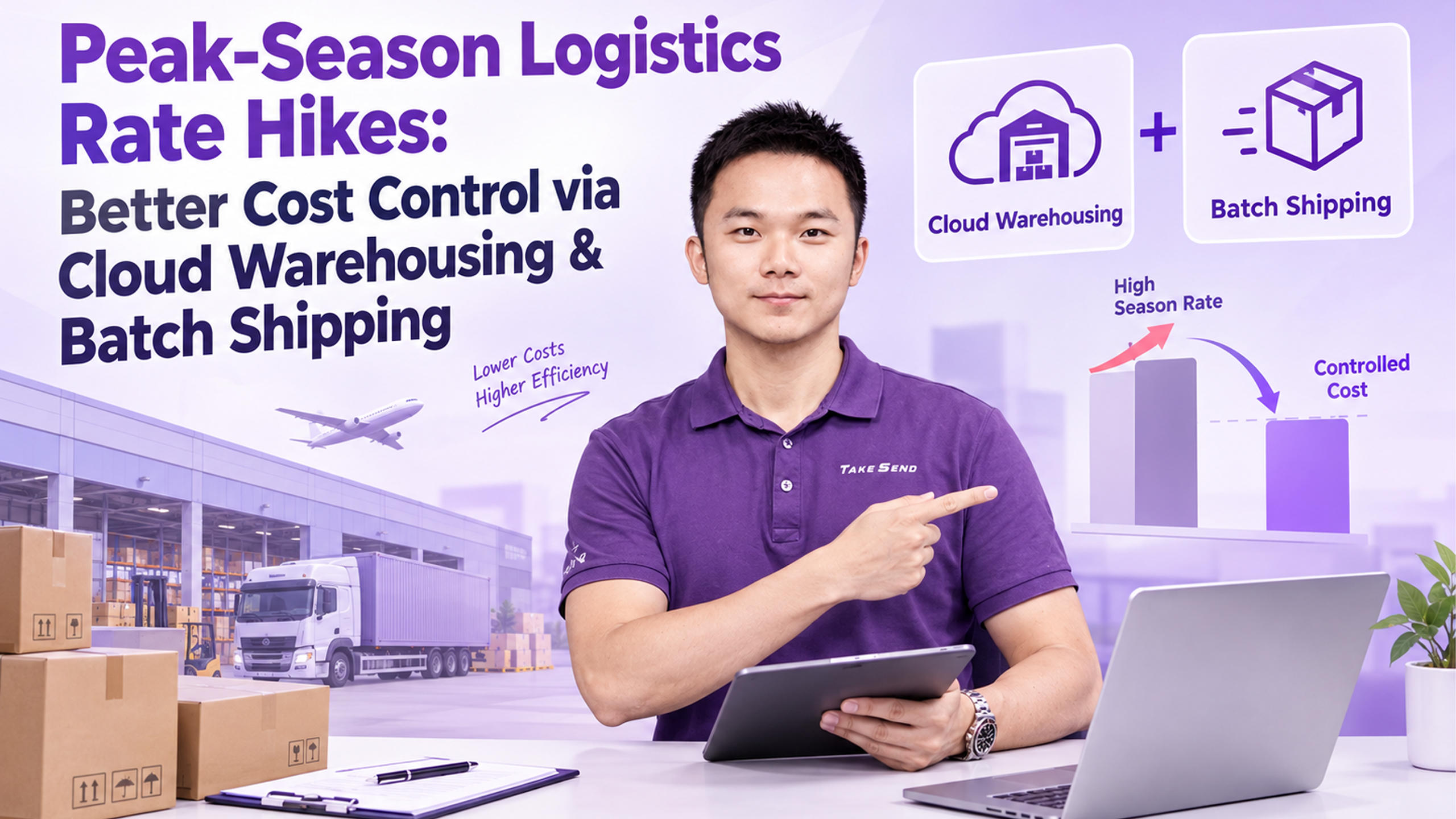
At this point, the stocking rhythm can be broken down. The goods that have been produced will first be temporarily stored in the domestic cloud warehouse, and the quantity and destination of the goods that need to be transported will be sorted out in advance. After the cabin space is confirmed, they will be shipped in batches according to the sales progress.
The advance preparation that needs to be prepared in advance, the inventory that needs to be waited for, remains in the country and does not require all goods to be shipped at the same time.
1:Why is it harder to arrange shipments as the peak season approaches
The logistics demand during peak season is concentrated, and cabin space and transportation resources will become tight. Booking is only started near a major promotion, and the selection space is often reduced, and the freight rate may differ from the previous inquiry.
If cross-border sellers also need to temporarily transfer goods from factories, time will be even more passive. Production completion, inspection, packing, vehicle search, and booking are all squeezed within a few days. Any delay in any link will result in subsequent plans being pushed back.
Sending the goods to the domestic cloud warehouse in advance allows for the completion of receiving, counting, measuring, and packaging preparation. When it is truly necessary to ship, there is no need to rearrange the goods from the production end.
2:Does storing the goods in the cloud warehouse in advance mean sending them all at once
No. The significance of domestic cloud warehouses lies precisely in leaving a buffer space for inventory.
Before the big promotion, it is possible to prepare the goods required for the expected sales in the domestic warehouse, but it is not necessary to send them all overseas at once. Priority will be given to the transportation of the parts with confirmed demand, and inventory with no clear sales rhythm will remain in China for the time being.
Amazon sellers can replenish inventory in batches according to the FBA inventory consumption rate. Independent sellers can arrange overseas warehouse stocking based on order growth. After receiving orders from overseas customers, foreign trade factories can also ship them in batches according to the delivery time.
The advantage of doing this is that the inventory will not be all stored in one place, adding an extra layer of buffer between domestic and overseas warehouses.
3:How to balance freight and delivery time for batch shipments
Batching does not mean shipping in small quantities each time, but rather determining when each batch of goods will depart based on inventory and transportation conditions. When the volume of goods is large, it is possible to lock in some transportation resources in advance, so that the goods to be sold can depart first.
The subsequent inventory will be arranged based on the actual sales situation. For orders with high timeliness requirements, corresponding air freight or commercial express delivery can be chosen. For restocking with less tight time requirements, a more suitable transportation method for bulk goods can be considered.
In actual accounting, storage fees and transportation fees should also be included together. If goods are stored in domestic warehouses for too long in order to save some transportation costs, storage fees will also increase.
4:What preparations should be made in advance when stocking up in cloud warehouses
For goods entering the cloud warehouse before the peak season, it is best to organize the SKU, number of boxes, weight of each box, and outer box size in advance. These data will directly affect the transportation plan during subsequent booking, inquiry, and arrangement of outbound shipments.
At the same time, the inventory of different platforms should be calculated separately. FBA replenishment inventory, independent station order inventory, and other platform stock cannot be mixed together, otherwise it is easy for one platform to urgently replenish while the inventory of another platform is occupied in advance.
After the warehouse completes partitioning and inventory recording in advance, the shipment plan can be directly picked, packaged, and released, and there will be much less temporary operations during peak seasons.
5:How to coordinate multi-channel shipping with peak season in cloud warehouse
The biggest taboo in peak season logistics is to put all goods on a single channel. Different countries, cargo volumes, and time requirements inherently require different modes of transportation.
After the goods are stored in the domestic cloud warehouse, corresponding international logistics channels can be selected according to the actual shipment plan. Orders that require timely delivery should be processed through faster delivery methods, while regular restocking should be done through channels with more suitable prices.
Taijia Logistics can combine Taijia Cloud Warehouse's inventory management and outbound requirements to arrange different international logistics channels. The seller prepares the goods in advance in the warehouse and decides which batch to go first based on changes in cabin space, inventory, and orders. There is no need to reorganize the goods from the factory every time the peak season approaches.
For small and medium-sized sellers, this approach does not necessarily mean that a complete set of warehouse distribution services must be added. Just need to store and stock, and add corresponding operations when labeling, packing, or order dispatch is required, so that the stocking pace can be adjusted according to actual sales volume.
The real thing to control during peak season stocking is not whether a certain shipment can grab the lowest freight rate, but whether the inventory in hand has enough room for adjustment.
The goods should be stored steadily in the domestic market, shipped when the cabin is suitable, and adjusted according to changes in sales volume. Only in the face of price and time fluctuations during peak seasons can we avoid being constrained by a single space table.
FAQ
Question: How long before the peak season does it take to put the goods into the cloud warehouse?
Answer: Based on the production cycle, sales forecast, and international transportation time, reserve transportation buffer in advance.
Question: Will shipping in batches increase costs?
Answer: It may increase storage and operation costs, which need to be calculated comprehensively based on freight rates, inventory cycles, and timeliness.
Question: Is FBA peak season replenishment suitable for wholesale?
Answer: It is suitable to arrange batches based on inventory consumption and transportation cycle to reduce one-time backlog.
SERVICE
Copyright © 2026 TakeSendShip. All rights reserved


