

The biggest fear for FBA sellers is not running out of stock, but having stock but no storage capacity in FBA warehouses. Nutritional product sellers face even more trouble in this situation, as inventory cannot be kept indefinitely in FBA, nor can they stop stocking due to insufficient storage capacity.
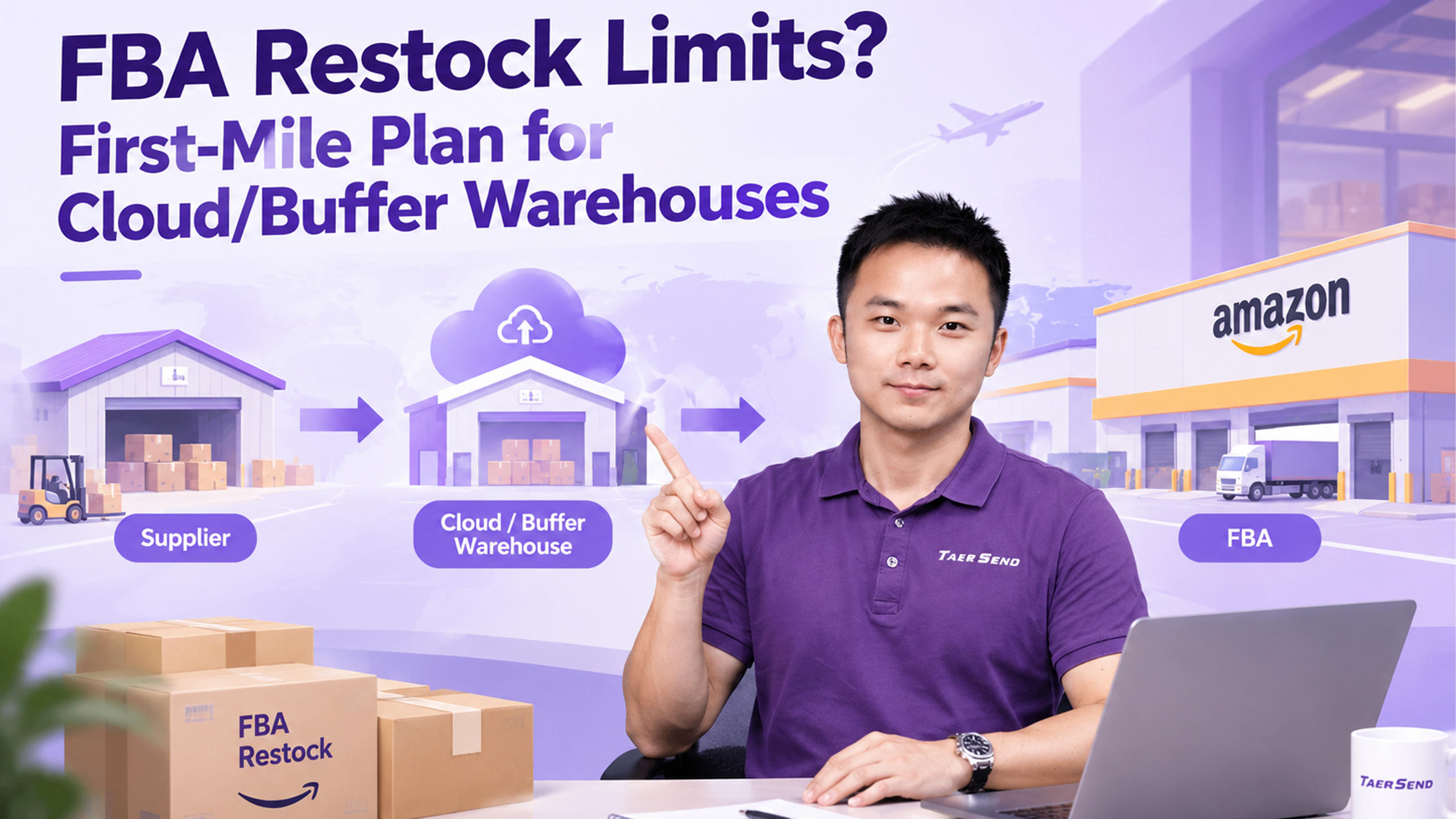
A more practical approach is to store a portion of the inventory in a domestic cloud warehouse, and then ship it out in batches according to FBA storage capacity and sales speed when replenishment is needed.
1:FBA storage capacity is limited, why is it easy to disrupt the replenishment rhythm
After FBA storage capacity is limited, sellers usually face a dilemma: sales are still ongoing, but they cannot send too many at once. Having too little stock can lead to stock shortages, while having too much stock leaves no place to store. Nutrients also need to consider batch and shelf life, and inventory management should not only focus on available quantities.
Many sellers used to have the habit of directly wholesaling FBA after factory production was completed. When the storage capacity is normal, the problem is not obvious. Once restrictions occur, the entire batch of goods may be stuck on the shipping schedule. The goods are left in the factory warehouse, occupying space and funds, and the sales end cannot replenish them in a timely manner.
FBA is responsible for front-end sales fulfillment, while cloud warehouse is responsible for temporarily storing replenishment inventory. Separate management of inventory on both sides, and adjust the replenishment pace accordingly when FBA storage capacity changes.
2:Why do nutrition product sellers need a buffer warehouse more
There is a special situation in nutritional inventory management: it cannot only calculate how many boxes are left, but also depends on the batch, expiration date, and sales speed. If the sales of a certain SKU suddenly increase and need to be replenished quickly, while the sales of another SKU slow down, there is no need to continue to push inventory into FBA.
Put some inventory into Taijia Cloud Warehouse and manage it according to SKU, batch, and quantity first. How much FBA needs to replenish, then select the corresponding quantity from the buffer inventory and arrange for the first shipment. Inventory does not need to enter FBA all at once, reducing inventory pressure on the warehouse side.
This approach is also suitable for multi store operations. A brand may have multiple Amazon sites or SKUs at the same time, and the replenishment time may not be completely consistent.
After the inventory is centralized in the cloud warehouse, it can be processed in batches according to actual orders and replenishment plans, rather than having each sales end pre load a large quantity of goods.
3:How should FBA replenishment be split into batches so as not to make it more chaotic as the replenishment continues
Dismantling is not simply dividing a batch of goods into several boxes. More importantly, it is calculated based on sales speed, existing FBA inventory, in transit inventory, and cloud warehouse inventory. High sales SKUs can be prioritized, while SKUs with slow turnover will have a reduced frequency of entering FBA.
Nutrients also need to include shelf life in inventory arrangements. When there are different production batches for the same SKU, the warehouse shipment order needs to be set in advance to avoid sending out new batches first and keeping old batches in the warehouse for a long time.
The first journey may not necessarily be fixed in one way. When the replenishment quantity is large, a transportation channel suitable for bulk goods can be used, and for temporary gaps, a channel more suitable for small batch replenishment can be selected. Using different transportation methods for different batches actually makes it easier to control the replenishment pace.
4:How to choose FBA first leg, you can't just focus on the unit price
The cost of FBA first mile logistics cannot be solely based on the kilogram price on the quotation sheet.
The weight of the goods, container specifications, destination warehouse, customs clearance requirements, transportation time, and whether labeling is required will all affect the final cost. Nutrients also need to confirm the attributes of the goods and the scope of channel transportation in advance.
When FBA storage capacity is limited, the first leg selection also needs to be coordinated with the replenishment plan. When there is sufficient inventory, regular replenishment can be arranged in advance. If there is a temporary shortage of inventory, faster transportation methods need to be considered. Only in this way can the cloud warehouse buffer inventory truly play a role.
Sellers can organize the goods information in advance, including SKU, number of boxes, weight of each box, size, destination FBA warehouse, and product attributes, and then select the channel based on the actual replenishment batch.
5:How to do FBA replenishment buffering in cloud warehouse
Taijia Cloud Warehouse can serve as a domestic inventory buffer warehouse outside of FBA. After the goods are received, inventory management is carried out, and picking, review, packaging, labeling, and outbound are completed when replenishment is needed.
When the FBA storage capacity changes, sellers can adjust the shipment quantity according to actual needs, without the need to send all inventory to FBA at once.
In terms of first leg logistics, TakeSend provides multiple FBA first leg logistics channels that can be selected based on destination country, cargo volume, delivery time, and cargo attributes. Different replenishment batches can use different channels to avoid all goods being bound to the same transportation method.
For nutrition product sellers, what they really need to pay attention to is where the inventory is placed, when it is shipped, and how much is shipped at once. Cloud warehouse is responsible for buffering inventory, FBA is responsible for sales fulfillment, and first mile logistics is responsible for delivering replenishment inventory to the target warehouse. After separating the three, the replenishment plan will be easier to adjust according to changes in sales volume.
Frequently Asked Questions
Q: FBA storage capacity is not enough, can we put all the inventory in the cloud warehouse?
It can be used as a buffer inventory management, but the quantity should be arranged based on sales volume, shelf life, and subsequent replenishment plans.
Q: When is the most suitable time to send FBA for cloud warehouse inventory?
Based on changes in FBA inventory, sales volume, in transit cargo volume, and storage capacity, it is not recommended to rely solely on a single indicator.
Q: Can FBA first leg customers freely choose channels based on each batch of goods?
You can choose the appropriate FBA first leg channel based on cargo volume, destination, delivery time, and product attributes.
SERVICE
Copyright © 2026 TakeSendShip. All rights reserved


