

When the same product is sold on Temu and Amazon at the same time, the real trouble often lies not in production but in shipping once the stocking volume increases.
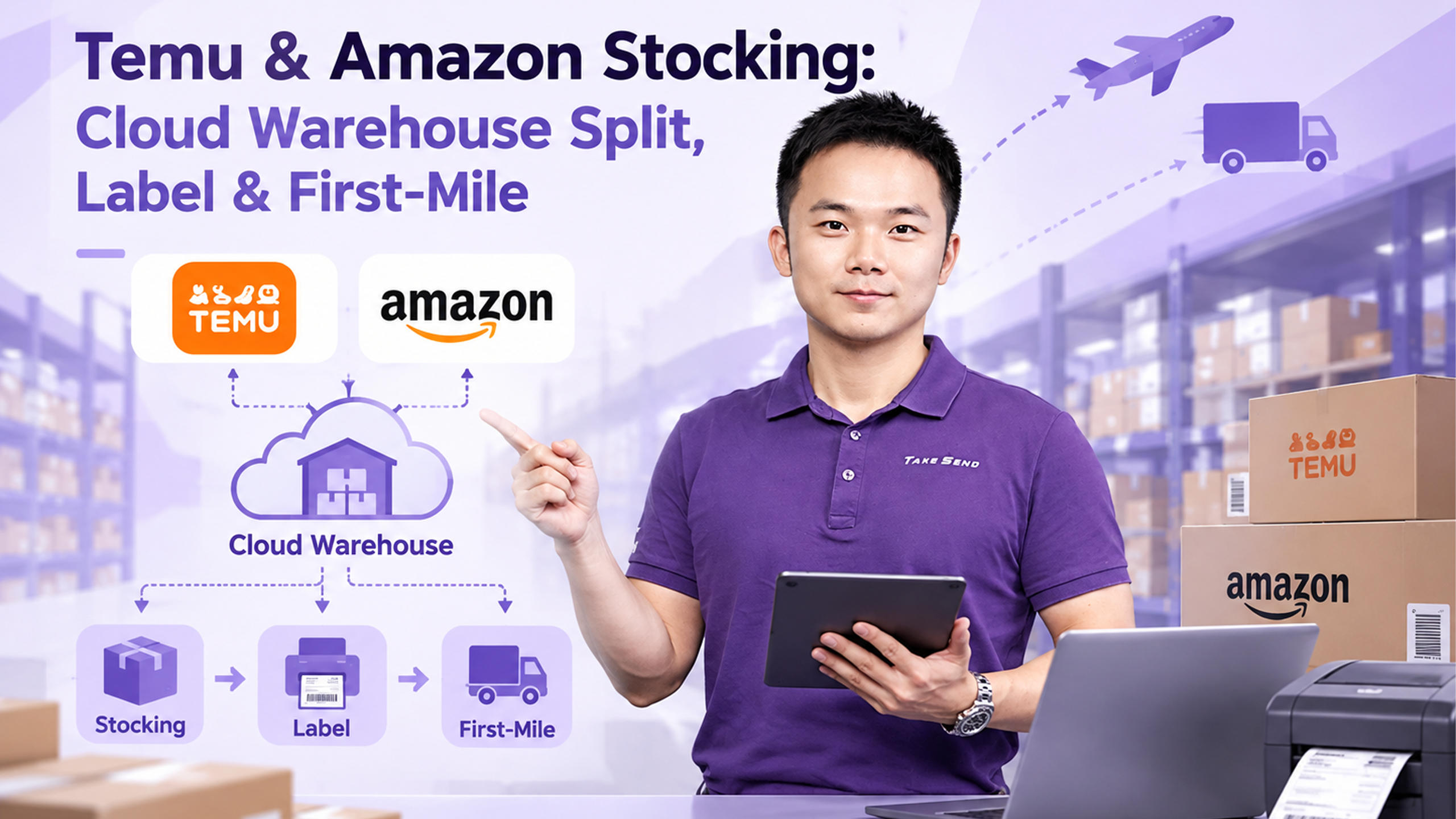
The warehousing requirements, labels, box specifications, and replenishment pace of the two platforms may be different. If a batch of goods is directly mixed and processed from the factory warehouse, it is only discovered during the packaging process that they need to be unpacked and labeled again, which can easily increase labor costs.
Dual platform stocking is more suitable for managing inventory and platform shipments separately. The goods first enter the cloud warehouse, and then are divided into boxes, labeled, and packaged according to the orders and warehousing requirements of different platforms, and finally matched with suitable first mile channels.
1:Why is it easy to send the wrong goods when Temu and Amazon stock up at the same time
When operating on dual platforms, the same SKU may have two sets of shipping requirements. Amazon FBA restocking needs to be processed according to the corresponding shipment, and Temu's warehousing or fulfillment requirements may vary.
If warehouse personnel only search for goods by product name without distinguishing platform orders, the risk of mislabeling and mixing boxes will increase.
Another common situation is that the same batch of production goods is supplied to two platforms simultaneously. The factory is only responsible for producing the goods, but the subsequent number of boxes, box labels, platform labels, and destination warehouse information are not the same. When there are few orders, they can still be manually processed, but when there are many orders, it is easy to get busy.
2:What specific solutions can be achieved by stocking goods on dual platforms and placing them in cloud warehouses
After the goods enter the cloud warehouse, they can be processed according to the platform SKU: Manage inventory for batches and orders. How many boxes does Temu need, how many boxes does Amazon need, and the warehouse picks them separately according to the corresponding tasks, without the need for the factory warehouse to recheck and sort them every day.
For sellers who operate multiple sites simultaneously, this method is also quite convenient. Replenishment orders from different countries can be processed separately, with inventory stored in a centralized manner, and actual shipments can be divided into boxes according to the destination.
If there are subsequent changes in sales, there is no need to send out all the inventory at once. When Amazon's storage capacity is tight, ship less, and when Temu orders increase, add corresponding batches. The remaining goods will remain in the cloud warehouse waiting for the next replenishment.
3:What is the most common problem with box labeling
The most prone to errors is not the labeling itself, but the mismatch between the label and the actual goods inside the box. SKU: If there is a mistake in the quantity, number of boxes, platform, and destination warehouse, there may be abnormalities in subsequent warehousing.
So before dividing the boxes, it is necessary to confirm the platform order information first, and then pick, review, and pack according to the tasks. After printing the labels, they should not be randomly pasted in bulk. Instead, the labels should be associated with specific box numbers.
For sellers with a large number of SKUs, artificial memory is not reliable. The warehouse system can generate operational information based on order tasks, and warehouse personnel can process them accordingly, resulting in a much lower probability of errors.
4:Should we also choose different platforms for the first leg logistics
Not every batch of goods may use the same first leg method. Amazon restocking may need to consider the FBA warehousing rhythm, while Temu goods will choose transportation channels based on actual destinations and warehousing arrangements.
When the volume of goods is large, channels suitable for bulk transportation can be considered. If the temporary replenishment quantity is not large, a more suitable method for small batch goods can be chosen. It is also necessary to judge based on the box specifications, weight, destination warehouse, and delivery requirements, and not simply compare the quotation per kilogram.
If the seller ships to multiple countries at the same time, the cloud warehouse can first sort the goods and then unpack and ship them according to the destination. Inventory, platform processing, and international transportation are independent, making subsequent adjustments more convenient.
5:How to handle Temu and Amazon dual platform stocking in cloud warehouse
Taijia Cloud Warehouse manages inventory and orders through a warehouse management system, which can arrange picking, boxing, label printing, packaging, and outbound according to the task requirements of different platforms. Sellers do not need to have factory employees repeatedly learn the operational requirements of different platforms. The warehouse can execute the corresponding tasks accordingly.
When Temu and Amazon have replenishment needs at the same time, corresponding processing tasks can be generated separately. What labels need to be affixed, how many pieces to pack, how many boxes to divide, and then execute according to the actual order. After completing the warehouse operations, select the first mile logistics channel based on the attributes of the goods, destination, weight, and delivery time.
Taijia Logistics provides multiple cross-border first leg channels, and sellers can freely choose according to the actual situation of each batch of goods. The order structure has changed, and there is no need to fix all goods on the same transportation method.
For sellers who operate on dual platforms, multiple SKUs, and multiple countries, the warehouse is responsible for separating the goods clearly, and the logistics is responsible for sending them out, making the entire process easier to manage.
FAQ
Q: Can Temu and Amazon inventory be stored in the same cloud warehouse?
Sure, manage by platform, SKU, and order task classification.
Q: Can Cloud Warehouse do platform labeling on behalf of others?
Sure, label printing, boxing, and packaging can be done according to the actual order requirements.
Q: Do dual platform stocking have to use the same first leg channel?
No need, you can choose according to destination, cargo volume, delivery time, and platform requirements separately.
SERVICE
Copyright © 2026 TakeSendShip. All rights reserved


