

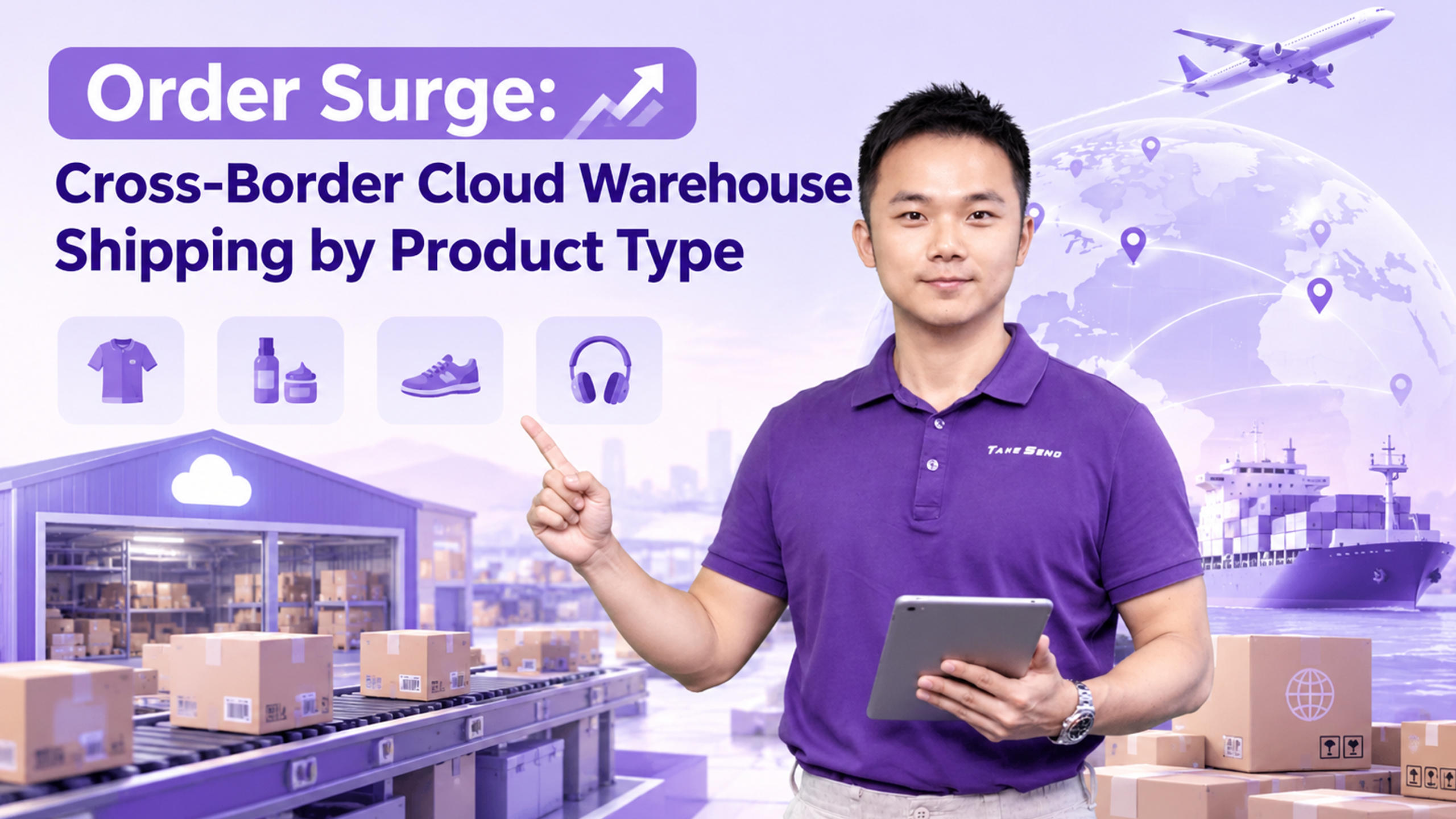
Cross border sellers are most easily disrupted by explosive orders, not because there are too many orders, but because orders from different platforms flood in together.
Amazon: Temu: TikTok Shop: Independent websites and even foreign trade customer orders are increasing at the same time, and there are general goods, electrified products, and sensitive goods in the same warehouse. The receiving requirements vary from country to country.
If we still rely on manual order by order judgment, what really consumes time is sorting and selecting logistics. Where to send the goods, what channels to use, and how to package them will soon become new bottlenecks in the warehouse.
1:Why is it easy for manual order splitting to make mistakes when orders suddenly surge
Normally, there are dozens of orders per day, but manual processing can still handle them. When encountering promotional activities or sudden surge in orders for new products, with hundreds or even more orders per day, warehouse personnel not only face an increase in quantity, but also a change in order structure.
The same SKU may appear in both Amazon and Temu orders, but the platform processing requirements are not exactly the same. In addition, destinations such as the United States, the United Kingdom, Europe, and Southeast Asia are mixed together, and if you only queue up for shipment according to the order time, the logistics choices in the later stages are easily unable to keep up.
The truly efficient way to split orders is not to simply distribute them evenly among a few employees, but to first divide the platform, country SKU: Distinguish between the attributes of the goods and the shipping requirements.
2:What should be divided into cross-border cloud warehouse intelligent order splitting
A mature split order logic requires at least four factors to consider: which platform the order comes from, what type of goods it belongs to, where the destination is, and what transportation channel this shipment is suitable for.
General goods can be processed through regular international small packages or dedicated lines, while live products need to be matched with corresponding shipping channels. Sensitive goods such as food and nutrition products need to confirm the shipping scope in advance. Different goods cannot be packed into the same logistics channel just because they are ordered from the same store.
Sellers with large order volumes can also split them again according to time requirements. Urgent replenishment orders should be prioritized for faster processing, while regular orders should choose channels with more suitable costs. The warehouse is responsible for sorting the orders clearly, and the logistics end will ship them according to the conditions.
3:Why does inventory have to be divided along with orders when there are multiple platforms with explosive orders
Many sellers only focus on order diversion, but neglect inventory management. If Amazon, Temu, and independent sites share a set of inventory records, there may be a deviation between the actual available quantity in the warehouse and the displayed quantity on the platform, which could result in oversold or out of stock.
Cloud warehouses are more suitable for unified management of SKUs, batches, and available inventory. After the order is received, it is deducted from the same inventory pool and corresponding warehouse tasks are generated based on different platforms.
There is another benefit to doing this: if a platform suddenly experiences a decline in sales, inventory can be transferred to other sales channels without the need to move the goods back to the factory.
For small and medium-sized sellers operating on multiple platforms, this scheduling method is more space saving than separately preparing a set of inventory for each platform.
4:Is it easier to mess up warehouses with more global logistics channels
On the contrary, what is really prone to problems is having multiple channel options but no rules.
The warehouse needs to establish basic judgment conditions in advance. Which channels correspond to the destination country, weight range, cargo attributes, timeliness requirements, and platform requirements? After the system screens based on the conditions, warehouse personnel execute the corresponding tasks.
In this way, logistics selection no longer relies on the last-minute judgment of a certain employee. After the order enters the system, it is first grouped according to the conditions, and then the channel that meets the requirements is selected. When encountering a suspension of receiving goods or price changes in a certain channel, you can also switch to other available channels.
5:How to handle multi platform explosive orders and traffic diversion in cloud warehouse
Taijia Cloud Warehouse supports one-stop shipping of orders from various platforms, package splitting and merging, packaging and labeling services, and can be integrated with mainstream ERP systems through logistics systems.
In practical operation, sellers can centralize their inventory and hand it over to cloud warehouse management. After the order enters, according to the platform SKU: Generate corresponding processing tasks for destination and goods type, and then complete picking, review, packaging, and outbound. Different orders do not need to use the same logistics method for all.
TakeSend itself integrates multiple transportation methods such as international postal, international express, and international dedicated lines. Standard package information shows that there are currently over a hundred logistics products and services, covering international parcels, international express, international EMS, international dedicated lines, and FBA first leg.
Explosive orders themselves are a good thing, but what really tests the warehouse is whether it can accurately deliver each shipment to the corresponding shipping process after a sudden increase in orders. Once the sorting is clear, the subsequent warehousing, packaging, and international transportation will not be hindered by each other.
FAQ
Q: Can multi platform orders be stored in one cloud warehouse?
Sure, manage by platform, SKU, and item type separately.
Q: Can different logistics channels be automatically matched after a surge in orders?
Suitable channels can be selected based on order conditions before arranging shipment.
Q: Can general goods and sensitive goods be managed together?
Sure, but the warehousing and shipping processes need to be distinguished and processed according to the attributes of the goods.
SERVICE
Copyright © 2026 TakeSendShip. All rights reserved


