

When many cross-border sellers choose cloud warehouses, the first thing they see is the storage unit price. At the end of the month, it was discovered that warehouse rent was only a part of it, and operations such as warehousing, picking, packaging, labeling, changing labels, and dividing boxes may also affect the final cost.
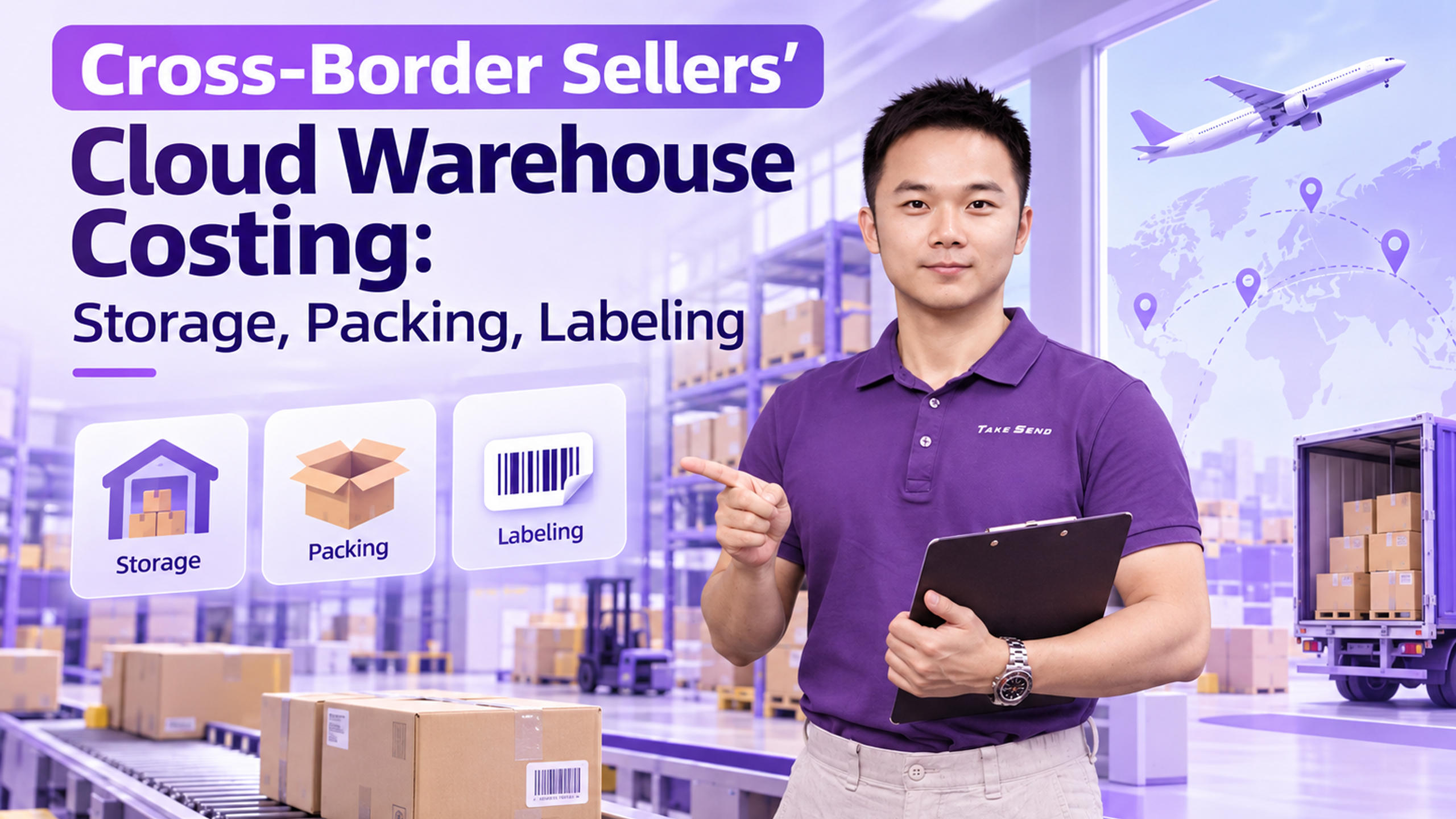
Sellers on multiple platforms such as Amazon, Temu, TikTok Shop, etc. have a large number of SKUs and fluctuating orders. If only one warehouse quote is compared, it is easy to miscalculate.
1:Why is the cloud warehouse quotation different from the actual bill?
Cloud warehouse fees are usually not calculated solely based on inventory quantity. The seller needs to first clarify how the warehouse charges, and then confirm whether the inbound and outbound operations are charged separately.
For example, when a batch of goods enters a warehouse, it may involve unloading, counting, quality inspection, and shelving. After the order is released from the warehouse, there may be operations such as picking, reviewing, packaging, and labeling.
If the goods need to be re labeled on the platform, or if an order needs to be split into multiple packages, the cost structure will change again.
So when looking at cloud warehouse quotes, you can't just ask how much it costs per cubic meter or per pallet, but should also check each item with a complete list of charging items.
2:What operations are most likely to be missed by sellers?
The storage cost depends on whether it includes counting, quality inspection, photography, shelving, and other related work.
The storage fee needs to be confirmed by the billing unit, whether it is calculated based on volume, pallets, storage location, or actual inventory cycle, and it is also necessary to inquire whether there is a minimum charge.
The outbound operation depends on whether picking, reviewing, and packaging are charged separately. Once the order volume increases, this part can easily become the main cost.
There are also several items that are easily overlooked, such as labeling, changing labels, dividing boxes, combining boxes, and changing packaging. If a SKU has only a few orders per day, the single ticket handling fee may not be significant. At a daily average of several hundred orders, the difference will be magnified.
For multi platform sellers, it is also necessary to confirm the processing methods for orders on different platforms. Amazon restocking, independent site orders, and other platform orders may have different requirements for packaging and labeling, and cannot rely solely on a unified shipping unit price.
3:How to determine whether the cloud warehouse quotation is expensive or not?
The most practical method is not to compare a storage unit price, but to calculate it based on one's actual business. Assuming the seller enters 100 boxes per month, has 2000 items in stock, and sends 100 orders per day, the cost can be divided into:
Warehousing Storage Picking Packaging Labeling/Labeling Special Operations International Logistics
Compare different cloud warehouses item by item.
If a warehouse has low storage fees but high prices for labeling, container sorting, and other operations, the actual monthly cost may not be low. On the contrary, some warehouse quotations may seem ordinary, but the basic operations involve more items, making settlement easier to control.
4:What kind of seller is more suitable for calculating expenses in detail?
Sellers who conduct new product testing, experience significant inventory fluctuations, have a large number of SKUs, or operate multiple platforms simultaneously should pay more attention to operating costs.
These types of sellers find it difficult to maintain fixed inventory and order volumes in the long term. If the cloud warehouse can provide services such as short-term inventory management, incoming quality inspection, one-stop order shipping, unpacking and repackaging, repackaging, and labeling, then some of the warehouse work can be handed over to the warehouse for processing.
Taijia Cloud Warehouse currently provides 60 days of free warehousing, as well as one-stop shipping for orders on various platforms, package splitting and merging, packaging, labeling, product quality inspection, and photography services. The specific cost should still be confirmed based on the goods and actual operational items.
If the seller needs to send FBA, overseas warehouse, or orders from different countries at the same time, the logistics channel fees should be separately included. Taijia Cloud Warehouse can provide dropshipping services according to export logistics needs, with logistics channels covering international parcels, international express delivery, international EMS, international dedicated lines, and overseas warehouse/FBA first leg products.
5:Before placing an order, please clarify these 6 items to avoid a lot of trouble later on
What unit is charged for warehousing?
Is there a charge for inventory counting and quality inspection?
Are picking and packaging calculated separately?
How do I charge for pasting, labeling, and changing labels?
Is there any additional cost for dividing, consolidating, or changing packaging?
Is the cost of international logistics channels independently accounted for?
What Cloud Warehouse really needs to compare is the complete cost of a batch of goods from entry to exit, rather than a warehouse rental number on the quotation.
FAQ
Q: Is it better to have lower cloud storage fees?
Not necessarily, it needs to be calculated together with inbound, outbound, and value-added operations.
Q: How to account for multi platform sellers?
Calculate based on different platform order volumes and actual warehouse operations.
Q: What should be confirmed before choosing a cloud warehouse?
Clarify each item of warehousing, storage, picking, packaging, labeling, and special operations.
SERVICE
Copyright © 2026 TakeSendShip. All rights reserved


