

The biggest fear during the annual big promotion period is not the large number of orders, but the sudden influx of orders, which makes it difficult for the warehouse to keep up with the picking and labeling, and the normal logistics channels begin to be emptied.
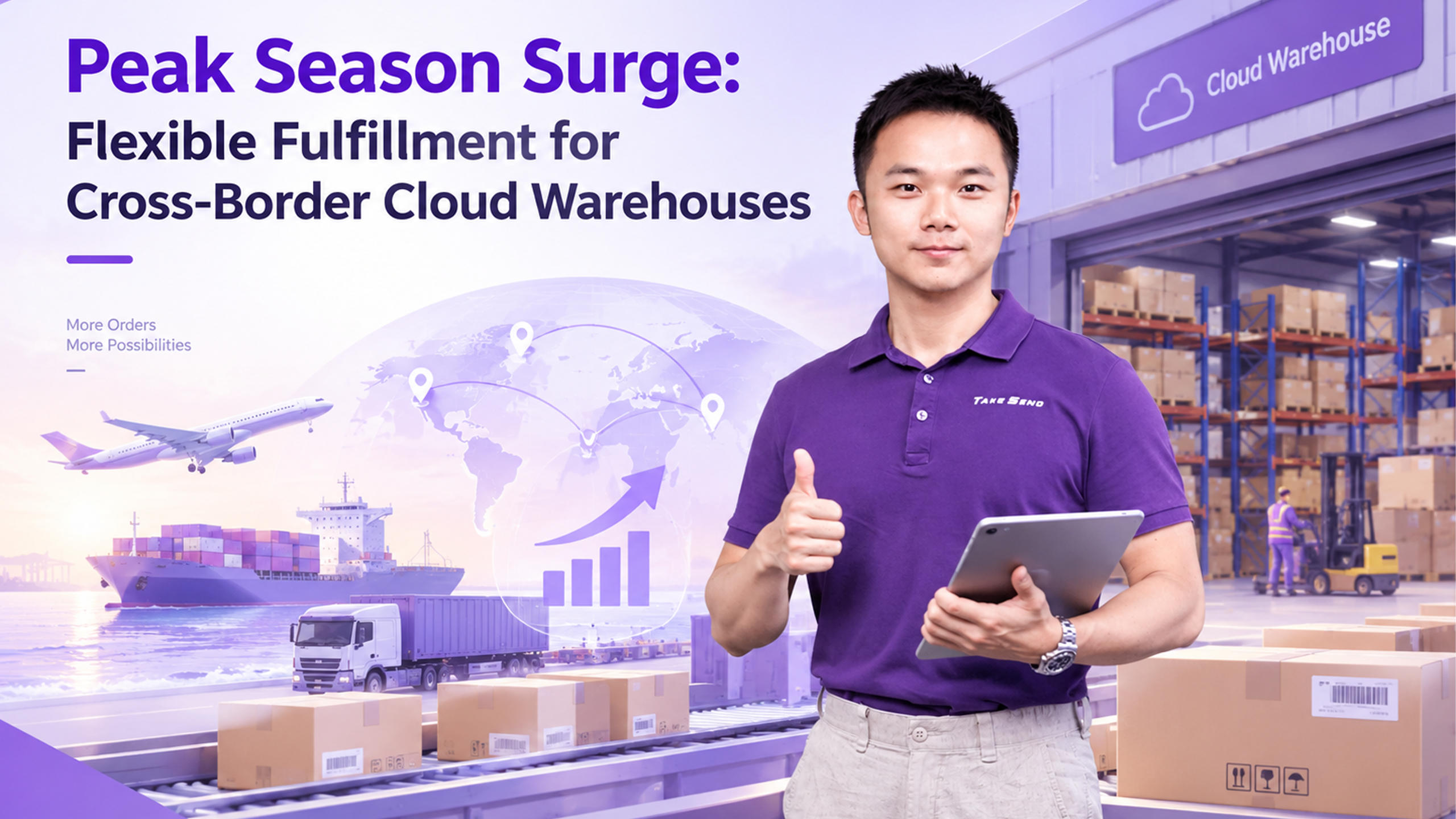
Sellers see an increasing number of orders in the backend, but the warehouse can only send out a fixed quantity per day, and delays often occur in this way.
For sellers on multiple platforms such as Amazon, Temu, TikTok Shop, and independent sites, stocking up during peak season should not only consider whether inventory is sufficient, but also whether warehouses can quickly handle sudden increases in orders and how to quickly separate goods from different destinations.
1:Why does the cloud warehouse need to have flexible outbound capabilities when orders skyrocket during the big promotion?
Normally, there are 100 orders per day, but during peak season, it may suddenly become 300 orders or even more. If the cloud warehouse can only handle according to the usual operating rhythm, there will be backlog in picking, reviewing, packaging, and pasting orders.
The cloud warehouse that is truly suitable for the peak season is not simply placing more inventory, but being able to adjust the outbound pace according to changes in order volume.
After consolidating orders from multiple platforms, the warehouse picks them according to SKUs and processes them separately based on the platform, destination, and shipping requirements to reduce the risk of misdelivery caused by mixing different orders together.
The seller also needs to confirm the scope of warehouse operations in advance. If tasks such as placing orders, pasting orders, labeling, dividing boxes, combining boxes, and changing packaging all require temporary manual handling, it is easy to create bottlenecks during major promotions.
2:Why can't all orders go through the same channel when there are multiple platforms with explosive orders?
One of the biggest changes in big promotion orders is that the sources and destinations of orders have become more complex.
Amazon FBA restocking needs to consider platform warehouse requirements, while independent site orders focus more on buyer delivery time. Orders from platforms such as Temu and TikTok Shop may have different labels and shipping requirements. Pack all orders according to a standard and hand them over to a single logistics channel, as peak season risks will be concentrated in one place.
A more prudent approach is to separate inventory and orders in advance. Select channels for US orders based on the attributes and timeliness requirements of the goods, handle European orders separately, and separate FBA replenishment from regular B2C orders. For example, when there is a backlog or time fluctuation in a certain channel, transfer eligible orders to other channels.
3:Cloud warehouse elastic outbound, the key is to stratify inventory and orders in advance
Don't wait until orders surge during peak season to start adjusting. Inventory can be divided into daily shipping inventory, platform replenishment inventory, and temporary buffer inventory in advance.
For example, a product usually sells 100 pieces per day, and before the big promotion, the cloud warehouse inventory can be arranged based on historical sales and current order situation. When there is a sudden increase in orders, the cloud warehouse directly picks up goods from the stock and ships them out, without having to wait for the factory to ship each order again.
For sellers with a large number of SKUs, the warehouse also needs to keep good inventory records. Which products belong to Amazon, which products are used for independent sites, and which orders require platform labels? By distinguishing in advance, the processing speed during the big promotion period will be much faster.
4:How to divert multiple logistics channels to avoid becoming more chaotic?
Having multiple channels does not mean switching randomly. What is truly useful is to classify orders in advance based on the goods, destination, weight, and delivery requirements.
For example, for light and small items, you can choose the corresponding small package or international dedicated channel, and for orders with high time requirements, consider international express delivery. FBA first leg, regular e-commerce orders, and sensitive goods orders cannot be simply processed together.
Cloud warehouse is responsible for organizing orders and goods clearly, and the logistics end arranges suitable channels based on actual conditions. The advantage of doing this is that when there is congestion in a certain channel, the seller still has room for adjustment and does not need to wait for the entire batch of goods together.
5:What sellers should pay more attention to during peak season is whether warehouses can switch quickly
If the seller rents their own warehouse and suddenly adds temporary personnel, printing equipment, and packaging consumables during the big promotion period, the management pressure will significantly increase. For small and medium-sized sellers with significant order fluctuations, placing a portion of their inventory in a cross-border cloud warehouse can allow the warehouse to handle warehousing and order processing.
Taijia Cloud Warehouse provides services such as warehouse quality inspection, inventory management, one-stop shipping for orders on various platforms, package splitting and merging, packaging, labeling, product quality inspection, and photography. For sellers with significant changes in order volume during the big promotion period, cloud warehouses can be used as a domestic inventory buffer and order processing node.
In terms of logistics channels, Taijia Logistics currently has over a hundred logistics products and services, covering international small packages, international express delivery, international EMS, international dedicated lines, as well as overseas warehouses, FBA first leg and other businesses.
For sellers who need to flexibly ship according to different orders, Taijia Cloud Warehouse can adapt to hundreds of logistics channels. Users can freely choose the appropriate channel based on the characteristics of the goods, destination, and timeliness requirements, instead of putting all peak season orders on a single channel.
Pre planning inventory for major promotions, timely diversion of orders, leaving room for channel replacement, and avoiding being stuck in warehouses or transportation during peak season when orders surge.
FAQ
Q: What can cloud warehouse solve when peak season orders suddenly double?
We can handle inventory, picking, packaging, labeling, and order forwarding, reducing the pressure on sellers to temporarily expand their warehouses.
Q: Can a logistics channel be temporarily changed if it is unstable?
When the goods and transportation conditions are met, other channels can be re selected based on the destination, delivery time, etc.
Q: Is it suitable for multi platform sellers to use cross-border cloud warehouses?
Sellers with large order fluctuations, multiple SKUs, and multiple platforms operating simultaneously are more suitable for processing inventory and orders through cloud warehouses.
SERVICE
Copyright © 2026 TakeSendShip. All rights reserved


