

After returning to China from cross-border returns, the biggest fear is not that there will be an additional batch of returns, but that this batch of goods will not be judged or organized, and will eventually be mixed with normal inventory. Over time, it may become a total loss.
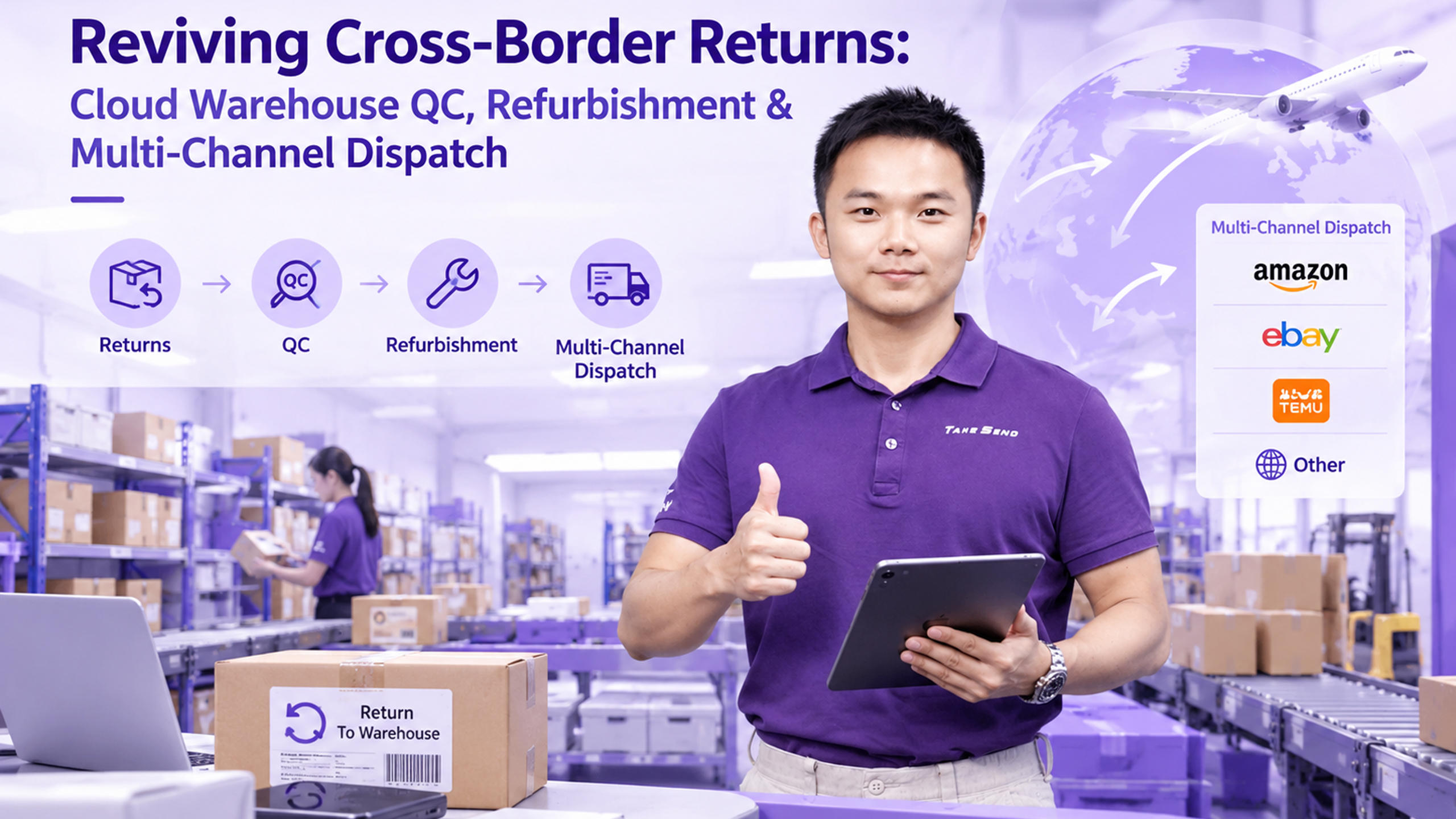
Many sellers see a high return rate and simply treat the goods as damaged, but in fact, many returned products are not completely unsellable.
A more practical approach is to have the returned items first stored in a cloud warehouse, where professional staff will perform inventory, quality inspection, and classification before deciding on the next steps.
Items that can be sold normally will be restocked, those that require repackaging will be handled, those that require re labeling will be re labeled, and those with issues will be isolated separately. This batch of returns has a chance to become sellable inventory again.
1:After returning the item, don't rush to relist it
The goods returned from overseas often have different statuses. Some are just returns from buyers, and there are no obvious problems with the products themselves. Some have been unpacked, some have damaged outer packaging, and some have missing accessories or abnormal products.
If all products are processed according to new inventory, it is easy to encounter secondary after-sales service in the future. A more reasonable approach is to classify the goods according to their actual status, and manage them separately for those that can continue to be sold, those that need to be sorted, those that need maintenance, and those that cannot be sold.
After receiving the return, Cloud Warehouse can first verify the quantity and SKU, and then conduct product inspection and photography.
The seller decides whether to re-enter the warehouse or proceed with packaging processing, label replacement, and reshipment based on the results of the cloud warehouse inspection.
2:After quality inspection, we will decide where to send this batch of goods
The key to returning and reusing goods is not to put them back in the warehouse, but to rearrange the direction of inventory.
Products in normal condition can be reclassified as sellable inventory. If the outer packaging affects sales, it can be repackaged. If the original platform labels are no longer suitable for use, a new label form needs to be issued and sent out according to the new order requirements.
If the seller operates platforms such as Amazon, Shopify, eBay, Shopee, etc., the same batch of inventory may not necessarily have to be returned to the original sales channel. Reassignment based on platform orders and product status can reduce the long-term backlog of returns in the warehouse.
For sellers with large inventory, they can also establish a separate SKU status for returned inventory to avoid mixing it with brand new inventory.
3:The real role of cloud warehouse is to turn returns back into operational inventory
If the return is directly sent back to the seller's office or factory, and you have to count, inspect, change the packaging, label it yourself, and then arrange for shipment, it is easy to pile up with a large number of orders. Handing over this part of the work to the cloud warehouse allows sellers to focus more on inventory allocation and sales arrangements.
Taijia Cloud Warehouse's existing services include product quality inspection, photography, packaging outsourcing, package splitting and merging, and order placement outsourcing. It also supports dropshipping of orders from multiple cross-border e-commerce platforms.
For returned goods, it is more suitable to use the method of returning them to the warehouse, quality inspection and classification, packaging treatment, re labeling, re warehousing, and then arranging shipment according to the order.
After this processing, the returned goods are no longer just unsold inventory in the warehouse, but can re-enter the sales process.
If you already know that there will be a batch of orders to be shipped in the future, it is best to complete quality inspection, packaging, and labeling in advance, and not wait until the orders are consolidated before processing them temporarily.
What is truly worth managing for cross-border returns is not only the return rate, but also how much value can be generated from the returned goods. Arrange quality inspection, refurbishment, packaging replacement, label replacement, and secondary shipment in advance, so that the returned inventory has a chance to be circulated again.
FAQ
Can I resell the product directly after returning it to my home country?
It is not recommended to handle it directly. First, complete the quantity verification and product quality inspection, and then decide whether to re-enter the warehouse.
Can Cloud Warehouse handle returns, packaging exchanges, and labeling?
Okay. Taijia Cloud Warehouse provides related operations such as quality inspection, packaging, and labeling.
How to avoid mixing returned inventory with new products?
It can be classified separately by SKU and goods status, and after quality inspection is completed, it can be decided to re-enter the warehouse or enter the secondary shipping process.
SERVICE
Copyright © 2026 TakeSendShip. All rights reserved


