

For foreign trade merchants and cross-border e-commerce sellers who use third-party cloud warehouses for shipping, when to confirm orders and when to release them are key factors affecting the buyer's receiving experience.
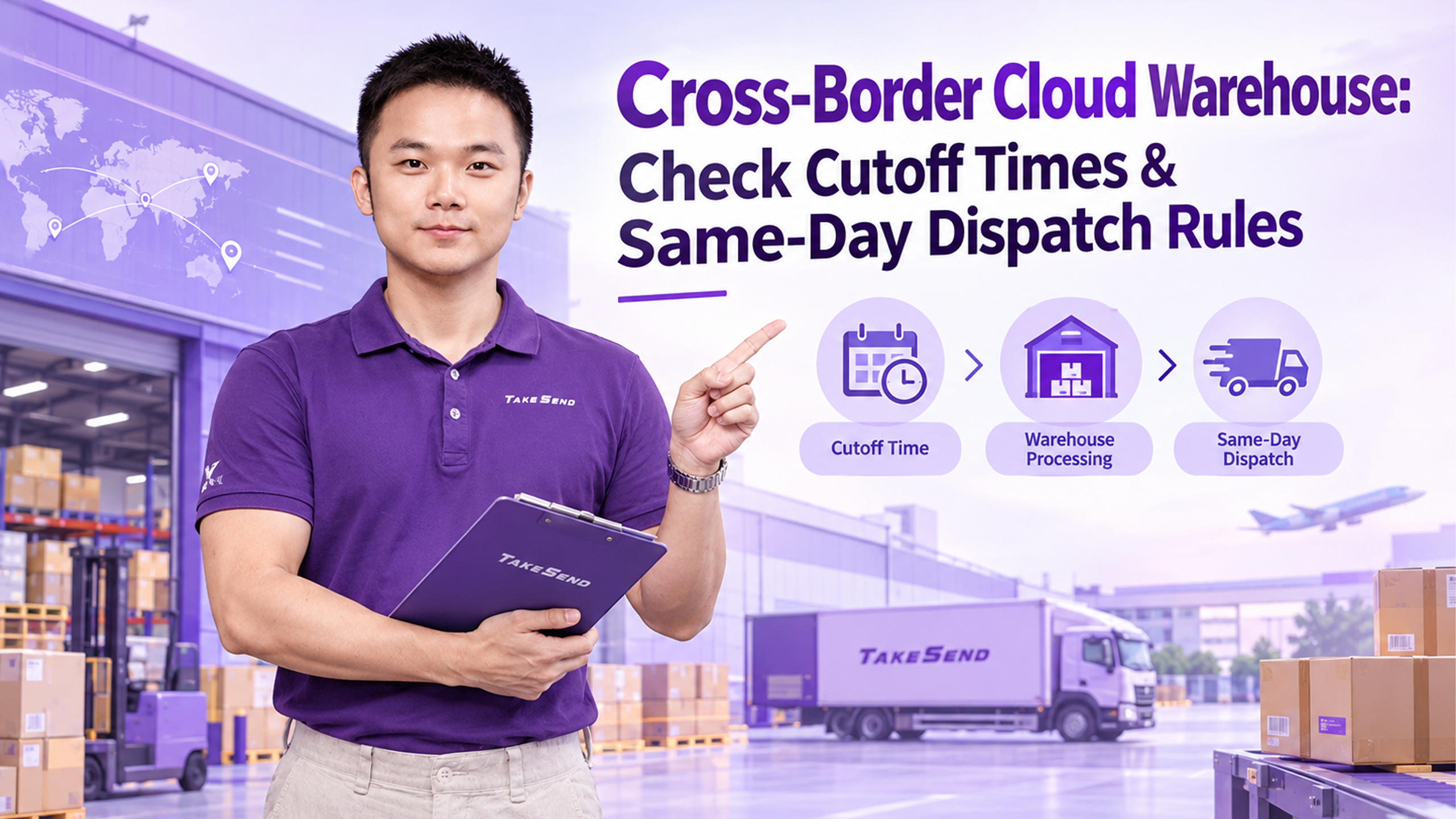
Many sellers may encounter a situation where orders continue to increase in the morning, and in the afternoon, they notify the warehouse to ship temporarily, only to find that they cannot arrange for the shipment on the same day.
The problem may not necessarily lie in warehouse efficiency, but rather in the fixed processes of order processing, picking, packaging, labeling, and logistics handover.
Understanding the deadline for cloud warehouse orders can help sellers arrange inventory and sales pace in advance, avoiding orders that arrive at the warehouse but cannot be shipped on the same day.
1:What is the deadline for cloud warehouse orders
The deadline for cloud warehouse orders is simply understood as the deadline for the warehouse to receive orders on the same day and arrange for processing on the same day.
Orders confirmed before this time can usually be arranged by the warehouse to complete picking, packaging, labeling, and outbound on the same day. If the deadline is exceeded, the order may be postponed to the next working day for processing.
The cut-off rules for different cloud warehouses are influenced by multiple factors, including order quantity, product type, warehouse operation process, logistics channel collection time, etc.
2:Why does Cloud Warehouse need to set a cut-off time for orders
Many sellers believe that the warehouse can ship the order immediately after receiving it, but in practice, an order needs to go through multiple steps from confirmation to delivery to logistics.
Warehouse personnel need to first verify the order information, then find the corresponding inventory based on SKU, complete picking, check the product status, then pack and label, and finally wait for logistics collection.
If orders are placed in a centralized manner within a day, the warehouse needs to arrange personnel and equipment according to the schedule. If there is no clear cut-off rule, it is easy for some orders to be unable to be completed on the same day, which affects the overall shipping plan.
3:How do sellers arrange shipments based on the cut-off time
For sellers with stable order volume, order synchronization time can be arranged according to the daily processing rhythm of the cloud warehouse. For example, completing order confirmation in the morning allows the warehouse sufficient time to process orders for the day.
For independent websites, Amazon, Temu and other sellers with significant order fluctuations, it is necessary to plan inventory and shipping arrangements in advance. Don't wait for a large number of orders to enter before notifying the warehouse to expedite processing.
If there are many SKUs in the product, it is necessary to organize product information in advance, including SKU codes, packaging requirements, label requirements, etc. The more complete the information, the less likely the warehouse is to make errors when processing orders.
For products with special requirements, such as orders that require repackaging, labeling, or combination sales, it is also necessary to confirm the operation time with the warehouse in advance.
4:How can cross-border cloud warehouses assist sellers in processing and shipping orders on their behalf
The value of third-party cloud warehouses is not only to provide storage space, but more importantly, to help sellers complete the warehouse operations after the order is placed.
Taijia Cloud Warehouse provides services such as warehousing, product quality inspection, photography, packaging, labeling, package splitting and merging, and one-stop platform order shipping.
For sellers who need to process orders quickly, Taijia Cloud Warehouse provides a two shift operation mode of dropshipping, and arranges in warehouse processing based on order confirmation. After confirming the shipment of the order, we can provide a shipping service within 12 hours to help sellers reduce order waiting time.
For foreign trade enterprises and cross-border sellers, it is easier to control the pace by placing inventory in the cloud warehouse in advance and confirming order processing rules, rather than arranging shipment temporarily after the order arrives.
The deadline for cloud warehouse orders is not to restrict sellers from shipping, but to help the warehouse and sellers establish a stable order processing rhythm. A cloud warehouse that is truly suitable for long-term cooperation not only needs to be able to ship goods, but also needs to be able to cooperate with the seller's sales changes.
FAQ
Can cloud warehouse orders still be shipped after the deadline?
It can be sent, but usually the processing time needs to be postponed, depending on the warehouse arrangement.
Is it certain that the order will be shipped out on the same day of confirmation?
Not necessarily, it depends on the order time, type of goods, and warehouse processing capacity.
Which sellers are suitable for dropshipping?
Suitable for sellers with scattered orders, multi platform sales, or those who need to reduce operational pressure in the warehouse.
SERVICE
Copyright © 2026 TakeSendShip. All rights reserved


