

Large scale sellers engaged in cross-border trade may encounter situations where goods are produced from factories, but ordinary warehouses may not be suitable for storage, and ordinary logistics channels may not be able to directly ship them.
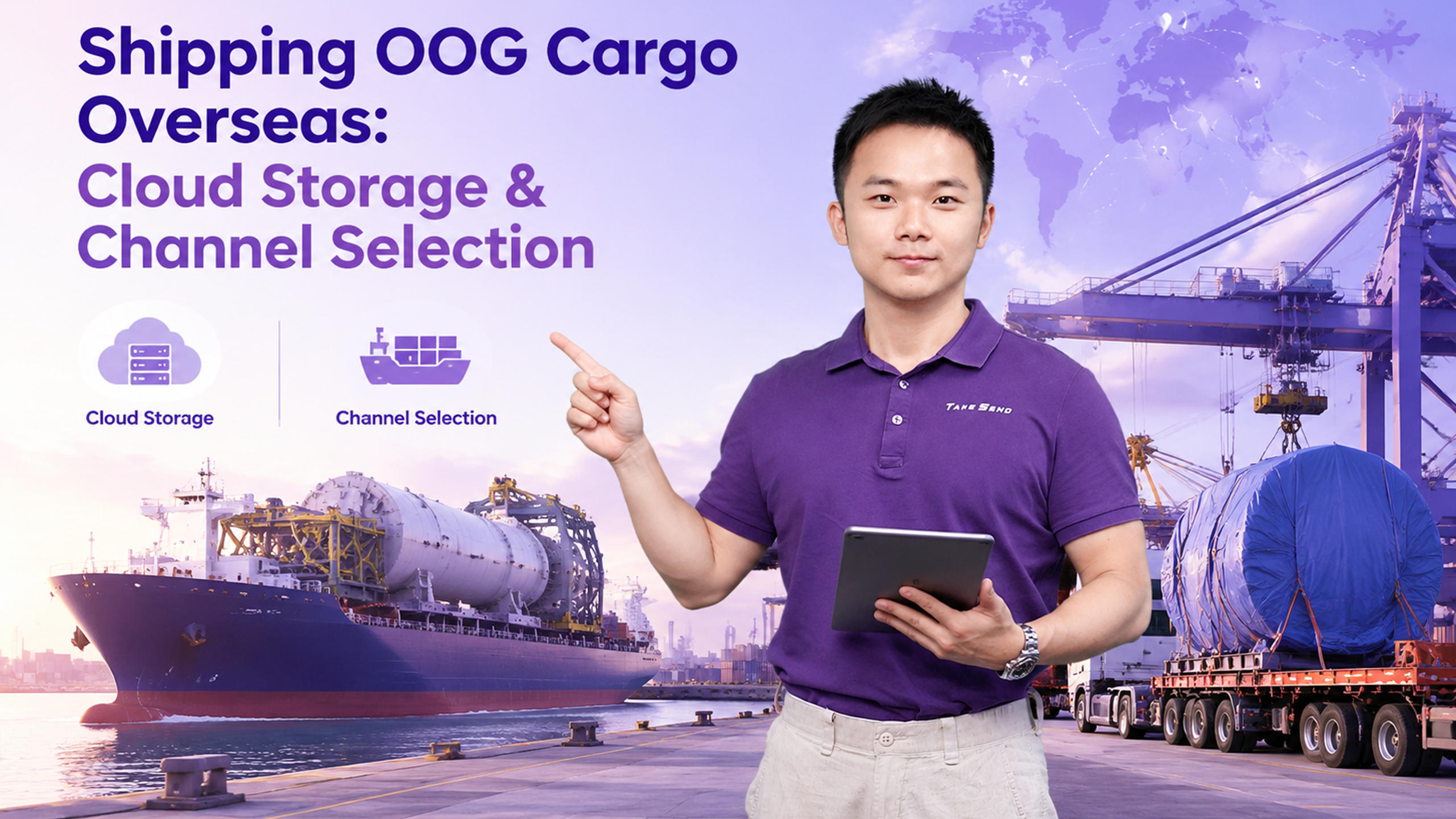
For example, large mechanical parts, furniture, display equipment, industrial supplies, outdoor products, etc., these types of goods may have problems such as oversized dimensions, high weight, and irregular shapes.
In the logistics industry, goods that exceed conventional transportation specifications are usually referred to as OOG goods.
For foreign trade enterprises and cross-border e-commerce sellers, the truly difficult part of handling OOG goods is not just transportation, but the entire process from warehousing, storage, packaging to outbound.
1:Large and irregular goods entering the cloud warehouse require confirmation of storage conditions first
Ordinary SKUs entering the cloud warehouse are usually managed based on product quantity and specifications. But unlike large shaped goods, which occupy more space and require different handling methods.
A batch of large equipment accessories, if stacked directly, not only affects the utilization of warehouse space, but may also affect subsequent search and outbound. If the goods have special structures, moisture resistance, collision prevention, and storage stability also need to be considered.
Before handing over OOG goods to a third-party cloud warehouse, the seller needs to provide the size, weight, packaging, and storage requirements of the goods in advance. Cloud warehouse arranges storage locations based on actual conditions to avoid discovering mismatched storage conditions only after the goods arrive.
2:Shipping OOG goods, packaging, and transportation channels are equally important
When large goods are shipped out, ordinary cardboard packaging often cannot meet transportation needs. According to the characteristics of the goods, it may be necessary to board, reinforce, wooden frame or wooden crate.
After determining the packaging method, it is also necessary to consider the subsequent transportation channels. Different countries and destinations have different transportation requirements for large goods. Some are suitable for sea freight, some require special transportation arrangements, and some require selecting corresponding channels based on the weight and size of the goods.
If the seller focuses too much on the shipping price and ignores the specifications and transportation conditions of the goods, it is easy to encounter problems such as inability to transport, repackaging, or delayed shipment in the later stage.
3:Choosing a third-party cloud warehouse depends on whether you have experience in handling special goods
For large item sellers, cloud storage is not simply providing a location for inventory. What is really needed is that the warehouse can understand the characteristics of the goods and cooperate with subsequent order processing.
Sellers can confirm a few questions in advance: whether the warehouse can store large-sized goods, whether it supports special packaging, whether it can arrange for outbound according to orders, and whether it can assist in matching suitable logistics channels.
For foreign trade enterprises, orders may not be generated on a daily basis. Sometimes a batch of goods needs to be temporarily stored for a long time, and sometimes customers suddenly place orders and need to arrange exports quickly. The coordination between warehousing and logistics is very important.
4:How to handle different types of cargo demands in cross-border cloud warehouses
According to different types of goods and business needs, Taijia Cloud Warehouse can arrange corresponding warehousing environments and subsequent processing methods based on actual situations for one piece dropshipping.
Goods of different sizes and categories can be classified and stored according to actual situations. After the order is generated, select a suitable logistics channel based on the attributes of the goods, destination, and transportation requirements, and then arrange for subsequent outbound shipments.
In addition to warehouse management, Taijia Cloud Warehouse also provides services such as product quality inspection, photography, packaging, labeling, package splitting and merging, and one-stop platform order shipping. For special specification products, packaging and shipping arrangements can also be made based on customer needs.
For OOG, large and irregular goods, there is no one way that is suitable for all products. The storage methods and logistics channels may vary depending on the size, weight, destination country, and delivery requirements of the goods.
Handing over the information of the goods to the cloud warehouse in advance, and then making warehousing and cross-border logistics arrangements based on the actual situation, is easier to control time and cost than temporarily finding a processing method when the goods need to be exported.
FAQ
Can OOG goods be stored in a regular cloud warehouse?
It is necessary to check whether the warehouse space, equipment, and storage conditions meet the requirements.
Do large goods necessarily need to be packaged in wooden boxes?
Not necessarily, it needs to be judged based on the structure, weight, and transportation requirements of the goods.
Can Yuncang help match large logistics channels?
Corresponding channels can be arranged based on the condition of the goods and the demand of the destination.
SERVICE
Copyright © 2026 TakeSendShip. All rights reserved


