

Amazon sellers arrange FBA first leg shipments, and delivering the goods to the logistics warehouse does not necessarily mean that the preparation work has been completed. Whether the product label is correct, whether the outer box information corresponds to the shipment, and whether the packing quantity has been checked will all affect the subsequent transportation and warehousing arrangements.
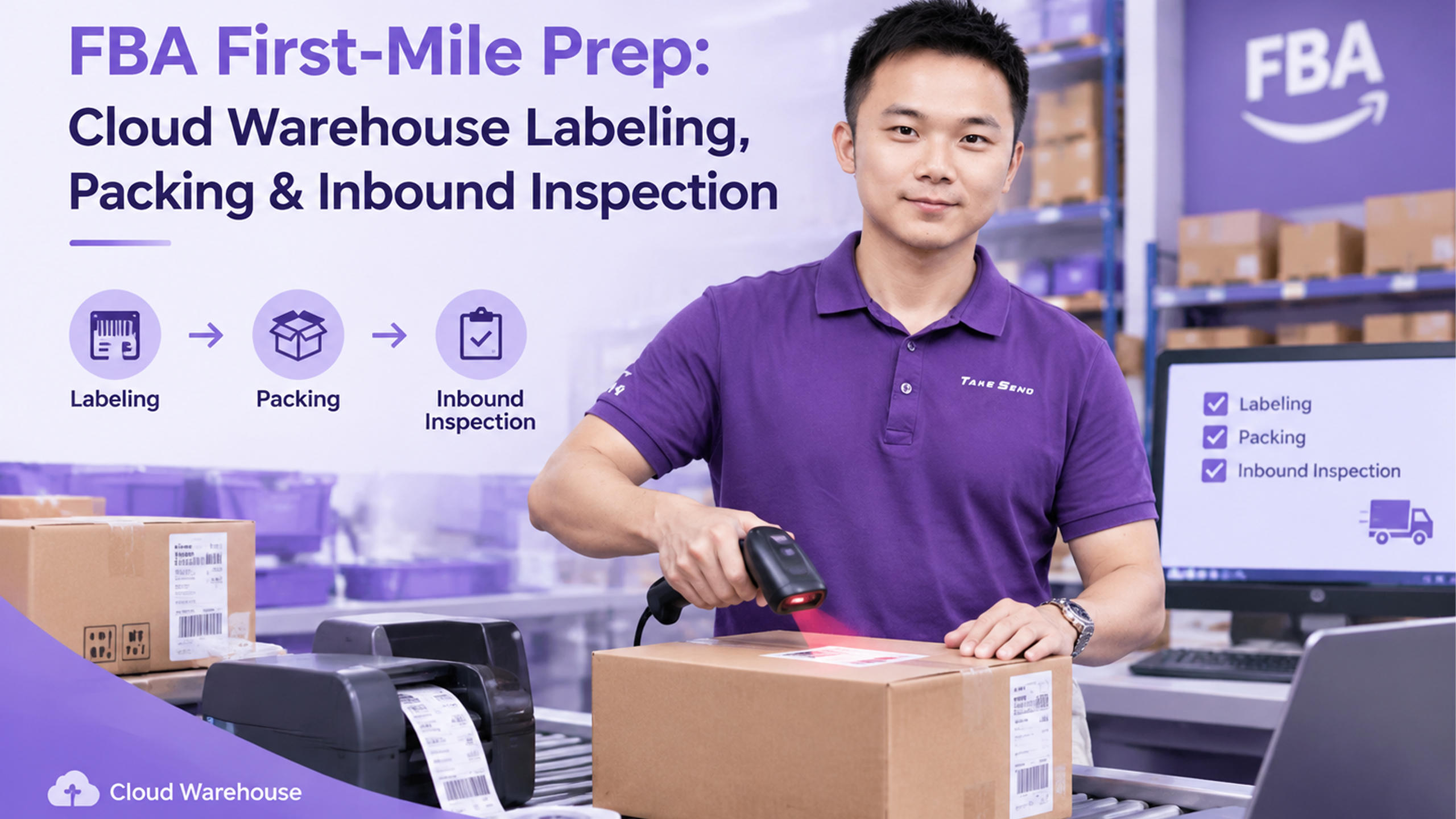
If the factory ships directly, the product packaging and labeling may not fully meet the current shipment requirements. Handing over to a third-party cloud warehouse for pre-processing can not only connect labeling, inspection, packaging, and first mile transportation, but also reduce the situation of discovering problems only after the goods are shipped.
1:Why do we need to do pre-processing before FBA first leg shipment
FBA pre-processing mainly involves completing necessary inspections, labeling, packing, and shipping preparations according to the requirements of the shipment before the goods are officially sent to the Amazon operations center.
Common issues include incorrect labeling of products, inability to recognize labels properly, discrepancies between the number of boxes and the shipment information, and packaging of outer boxes that do not meet transportation requirements.
For sellers with a large number of SKUs, if different products are stocked together, manual verification is prone to errors. Organizing product lists, label files, and packing requirements in advance, and then arranging warehouse operations, makes it easier to identify problems.
2:What details need to be checked for labeling and packing in cloud warehouse
Before labeling the product, it is necessary to confirm the SKU, label version, and product correspondence. For goods involving label replacement or re labeling, it is also necessary to clarify whether the original label needs to be covered or removed to avoid multiple labels interfering with each other.
When packing, it is necessary to verify the quantity of products in each box, the SKU combination inside the box, and the information on the outer box. In the case of mixed SKUs and changes in the quantity of a single box, the actual shipment requirements should be followed, and the packing method of the previous batch of goods cannot be directly used.
Sellers should also confirm in advance the status of the shipment creation, destination warehouse information, and outer box label files. Amazon's warehousing requirements may be adjusted, and the actual operation should be based on the current shipment requirements in the seller's backend.
3:Which sellers are suitable for using third-party cloud warehouse preprocessing
If the seller has multiple SKUs, needs direct delivery from the factory, needs to replace product labels, or has a large inventory during peak seasons, third-party cloud warehouses can undertake tasks such as receiving, counting, quality inspection, labeling, and packing the goods.
For cross-border e-commerce teams, this approach can reduce the repetitive handover between warehouse operations and first mile transportation. After the factory completes production, the goods are sent to the cloud warehouse and subsequent processing is arranged according to FBA shipment requirements.
If the product packaging is special and needs to be unpacked for inspection or repackaged, the requirements should be explained before the goods are stored, and it should be confirmed whether the corresponding operation is supported and how long it will take to avoid affecting the original shipping plan.
4:Cloud warehouse FBA first mile logistics service, connecting pre-processing and transportation
Taijia Cloud Warehouse provides services such as product quality inspection, photography, packaging, labeling, and package splitting and merging. It can arrange corresponding pre inspection operations in the warehouse according to the seller's goods situation.
For goods that need to be sent to Amazon fulfillment centers, sellers can confirm in advance the labeling, packing, verification of shipment information, and subsequent first leg transportation needs, and then select the corresponding FBA first leg logistics channel based on the destination and goods attributes.
Connecting the pre-processing in the warehouse with the first leg transportation in advance can reduce the hassle of goods being handed over back and forth between different operational stages.
Sellers with multiple SKUs, bulk stocking, and peak season replenishment can confirm the labels, box specifications, and shipment requirements for each batch of goods in advance, which is more secure than temporarily supplementing information after the goods arrive at the warehouse.
FAQ
Do we need labeling before FBA first leg shipment?
According to specific product and shipment requirements, products that require labeling should be completed before shipment.
Can Cloud Warehouse handle FBA labeling and packaging on behalf of customers?
You can confirm in advance whether the cloud warehouse supports corresponding labeling, packaging, and verification services.
Can the labels be modified after the goods are shipped?
The processing difficulty is usually higher, it is recommended to check the label version and shipment information before shipping.
SERVICE
Copyright © 2026 TakeSendShip. All rights reserved


