

The factory directly delivers the goods to the cloud warehouse, and cross-border sellers are most afraid not of the warehouse not receiving the goods, but of discovering that the quantity does not match, the packaging is damaged, or even the SKU is sent incorrectly after the goods arrive.
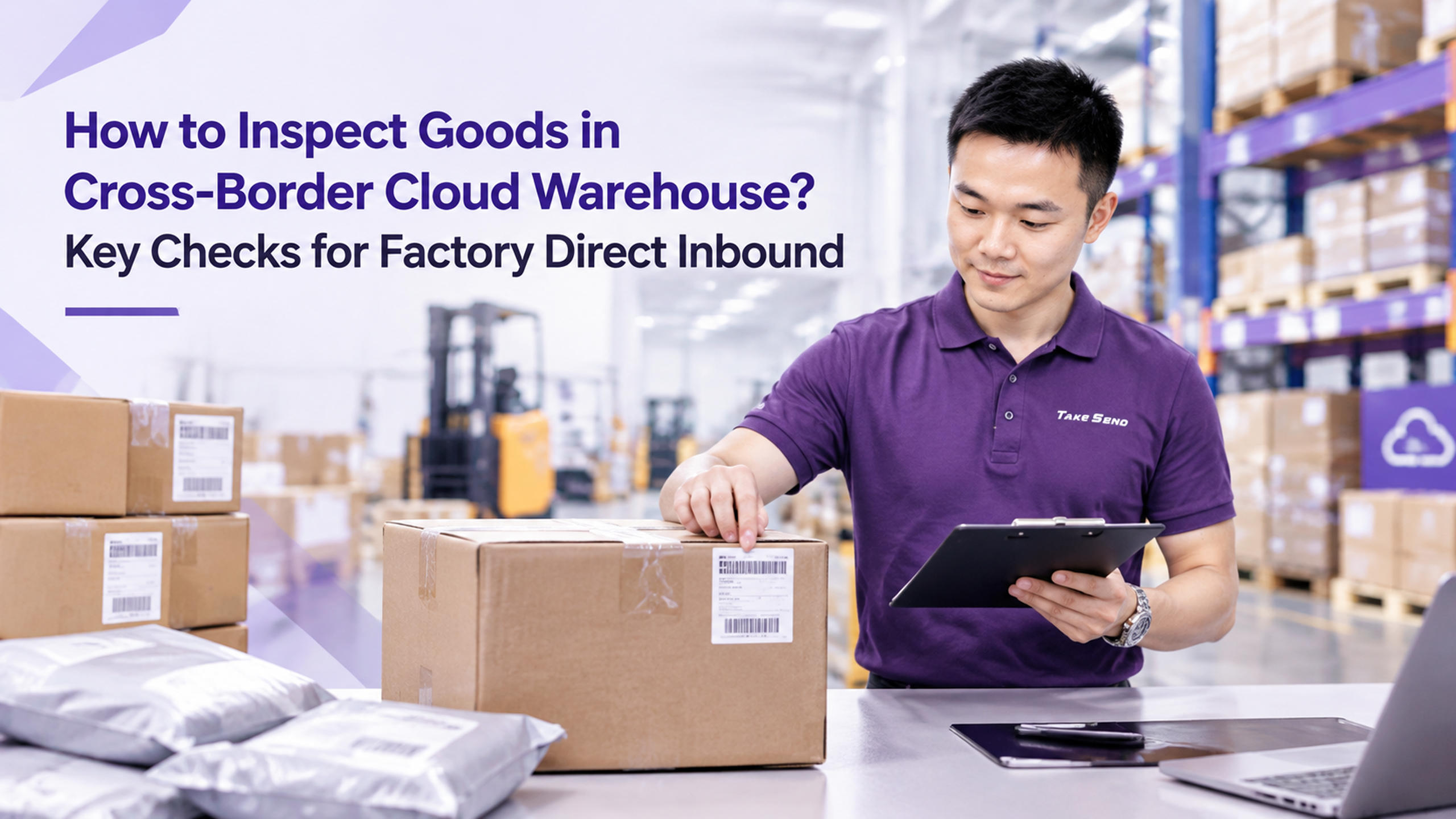
Foreign trade enterprises and cross-border e-commerce sellers often have suppliers, factories, and cloud warehouses located in different places. Sellers cannot conduct on-site inspections for every batch of goods themselves, so it is more convenient to entrust the transfer, counting, and basic inspection of factory shipments to cloud warehouses.
This is also a practical use for cross-border cloud warehouse hosting. The goods will enter the warehouse first, and if there is no hurry, they will be sent overseas immediately. First, check the things that need to be checked, and then arrange for the later outbound.
1:The factory directly shipped to the cloud warehouse, and the first thing to do is actually the number of nuclear units
The factory said they sent 100 boxes, but the warehouse should not directly account for them after receiving them.
In practical operation, it is necessary to first check the delivery quantity, and then verify it according to the outer box, SKU, or warehouse information provided by the seller. When the quantity is inconsistent, it should be recorded in a timely manner, and if necessary, photos should be taken for retention, and then confirmed by the seller and factory.
This situation is more common in multi SKU orders. A car may contain multiple styles, and if you only look at the total number of boxes, it is difficult to find how many boxes are missing for a certain SKU.
The inventory verification of cloud warehouse is not simply about moving the goods into the warehouse, but first matching the physical items with the inventory information.
2:Why is product packaging worth checking when entering the warehouse
The goods have been transported from the factory to the cloud warehouse and have undergone a handling process in between. If there is obvious damage, deformation, or moisture in the outer box, or if there are problems with the product packaging itself, it is best to discover them during the storage stage.
The quality inspection referred to here is generally a basic inspection and is not equivalent to laboratory testing. According to the seller's requirements, obvious issues such as product appearance, packaging status, and quantity can be checked.
A batch of products required individual independent packaging, but some products were not packaged. Alternatively, the outer box size and packaging method may differ from those previously confirmed. If it is discovered only when the customer places an order or is preparing to export, reprocessing will be more complicated.
3:After cloud warehouse hosting, sellers no longer need to monitor inventory every day
For foreign trade enterprises with small order volumes, renting warehouses and arranging personnel for management may not be cost-effective. After the factory completes production, it is common to directly send the goods to a third-party cloud warehouse for receiving, counting, and storing. The warehouse then arranges for the goods to be shipped out after the order is generated.
If there are many SKUs of the product, it can also be stored according to SKU classification. When the seller places an order later, the warehouse picks the goods based on inventory records to reduce errors caused by temporary searching.
More importantly, inventory does not need to be shipped all at once. Domestic cloud warehouses can first undertake intermediate storage, and sellers can release goods in batches based on customer orders, sales situation, and logistics arrangements.
4:Cloud warehouse hosting can perform the incoming inspection step. Next
If the factory is far away from the seller and it is not convenient to inspect the goods by oneself, the warehousing requirements can be sorted out in advance and sent to the cloud warehouse.
Taijia Cloud Warehouse provides related services such as quantity verification, product packaging inspection, and basic quality inspection after the goods are stored. Combined with existing cloud warehouse services, it can also provide operations such as product photography, packaging, labeling, package splitting and merging, and one-stop shipping.
For example, after the factory completes production, it directly delivers the goods to the cloud warehouse. The warehouse checks the quantity and packaging status upon receiving the goods, and organizes and stores them according to SKUs. For future orders, pick and package according to the seller's shipping requirements.
The advantage of this approach is that it leaves an additional inspection link between factory production and final shipment. Discovering quantity or packaging issues can be handled before the goods leave the country, rather than discovering them at the destination.
Cloud warehouse basic quality inspection cannot replace professional testing. Professional projects involving product functionality, ingredients, safety performance, etc. still need to be completed by corresponding institutions or suppliers according to the actual requirements of the product.
FAQ
Can the factory directly deliver the goods to the cloud warehouse?
Sure, just provide the warehouse entry information and cargo information in advance.
Can Cloud Warehouse Check Product Quality?
Basic inspections such as quantity, appearance, and packaging can be conducted, but professional inspections need to be arranged separately.
What should I do if I find that the quantity of goods received is incorrect?
Record the actual quantity and abnormal situation first, and then verify with the factory and seller.
SERVICE
Copyright © 2026 TakeSendShip. All rights reserved


