

When doing cross-border e-commerce and there are few orders, sellers usually pack and ship them themselves. As the number of orders increased, I realized that I was spending more and more time every day searching for goods, checking inventory, pasting orders, and handing over packages.
But if you rent a warehouse and hire people right after opening a store, and are worried about unstable orders and fixed expenses, you can't catch your breath. I thought of cloud warehouse dropshipping.
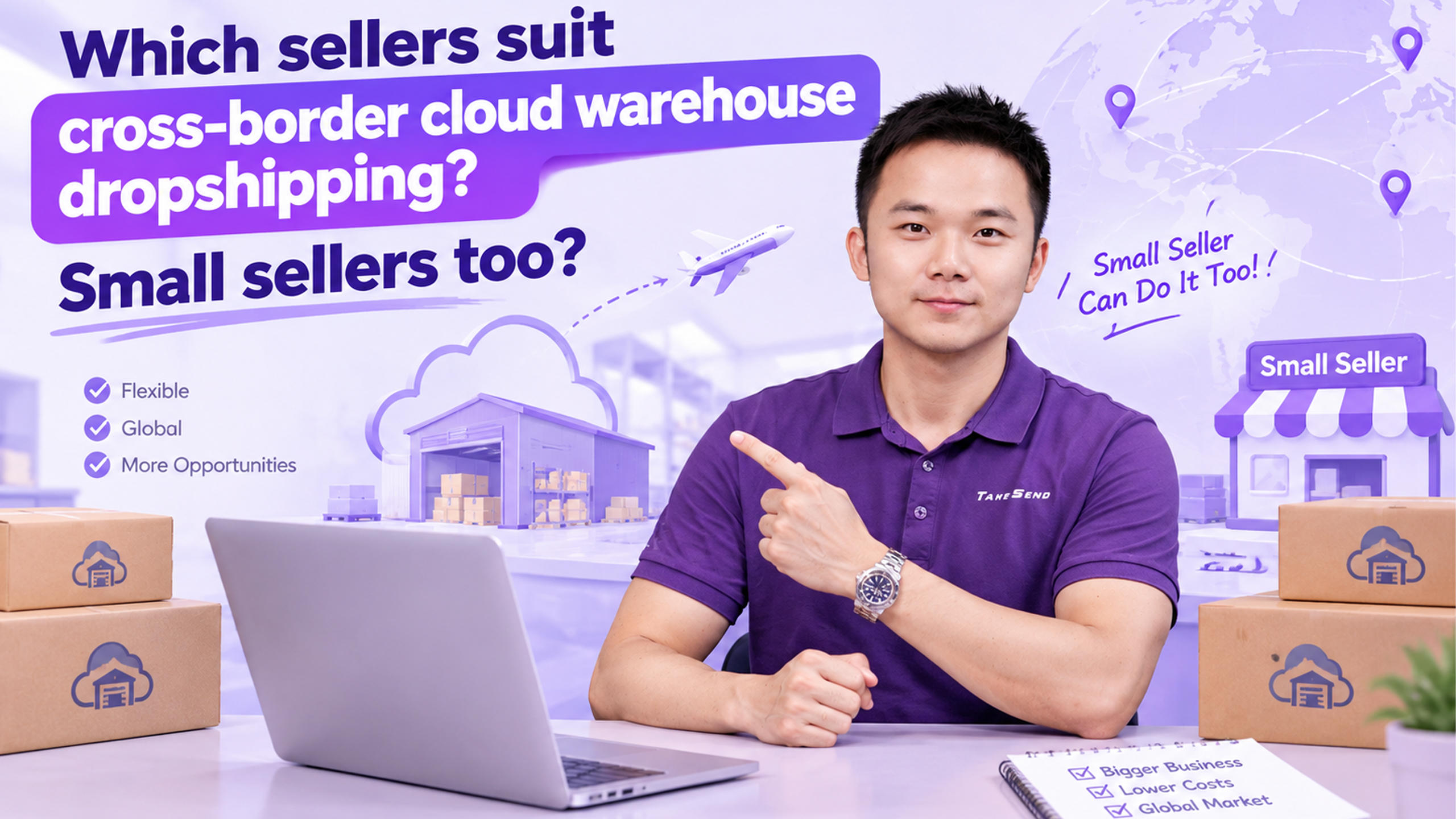
Cross border cloud warehouse dropshipping is not only useful for large sellers. What really needs to be considered is not how many orders a store has in a day, but whether shipping has affected operations, and whether existing inventory and personnel can keep up with changes in orders.
1:When is it necessary for novice small sellers to use cloud warehouses
The new store only has a few orders per day, or even one order every few days, so there is no need to rush to send all the goods to the cloud warehouse. If the product is still in the testing stage and sales fluctuate greatly, it is more convenient to handle and ship it yourself, and it can also avoid keeping inventory in the warehouse for a long time.
But some small sellers, although they don't have many orders, operate multiple platforms with SKUs scattered in factories or different inventory locations. It may take longer than the actual packaging time to find goods, verify styles, and repackage an order. In this case, even if the daily order volume is not high, it is still possible to consider handing over frequently sold products to the cloud warehouse for processing.
Small sellers are more suitable to start with a small number of stable SKUs, rather than moving all inventory over from the beginning. First observe the picking accuracy, outbound efficiency, and overall cost, and then decide whether to expand the scope of use.
2:What problems can cloud warehouse solve after order growth
When the store has orders every day, sellers are prone to another problem: operators have to handle listing, advertising, and buyer messages, while also taking time to pack. When orders suddenly increase during peak season, shipping can easily squeeze out other work.
Third party cloud warehouses can take over tasks such as inventory storage, order processing, picking, packaging, and delivery. Sellers should focus their energy on products, sales, and restocking instead of immediately finding their own space or recruiting warehouse personnel due to an increase in orders.
However, an increase in order volume does not mean that all products are suitable for early stocking. Products with stable sales can increase warehouse inventory appropriately, while new products or unsold SKUs should be carefully arranged.
3:Big sellers use cloud warehouses, but their focus is different
Sellers with high daily shipment volumes usually place greater emphasis on inventory accuracy, order processing capabilities, multi SKU management, and the integration of different channels.
If orders come from multiple e-commerce platforms or independent sites, inventory data that is not synchronized may result in overselling, missed shipments, or incorrect shipments.
These types of sellers need to understand how cloud warehouses receive orders, verify inventory, handle abnormal orders, and whether they can arrange shipments based on different products and destinations.
Whether a warehouse is suitable for oneself should not only depend on the quotation, but also on whether the actual operation can meet the business requirements.
4:Cloud warehouse dropshipping with no minimum usage limit
Small sellers do not want to bear the fixed costs of self operated warehouses, while large sellers need external warehouses to handle ongoing orders. Both types of needs can consider third-party cloud warehouses.
The difference is that small sellers should control the initial inventory, while large sellers should focus on confirming whether the system, inventory management, and outbound operations are in line with their own business volume.
Taijia Cloud Warehouse offers one-stop dropshipping without a minimum order quantity, suitable for sellers ranging from small-scale operations to large-scale cross-border e-commerce businesses. The related services include 60 day free warehousing, one piece dropshipping for orders on various platforms, product quality inspection, photography, dropshipping, dropshipping, and package splitting and merging.
Sellers can arrange usage based on their own order situation. At the beginning, put in a small amount of frequently sold items, and gradually increase inventory after stable orders.
Sellers with larger business scales can communicate in advance about warehousing and shipping arrangements based on SKU quantities, order processing requirements, and target markets.
FAQ
Is there a minimum order quantity for cross-border cloud warehouse dropshipping?
Taijia Cloud Warehouse does not have a minimum quantity for dropshipping, and specific storage and operational requirements can be confirmed in advance.
Is it suitable to use cloud storage when there are only a few orders per day?
It can be evaluated, and it is recommended to prioritize products with stable orders and calculate storage and processing costs for each order.
Can big sellers also use Taijia Cloud Warehouse?
Sure, specific arrangements need to be communicated based on order size, SKU quantity, inventory situation, and outbound requirements.
SERVICE
Copyright © 2026 TakeSendShip. All rights reserved


