

When doing cross-border e-commerce, manually exporting orders and organizing tables can still handle low order volumes.
When multiple stores such as Shopify, Amazon, eBay, etc. issue orders together and repeatedly check the order, inventory, and logistics tracking numbers every day, it is easy to make mistakes.
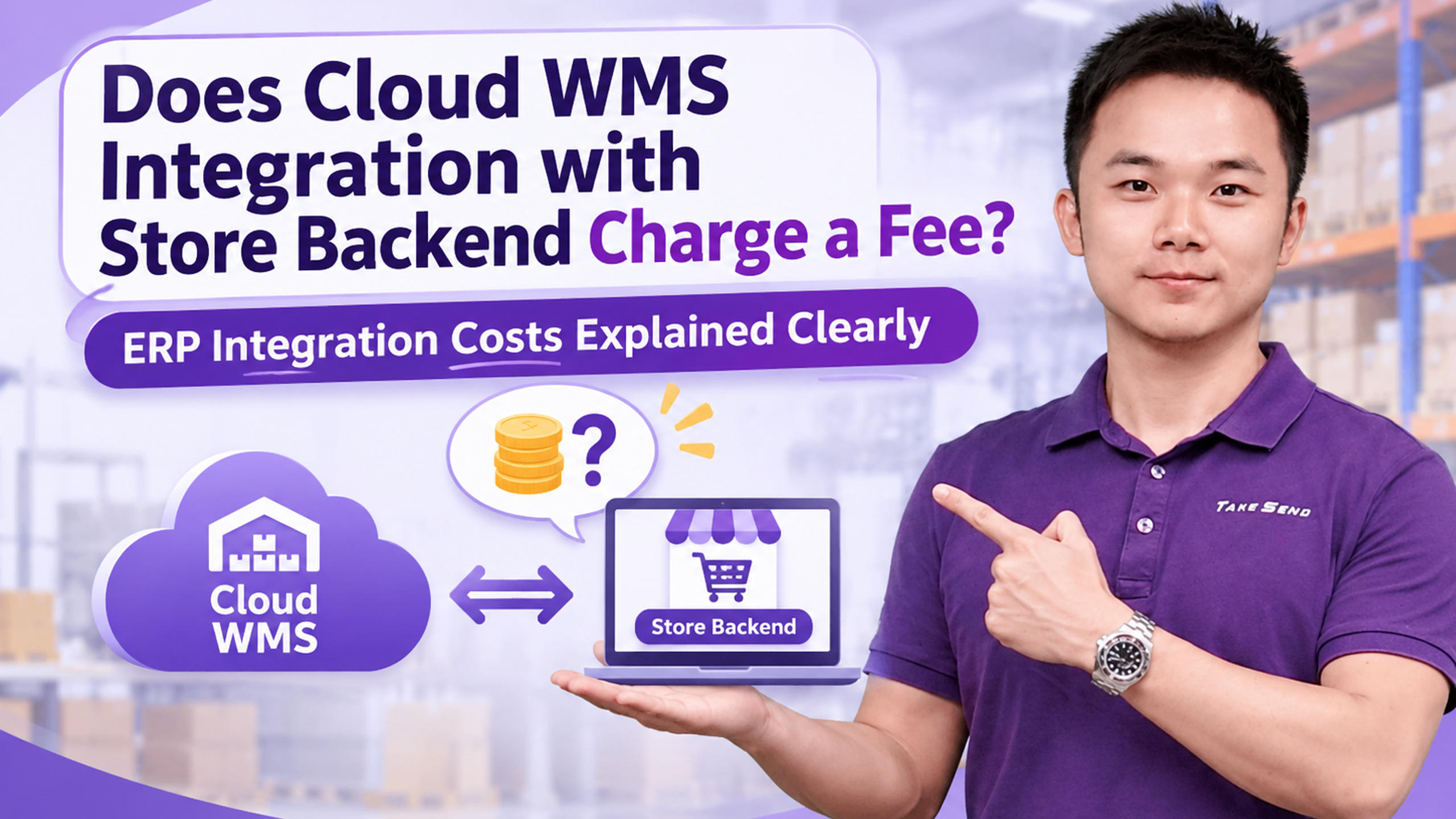
At this point, many sellers may consider connecting their store backend to the cloud warehouse WMS system, but they are concerned about paying a system integration fee.
There is no unified standard for whether cloud warehouse WMS docking is charged.
Most cloud warehouses include standard system integration in their services, and some may charge based on ERP authorization, customized development, or additional features. It is necessary to confirm before signing the contract.
1:What are the main problems solved by the integration of cloud warehouse WMS system?
WMS is a warehouse management system that primarily handles inventory, picking, packaging, and outbound operations. After the integration of the store backend or ERP with the cloud warehouse system, orders can be synchronized to the warehouse according to the set process, and the warehouse will process them before returning the shipping status or logistics information.
Independent sellers receive dozens of orders a day. If they still rely on manual downloading of forms, copying addresses, and entering logistics tracking numbers, it not only takes time but also easily leads to missed orders and wrong shipments.
The value of system integration is to reduce duplicate entries and make the connection between order and inventory data smoother.
2:Why do some cloud warehouse systems charge for integration while others are free?
It mainly depends on the docking method and service scope.
Standard docking usually uses ready-made platform interfaces or existing ERP connection methods, with relatively simple configuration.
Customized docking may involve special order rules, data conversion between multiple systems, exclusive feature development, or complex business processes, resulting in higher implementation costs.
It is also necessary to distinguish between the cloud warehouse docking fee and the cost of the ERP software itself. Even if cloud warehouses do not charge docking fees, third-party ERP software subscriptions, authorizations, or value-added features may still be charged separately.
Whether there will be any specific charges, it is necessary to check the charging rules of the corresponding service provider.
3:What details should be asked before signing the contract?
Just asking if the system integration is free is not enough. It is recommended to further confirm:
-Can store orders be automatically synchronized to the cloud warehouse.
-Whether inventory changes and shipping status support feedback.
-Can the logistics tracking number be automatically updated to the store backend.
-How to handle cancelled orders, refunded orders, and abnormal orders.
-Do you need to purchase an ERP account, interface authorization, or additional modules.
Especially for multi platform sellers, it is necessary to confirm whether the store, ERP version, and order process they are using are within the supported scope. The system's ability to connect does not mean that all data can be automatically synchronized.
4:Is there a fee for the integration of Taijia Cloud Warehouse system?
For cross-border sellers who want to reduce manual order processing, when choosing a cloud warehouse, system compatibility and integration costs can be compared together.
Taijia Cloud Warehouse provides free system integration services and supports ERP data integration with major e-commerce platforms. Sellers can understand how order, inventory, and shipping data are linked based on their existing store and ERP usage, reducing the need for manual order organization and repetitive information entry.
If operating multiple platforms simultaneously, it is recommended to confirm the specific platform, ERP, and required data scope before starting cooperation to ensure smooth integration of existing business processes.
The focus of system integration is not only on saving costs, but also on whether orders can be accurately transmitted, inventory can be updated in a timely manner, and shipping information can be smoothly returned.
Frequently Asked Questions (FAQ)
1. Is it necessary to charge a fee for integrating cloud warehouse WMS with the store backend?
Not necessarily. Standard docking may be free, while customized development or third-party software licensing may incur fees.
2. Are ERP docking fees and cloud warehouse docking fees the same thing?
No. ERP software authorization, subscription fees, and system integration services provided by cloud warehouses may be charged separately.
3. Is there a fee for the integration of Taijia Cloud Warehouse system?
System integration is free and supports ERP data integration with major e-commerce platforms. The specific platform and data scope can be confirmed in advance.
SERVICE
Copyright © 2026 TakeSendShip. All rights reserved


