

First of all, the answer is: yes.
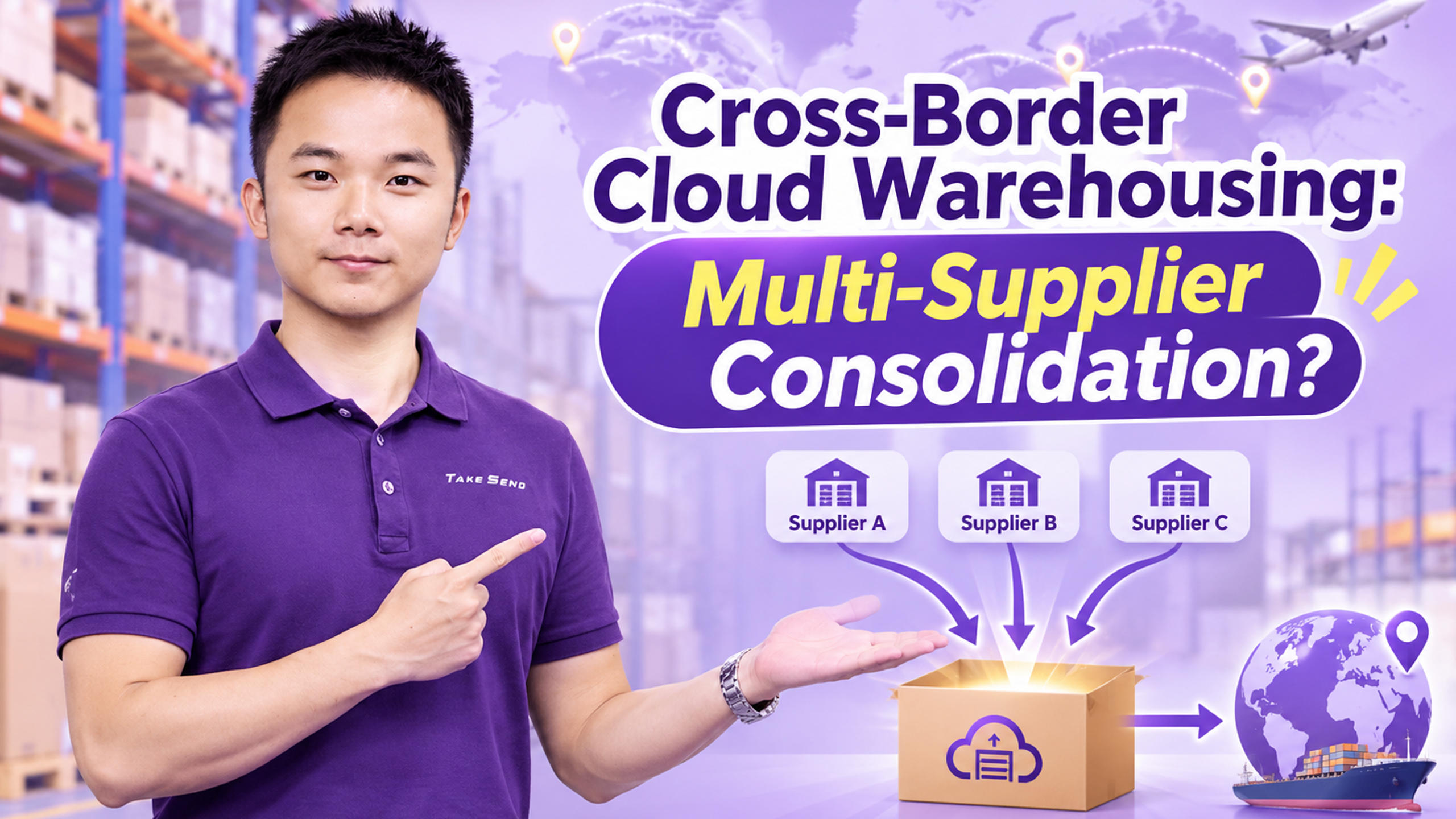
Cross border cloud warehouses can receive goods from different suppliers in batches, and after the goods are received and checked for storage, they can be merged and shipped out according to the seller's requirements.
Partial goods can also be shipped first, and the next batch can be arranged after the remaining goods arrive at the warehouse, depending on the inventory status and outbound plan. This model is very suitable for cross-border e-commerce sellers who purchase from multiple factories simultaneously.
For example, the main product is produced by a factory in Shenzhen, the accessories come from Dongguan, and the color box and instruction manual are made by another supplier. If each household arranges international transportation separately, not only will communication be complicated, but multiple transportation costs may also be incurred.
1:What situations are suitable for merging multiple suppliers for outbound shipments? There are three common situations:
One is that multiple factories produce different SKUs, and sellers hope to conduct centralized inspections and send them to overseas warehouses or FBA warehouses uniformly.
Secondly, the main products, accessories, and gift boxes are produced separately and need to be assembled or repackaged once they are all in place.
Thirdly, the delivery time of suppliers is inconsistent, and sellers do not want to arrange international transportation separately for each batch of goods.
It needs to be clarified that merging shipments does not mean waiting for all goods to arrive. If some SKUs urgently need to be restocked, the inspected products can be arranged to be shipped out first, and the remaining goods can continue to wait in the warehouse.
2:How should the cloud warehouse handle the batch delivery?
The key is not to stack the goods of several suppliers together, but to identify the source, quantity, and status of each batch of goods.
The first step is to register the arrival information in advance.
Please provide the name of the cloud warehouse supplier SKU: Expected quantity, number of boxes, and estimated arrival time at the warehouse. The product names of different suppliers may be similar, so it is best to use a unified SKU or item number to reduce confusion during storage.
The second step is to inspect and count each batch of goods.
Check the outer box, quantity, and appearance of the goods upon arrival. If the order says 1000 pieces, but only 950 pieces are actually received, the difference should be recorded first, and then the supplier should be contacted for confirmation. It is not possible to directly register and store according to the planned quantity.
Step three, confirm the merger or split plan.
After the goods arrive, they can be arranged according to the destination SKU: Recombination of packaging requirements and transportation channels. If there are goods that need to be reworked, there is a dispute over the quantity, or the acceptance has not been completed, they should be marked separately first to avoid mixing with normal outgoing goods.
3:What issues are easily overlooked before merging and issuing?
Don't just look at whether the shipping cost has decreased.
Multiple batches of goods are sent out in a centralized manner, which may reduce the trouble of duplicate transportation arrangements. However, domestic suppliers' warehouse freight, inbound inspection, warehousing, repackaging, and outbound operations should also be included in the total cost. Whether it is cost-effective or not, it should be calculated based on the entire batch cost.
Don't let a batch of late goods hold up all the inventory.
If the goods can be sold independently or sent separately to different warehouses, the batch delivery rule can be agreed upon in advance to avoid delaying the replenishment of main SKUs due to waiting for a small number of accessories.
Don't ignore inventory classification and labeling.
After merging products from multiple suppliers, SKU, quantity, and batch records must still be retained. If it involves kit assembly, labeling, or packaging replacement, the operational requirements should be explained in advance.
4:What services should be asked clearly when choosing a cloud warehouse?
Inquire whether the cloud warehouse supports multi supplier receiving, batch warehousing, quantity verification, inventory inquiry, consolidated outbound, and split shipping. It is also necessary to confirm how to handle abnormal goods, whether the warehouse records are traceable, and how to calculate the related operating costs.
Taijia Cloud Warehouse provides free on-site pickup and can provide services such as warehouse inspection, quantity verification, packaging replacement, consolidation, and split shipment according to business needs.
For sellers with scattered suppliers and inconsistent delivery times, it is advisable to first organize the supplier list, SKUs, and expected delivery dates, and then arrange the inbound and outbound plans to reduce repeated communication.
FAQ
Q1: How many days will the supplier deliver the goods? Can the cloud warehouse wait for the goods to arrive before sending them?
It is possible to agree on the collection and outbound plan in advance, but it is necessary to confirm the storage arrangement and related expenses.
Q2: Can goods from multiple suppliers be combined and shipped to overseas warehouses?
Usually, it is necessary to verify the attributes of the goods, destination requirements, packaging methods, and whether the selected transportation channel is suitable.
Q3: If one batch of goods has not arrived, can we send other goods first?
It is possible to evaluate batch delivery, confirm in advance whether inventory has been accepted, and incur additional costs for separate shipments.
SERVICE
Copyright © 2026 TakeSendShip. All rights reserved


