

In foreign trade and cross-border e-commerce, many merchants' products do not come from the same factory. Today we purchased a batch of accessories from Dongguan, and tomorrow we will replenish a batch of finished products from a supplier in Shenzhen. In addition, we need to send small commodities from Yiwu overseas together.
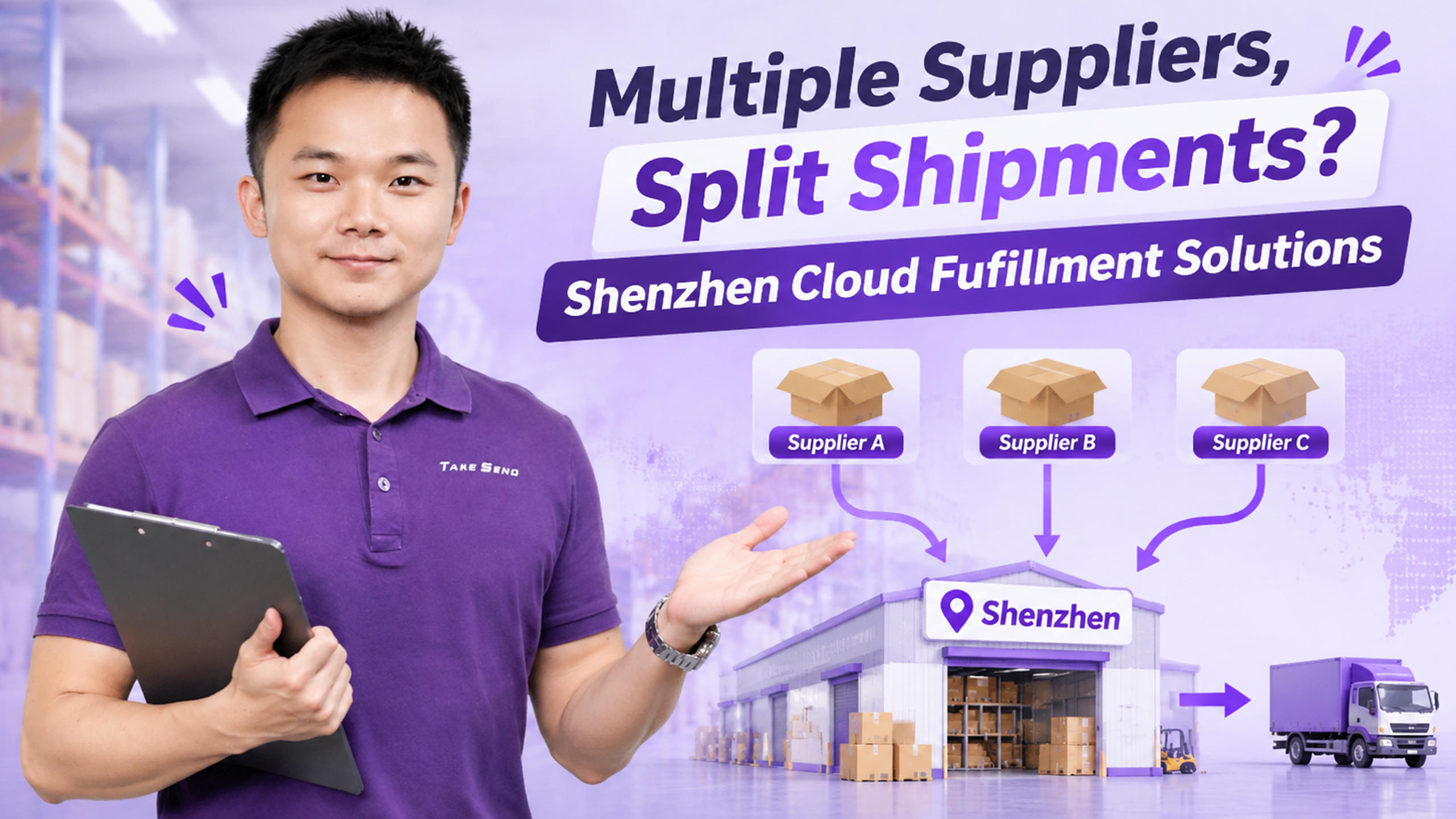
The source of goods is scattered, but orders need to be processed uniformly, making warehousing and shipping easily cumbersome. Cross border cloud warehouse dropshipping is suitable for this type of multi source business model.
Different suppliers can deliver goods to the same warehouse according to the plan, completing warehousing, classification, and inventory management. After overseas orders are generated, pick, package, and ship according to the order requirements, reducing the need for sellers to repeatedly coordinate shipments between multiple suppliers.
1:Why are multi source merchants suitable for using cloud warehouses for shipping?
The scattered supply of goods by foreign trade merchants usually brings three practical problems.
One is the dispersion of inventory. Different factories have their own inventory, making it difficult for sellers to timely grasp how much available inventory each SKU has.
The second issue is inconsistent shipping. Multiple suppliers sending goods separately may result in different packaging specifications, inconsistent labels, and split orders.
The third issue is the inflexibility of restocking. Suddenly placing an order for a certain product, the seller needs to contact the supplier to restock, which can easily delay the outbound arrangement.
Concentrating different sources of goods in Taijia Cloud Warehouse can unify the management of goods that were originally scattered across multiple suppliers. Sellers record the incoming quantity according to SKU and batch, and then arrange the outgoing according to the order, without having to have suppliers directly face overseas buyers every time.
2:How to manage multiple suppliers' goods entering the cloud warehouse more reasonably?
Multi source consolidation does not mean stacking all products together. It is best to unify SKU codes and provide product names, specifications, quantities, and supplier information before entering the warehouse. Different batches of goods should also be distinguished to avoid the same product being sent out as the same batch of inventory due to color, size, or accessory inconsistencies.
After the goods arrive at the warehouse, quantity verification, product quality inspection, and photography can be carried out according to business needs. For products that need to be sold in combination, package consolidation or splitting can also be arranged according to order requirements.
3:What inventory turnover scenarios are suitable for Shenzhen Cloud Warehouse dropshipping?
Foreign trade merchants with multiple factories supplying: Different factories deliver goods according to the procurement plan, and the cloud warehouse centrally receives and stores the goods. Subsequently, they will be shipped in batches according to overseas customer orders.
Cross border sellers operating multiple platforms: Orders from different platforms can be processed according to their own waybills and packaging requirements, reducing the time for sellers to coordinate shipments between multiple suppliers.
Businesses that engage in both wholesale and retail: Large orders can be arranged for centralized outbound, while scattered orders can be shipped as a single item without the need to prepare a separate inventory for each order mode.
Cloud warehouse shipping does not mean that all goods can be mixed or combined for transportation at will. Electrified products, liquids, fragile items, and special specification goods should be verified in advance for warehouse receiving requirements and destination channel restrictions.
4:How does Taijia Cloud Warehouse handle multi source dropshipping?
If the goods come from different factories or suppliers, they can be centrally sent to the Shenzhen warehouse according to the stocking plan. Taijia Cloud Warehouse provides 60 days of free warehousing, one-stop shipping for orders from various platforms, package splitting and merging, packaging, labeling, product quality inspection, and photography services.
Merchants who operate both wholesale and retail orders can arrange different outbound methods based on the number of orders. After the goods are entered into the warehouse, scattered orders are processed on a per order basis, while goods that need to be shipped in combination are arranged to be split or merged according to actual requirements.
It is crucial to keep records of multiple source merchants' inventory and verify their outbound shipments. There should be corresponding records for how much the supplier has sent, how much the warehouse has actually received, and how much the order has been used. This makes it easier to trace in case of shortage, wrong shipment, or batch differences.
FAQ
Can goods from multiple suppliers be delivered to the same Shenzhen cloud warehouse?
You can confirm the product category and storage requirements in advance, and then register and store them separately by supplier and SKU.
Can multiple sources of goods be combined into one package and sent overseas?
It can be evaluated based on order requirements, but it is necessary to confirm whether the product attributes, packaging, and destination channel allow for combined transportation.
3. Is Shenzhen Cloud Warehouse One Piece dropshipping suitable for small batch orders?
Suitable for merchants with scattered order processing needs, specific confirmation should be made based on the product, order quantity, and warehouse operation requirements.
SERVICE
Copyright © 2026 TakeSendShip. All rights reserved


