

In cross-border e-commerce, the goods have already been shipped overseas, but buyers have reported packaging damage, scratches on the surface, missing accessories, and even received colors that do not match their orders. The problem may not seem significant, but it could lead to refunds, returns, and negative reviews.
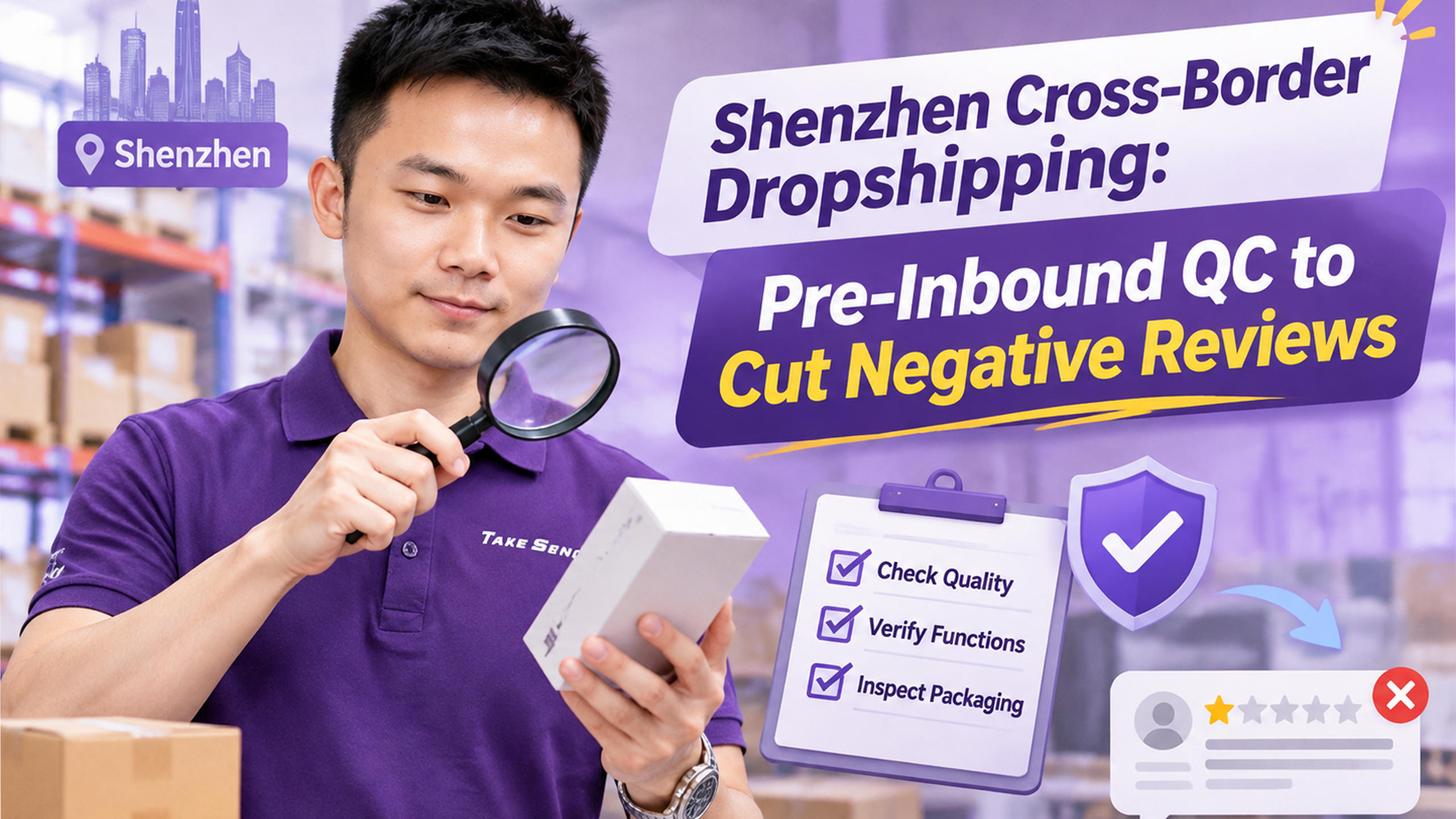
If the goods are directly delivered from the factory to the cross-border cloud warehouse in Shenzhen without being personally inspected by the seller, it is necessary to conduct a visual inspection before storage. Although we cannot guarantee that every product has no quality issues, we can detect some obvious defects in advance to avoid problematic products entering the subsequent dropshipping process without verification.
1:Why is it necessary to conduct visual inspection before cross-border cloud warehouse storage?
Many sellers understand cloud warehouse storage as receiving, counting, and shelving goods, but in fact, storage is also an important node for checking the status of goods.
Common issues include: scratches, stains, paint peeling on the surface of the product, compressed or damaged outer packaging, color and model mismatch, incomplete quantity of accessories, incorrect labeling or SKU mixing.
These issues may not necessarily involve product functional failures, but they can affect the actual feeling of buyers when they receive the goods. The product condition requirements of platforms such as Amazon also emphasize that the product should match the page description, and sellers need to conduct quality checks to avoid complaints caused by product appearance, packaging, or missing parts.
2:What are the key areas to be inspected during the random inspection of Shenzhen Cloud Warehouse storage?
The appearance inspection does not need to be particularly complicated from the beginning, the key is to set inspection items based on the characteristics of the product.
1. Appearance of the product: Check the surface for obvious scratches, stains, cracks, deformations, paint peeling, and other issues. Clothing products should focus on stains, damages, and stitching, while household items should pay attention to corners, surfaces, and structures. Electronic products should pay attention to whether there is obvious damage to the shell, interface, and screen.
2. Packaging status: Check whether the outer box, color box, sealing and protective materials are intact, whether they are damp, squeezed or damaged. The packaging itself is also a part of the buyer's receiving experience, and fragile and gift items need to be paid more attention to.
3. Quantity and SKU: Verify whether the actual quantity received matches the delivery list, confirm the color, size, model, and product code to avoid mixing different styles in the same batch of inventory.
4. Accessories and identification: According to the list provided by the seller, randomly check whether the accessories such as manuals, wires, screws, and gifts are complete, and check whether the product labels are consistent with the corresponding SKUs.
When abnormalities are found in the inspection results, promptly provide feedback to the seller on the problematic products, quantity, and specific location, making it easier to contact the factory for confirmation, rather than directly putting the entire batch of goods on the shelves.
3:How to determine the proportion of appearance inspection? It's not that the more you smoke, the better
There is no fixed answer for the sampling ratio that applies to all products. The unit price, batch quantity, supplier's past quality performance, product structure, and after-sales risks all affect the sampling arrangement.
If it is a supplier with long-term cooperation and stable quality performance, the sampling standards agreed upon by both parties can be implemented. For the first batch of goods from new suppliers and batches that have recently experienced quality issues, it is recommended to increase the sampling ratio. Goods with high unit price, high wear and tear, and high appearance requirements should also have additional inspection items.
Visual inspection is not equivalent to full inspection, nor can it replace functional testing, performance testing, or professional quality certification. For example, whether electronic products can be turned on normally and whether the device runs stably cannot be judged solely by appearance inspection.
4:The first few steps from picking up goods from the factory to warehousing in the cloud warehouse cannot be skipped
Many sellers are not located in Shenzhen, and their goods are scattered among different suppliers or factories. If each batch of goods needs to be inspected and picked up by personnel themselves, and then delivered to the warehouse, the time and labor costs are not low.
If cross-border cloud warehouses can provide door-to-door pickup, they can pick up the goods from suppliers or factories according to appointments. After the goods arrive at the warehouse, quantity verification, product verification, and basic appearance inspection can be carried out.
Taijia Cloud Warehouse Shenzhen warehouse can provide on-site pickup services, supporting pick-up from suppliers or factories. After the goods are stored, they can be checked for storage quantity, product information, simple quality inspection, and free basic sampling. When obvious appearance abnormalities or quantity discrepancies are found, timely feedback should be given to the seller for confirmation.
For sellers with multiple SKUs and suppliers, this can reduce the repeated handover of goods between factories, temporary transfer points, and warehouses, and also make the status of goods clearer before they are stored. In the future, it can also be connected to warehousing, packaging, labeling, and platform order dropshipping, reducing the workload of sellers processing each ticket.
5:The warehouse inspection is done well, and the prevention of negative reviews is the prerequisite
Negative reviews may not necessarily come from logistics, nor may they necessarily be due to quality issues with the product itself. Any negligence in the production, storage, packaging, and transportation of goods may affect the final condition of the goods received by the buyer.
For cross-border sellers, the value of pre inventory sampling is to try to keep any issues that can be detected in advance for domestic processing. Cooperating with SKU verification, exception handling, and outbound review is necessary to make every step of the dropshipping process clearer.
Frequently Asked Questions (FAQ)
Q1: Can Shenzhen cross-border cloud warehouse send one item for inspection upon receipt?
Sure, the specific inspection items and sampling requirements need to be confirmed with the warehouse in advance.
Q2: Can free appearance sampling check product functionality?
Basic appearance sampling does not equal functional testing, and items such as startup and performance need to be confirmed separately.
Q3: What should I do if the product is found to be damaged or the quantity does not match during random inspection?
First, take photos to record and verify the abnormal quantity, and then contact the seller to confirm the handling methods such as replenishment, return or exchange, or temporary shelving.
SERVICE
Copyright © 2026 TakeSendShip. All rights reserved


