

Shenzhen is engaged in cross-border e-commerce, and warehouse rent is sometimes more difficult to control than imagined. When stocking up during peak season, the goods are piled up and the warehouse space is not enough, so we rented a large warehouse. During the off-season, orders have decreased and half of the shelves are empty, but the rent will not decrease accordingly.
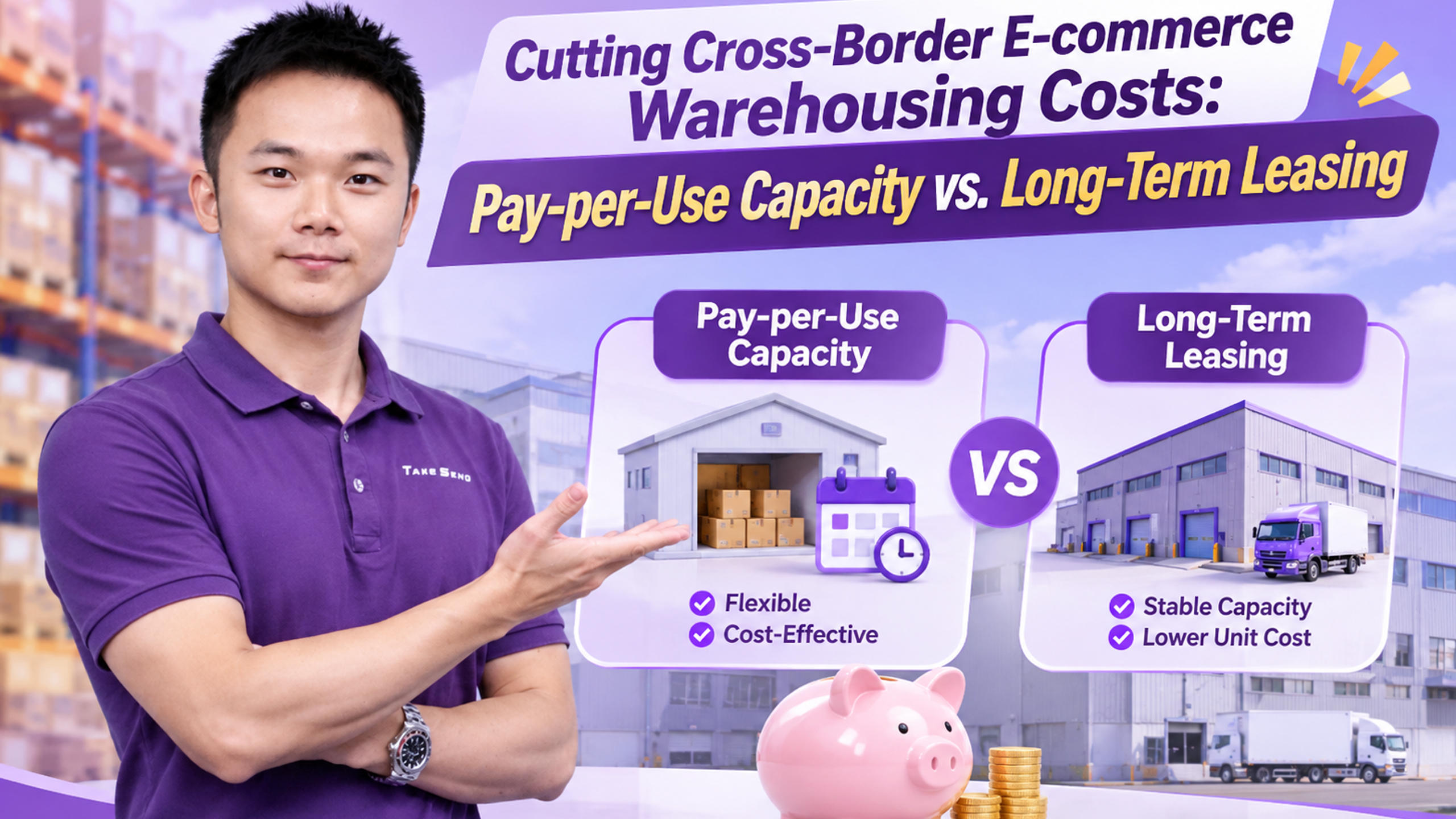
If there are fluctuations in store sales during peak and off peak seasons, or if there are many SKUs of products and small inventory of a single item, long-term fixed warehouse rental may not be cost-effective. Cloud warehouse dropshipping can consider settling based on the actual occupied storage capacity, allowing storage fees to follow inventory changes instead of bearing a fixed monthly warehouse rent.
1:Why is it possible to bear high warehousing costs when inventory is low?
Traditional warehouse leasing usually requires determining the area or space in advance. Even if only a portion of the space is actually used, rent may still need to be paid according to the agreed area.
The inventory of cross-border sellers is not always constant. During the new product testing period, the quantity of goods may only be a few boxes. The peak season is approaching, and it is necessary to concentrate on stocking up. After the event, inventory gradually decreased again. If paid for a fixed area over the long term, vacant space will also become a cost.
The approach is different when settling based on the actual occupied storage capacity. The amount of storage space occupied by the goods will be calculated according to the agreed billing standards between both parties. After the inventory decreases, there is also a chance for the storage fees to decrease accordingly. For sellers with large fluctuations in cargo volume, this method is easier to control warehousing expenses.
2:What should be asked clearly before signing the contract for charging based on actual storage capacity?
There is an easily overlooked aspect here: charging based on actual occupied storage capacity does not mean that the calculation method is the same for all warehouses.
Some are charged by cubic meter, some are calculated based on pallet, shelf space or actual occupied area, and some warehouses will set minimum charging standards. The operating costs of inbound, outbound, inventory, and repackaging may also be calculated separately.
Before signing the contract, it is recommended to clarify four things: firstly, how to measure the storage capacity, whether it is based on the size of the outer box or the actual stacking space. The second is to settle on a daily, monthly, or other periodic basis. Thirdly, is there a minimum charge for scattered inventory. The fourth is whether there are additional charges for inbound, outbound, and order shipping.
Also pay attention to the uneven size of the cardboard boxes, the inability to stack packaging, and the large space occupied by irregularly shaped goods, all of which may affect the actual storage capacity. Don't just look at the unit price on the quotation, but also calculate how much you actually need to pay for a month.
3:Which sellers are more suitable for this warehousing method?
Sellers with multiple new products and scattered SKUs often find it difficult to determine in advance how much space each product requires. Settlement based on actual storage capacity can reduce the continuous payment for temporarily unused space.
Sellers of seasonal products and holiday supplies will also experience significant inventory fluctuations. Concentrated warehousing during peak season and gradual clearance during off-season, storage costs do not need to be borne for a long time according to high inventory periods.
There is also a type of seller who is just starting out as an independent website or platform store, with an unstable order volume, and needs to bear the rent, personnel, and daily management expenses for building their own warehouse. Handing over warehousing and order forwarding to cloud warehouses can reduce the need to worry about daily warehouse affairs and focus on product selection, operations, and sales.
4:What else do you need to consider besides warehouse rent for Shenzhen Cloud Warehouse dropshipping?
Whether the goods in the cloud warehouse can be picked, packaged, and labeled in a timely manner according to orders, whether multiple SKU orders can be processed, and whether packages can be split or merged, will also affect daily operations.
When Shenzhen sellers choose cross-border e-commerce cloud warehouses, they can consider the inspection of incoming goods, inventory records, order processing, packaging labels, and abnormal feedback together. Comparing only the price per cubic meter can easily overlook the subsequent operational and communication costs.
If the initial inventory size is not large, you can also pay attention to warehouse discounts. Taijia Cloud Warehouse provides 60 days of free warehousing, with one piece shipping for each platform order, and supports package splitting, merging, packaging, labeling, product quality inspection, and photography services. Storage does not set additional thresholds based on the size of the goods or the number of categories, and specific goods still need to meet relevant storage and transportation requirements.
For sellers who are still testing their products and gradually increasing their inventory, having a free storage period in the early stages can alleviate the cost pressure of stocking up. Calculating the subsequent warehousing and shipping costs based on the actual outbound situation will be more flexible than assuming long-term fixed warehouse rent from the beginning.
FAQ
Q1: Shenzhen Cloud Warehouse charges based on actual storage capacity, is it suitable for small sellers?
Suitable for sellers with unstable inventory levels, a large number of SKUs, or those who temporarily do not want to rent their own warehouses, provided that the billing rules are clear.
Q2: Is charging based on storage capacity necessarily cheaper than fixed warehouse rent?
Not necessarily. It should be calculated comprehensively based on inventory volume, storage time, operating costs, and minimum charging standards.
Q3: Can cloud warehouse dropshipping store products of different categories?
It depends on the actual receiving range of the warehouse and the compliance requirements of the goods. Before entering the warehouse, the category, packaging, and transportation conditions should be confirmed.
SERVICE
Copyright © 2026 TakeSendShip. All rights reserved


