

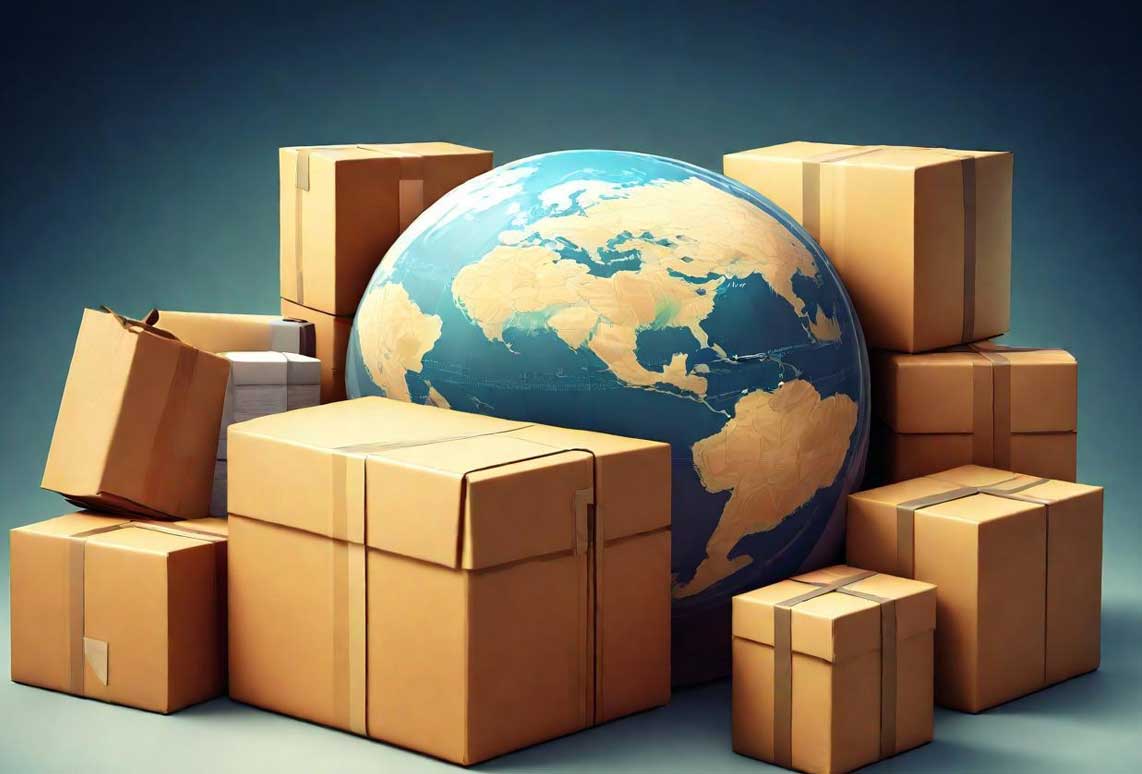
According to eMarketer's prediction, the global cross-border e-commerce online retail transaction volume will exceed 6 trillion US dollars in 2025, especially in emerging markets such as the United States, Europe, and Southeast Asia, where the growth is particularly rapid.
At the same time, overseas buyers' requirements for logistics timeliness and return and exchange experience are becoming increasingly strict. The traditional single shipping method has been unable to meet the diverse operational needs of cross-border sellers nowadays.
Under such a trend, cross-border cloud warehouses have begun to frequently appear in the discussions of the seller community. For small and medium-sized cross-border e-commerce sellers who want to get rid of cumbersome operations and optimize logistics experience, cloud warehouses are undoubtedly a key link to improve efficiency and reduce costs.
So, what services can a mature cross-border cloud warehouse provide to sellers? This article will answer for you one by one.
1. Warehouse management: The first step to solve overseas inventory
The primary function of cross-border cloud warehouses is local warehousing. Whether you are doing Amazon FBM, Shopify self-shipment, or localized platforms such as Temu, Walmart, etc., the cloud warehouse can provide services such as short-term storage, transfer, and batch transfer according to the needs.
In terms of inventory management, cross-border cloud warehouses usually have a WMS system (warehouse management system), which can accurately record the entry, exit, and in-stock status of each item of goods. Sellers do not need to personally operate across the sea, but can also keep track of the flow status of goods in real time.
2. One-stop pick and pack: Efficient handling of daily orders
The rise of the DTC model has made one-stop pick and pack almost a standard service for cross-border e-commerce. Cross-border cloud warehouses will perform the entire process of picking, packaging, labeling, and shipping based on the order information connected by the system.
Unlike FBA's large-scale warehousing, one-stop pick and pack supports execution based on individual orders, greatly improving flexibility. Especially for new-starters or sellers with many SKUs, it avoids the risks of stockpiling and redundant storage.
3. Multi-warehouse allocation: Shortening logistics routes and optimizing timeliness
Currently, overseas consumers are increasingly sensitive to how quickly the delivery can arrive. To ensure timeliness, many cross-border cloud warehouses have established layouts of warehouses in the eastern and western parts of the United States, as well as multiple regional distribution centers, supporting multi-warehouse coordination and allocation, and intelligent delivery based on regional areas. This can not only reduce last-mile transportation costs but also cope with sudden local delivery peaks.
Some cloud warehouses also support sellers to configure pre-stocked inventories based on the purchasing location of users, that is, the nearest delivery after the user places an order, maximizing the experience.
4. Return processing and label replacement services: No more difficulties in cross-border after-sales
Return and after-sales processing have always been a gray area for cross-border e-commerce. The traditional method is mainly refund, lacking the reuse and resale of goods. But now, mature cloud warehouses can provide:
Return item receipt, inspection, re-entry into storage
Replacement of damaged outer packaging, product function check
Label replacement, local delivery re-entry into storage
Through standardized processes, it not only ensures the satisfaction of buyers but also avoids losses for sellers.
5. Additional value-added services: Packaging materials, customization, quality inspection, etc. One-stop solution
An excellent cross-border cloud warehouse, in addition to completing the basic services of receive - store - deliver, can also provide customized services according to the different needs of sellers at different stages. For example:
Packaging material supply (delivery bags, cardboard boxes, etc.)
Multi-item packaging consolidation service
Labeling / replacement / FBA pre-processing
SKU quality inspection and shelving
Local customer service support, etc.
These additional services greatly reduce the daily communication and management costs for sellers.
Take Taig Cloud Warehouse as an example, it has three core warehouse networks in the eastern, western, and central parts of the United States, enabling one-stop delivery across the country. Its WMS system supports API integration with mainstream e-commerce platforms, real-time order synchronization, and high operational efficiency. The e-commerce industry is constantly evolving. Cross-border overseas cloud warehouses are no longer just simple warehouses for storage and delivery. They have evolved into comprehensive logistics service platforms that integrate storage, order execution, after-sales handling, and supply chain management.
SERVICE
Copyright © 2026 TakeSendShip. All rights reserved


