

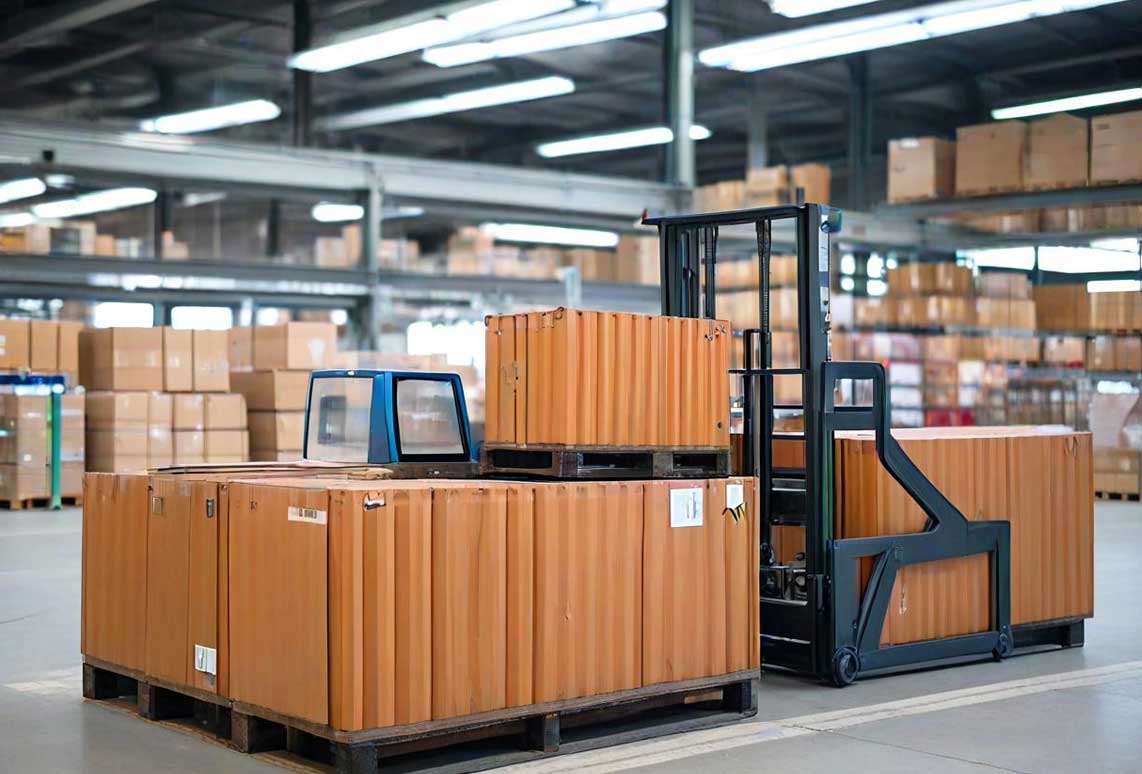
The cloud of the Los Angeles port strike at the beginning of the year has not yet dissipated, and in May, the cost of ocean freight in the US rose again. The uncertainty of cross-border logistics still follows us in 2025.
For many sellers in the US market, this not only means an increase in costs, but also means that the efficiency of warehouse distribution and the ability to respond flexibly are becoming the key factors in whether they can win orders.
The bustling overseas warehouses are no longer just storage warehouses; they have become a crucial link in supporting the resilience of cross-border business. The warehouse distribution and delivery trends in 2025 are rapidly evolving towards greater refinement, localization, and intelligence.
For sellers in the US market, the impression of overseas warehouses in the past was mostly concentrated on the basic functions of storage and delivery. But now, a comprehensive overseas warehouse with response speed, regional collaboration, and return handling capabilities has become a standard for improving cross-border fulfillment experience.
Especially in the US, buyers have higher requirements for delivery time, product packaging, and after-sales handling. The platform side no longer merely relies on price recommendations, but pays more attention to order fulfillment performance and customer satisfaction. All these are pushing the warehouse distribution system to upgrade.
In 2025, the services of US overseas warehouses will undergo three major changes:
First, the distribution network layout is more strategic.
From the traditional centralized single-point storage to the common three-cities (East Coast, West Coast, and Central America) collaborative layout, through intelligent inventory allocation, cross-state orders can be responded to quickly, reducing transportation time and costs.
Second, the service capabilities extend to pre-sales and after-sales.
In addition to picking, labeling, and packaging operations for delivery, more service providers have added functions such as inventory counting, product quality inspection, return re-shelfing, and label replacement and order change, making the warehouse a real supply chain operation background.
Third, the storage mode is more flexible.
Supporting mechanisms such as piece-based charging, short-term lease storage, on-demand allocation, consolidation and splitting, and flexible last-mile connection help small and medium-sized sellers lower operational thresholds while having certain elasticity to cope with peak and off-peak periods.
TakeSend's Taigayun warehouse, an overseas warehouse service provider in the US, has a local warehouse in Los Angeles, supporting a 30-day free warehouse rental policy. At the same time, it provides standardized operations such as on-demand one-stop delivery, last-mile self-selection, return re-shelfing, and abnormal goods handling for platform-based and self-delivery sellers, covering the frequent needs of current sellers.
This US overseas warehouse model enables sellers to not need to prepare large quantities of goods at once, but only to schedule deliveries based on real-time orders, avoiding overstocking and ensuring inventory liquidity, especially suitable for small-scale merchants expanding their market.
Starting from 2025, the role of US overseas warehouses is quietly changing. They are no longer just storage transfer stations, but essential nodes throughout the selection, preparation, delivery, and return of the entire chain.
For cross-border sellers, who can lay out this warehouse distribution path in advance, they will have an additional efficiency trump card beyond the price war.
SERVICE
Copyright © 2026 TakeSendShip. All rights reserved


