

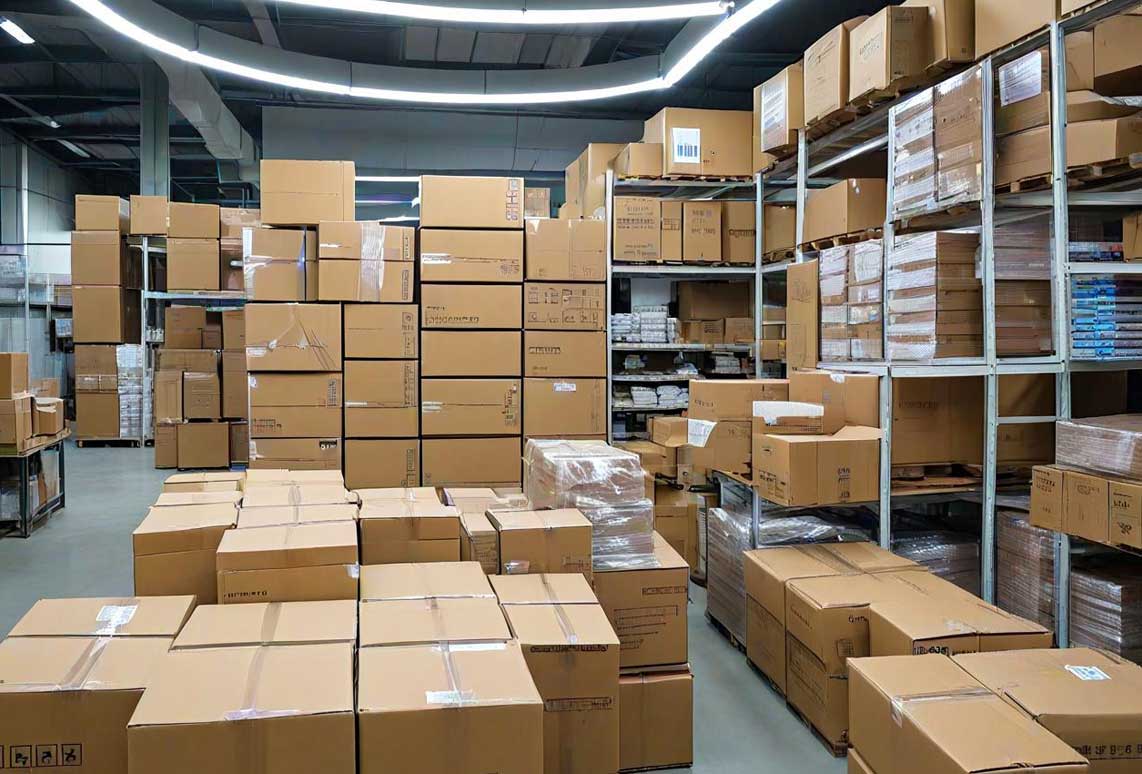
The mid-year peak season is approaching, and many cross-border sellers are starting to prepare for events such as Amazon Prime Day and summer promotions on their own websites. However, many have found during their review of the operations in the first half of the year that the problems lie not in traffic, not in products, but in shipping. Shipping is slow, unable to keep up, and prone to errors. This is one of the most troublesome common issues for most small cross-border teams.
For sellers targeting the North American market, facing complex customs clearance, unstable last-mile delivery, and frequent stockouts during holidays, they can't help but sigh: It's not that they don't want to improve the service experience; it's just that they really don't have the ability. At this time, the one-stop local warehouse shipping has gradually become an option and then a necessity.
But although this term is popular, it doesn't mean it is applicable to everyone. Before deciding to adopt it, sellers must first figure out what it solves and whether it matches the rhythm of their own stores.
In simple terms, one-stop local warehouse shipping means sending the goods to the local warehouse in the United States first. When there is an order from a customer, the warehouse will handle the shipment on their behalf. Sellers save the intermediate steps of domestic packaging, international logistics, and delivery, achieving local shipping and faster delivery times. At the same time, it also reduces the difficulty of return and exchange handling.
For some sellers with best-selling products and fast-moving sales, this model can achieve efficient turnover close to zero warehouse rent, greatly reducing financial pressure. But for those who are just starting out and have unstable orders, if they don't choose the right warehouse or don't plan their inventory well, they may also experience a cost surge due to slow sales.
In reality, the functions provided by different overseas warehouse service providers vary. Some only support shipping, while others can offer additional operations such as labeling, changing labels, return inspection, and exchange of orders, which are more suitable for sellers with many SKUs, frequent changes in packaging or channels.
Another often overlooked point is the system integration capability. A good overseas warehouse should be able to synchronize inventory and orders with the store system in real time, avoiding errors in manual operations such as incorrect shipment, missed shipment, and delayed shipment. Otherwise, one-stop local warehouse shipping will become semi-automatic shipping, and the efficiency will actually decrease.
Many third-party overseas warehouses also have the problem of tail-end binding, that is, they must use the logistics services they specify, and sellers cannot choose the channels. In this case, the high shipping costs and poor service can only be endured, and the merchants themselves will suffer the losses.
If considering using the one-stop local warehouse shipping model, it is recommended to choose a local warehouse service provider in the United States that supports flexible tail-end, offers a free warehouse rent period, and has standardized operation processes.
Currently, service providers like TakeSend, which have multiple warehouses in the Eastern, Central, and Western United States, have launched more suitable models for small sellers, such as 30-day free warehouse rent one-stop local warehouse shipping service, avoiding the risk of overstocking and not forcing the selection of tail-end channels. Sellers can choose USPS, UPS, FedEx, etc., in a more cost-effective way based on different orders.
In the end, one-stop local warehouse shipping for overseas warehouses in the United States is not a universal solution. But for sellers with a certain shipping rhythm and clear SKUs, it is one of the effective means to reduce shipping costs and improve the buyer experience at this stage.
SERVICE
Copyright © 2026 TakeSendShip. All rights reserved


