

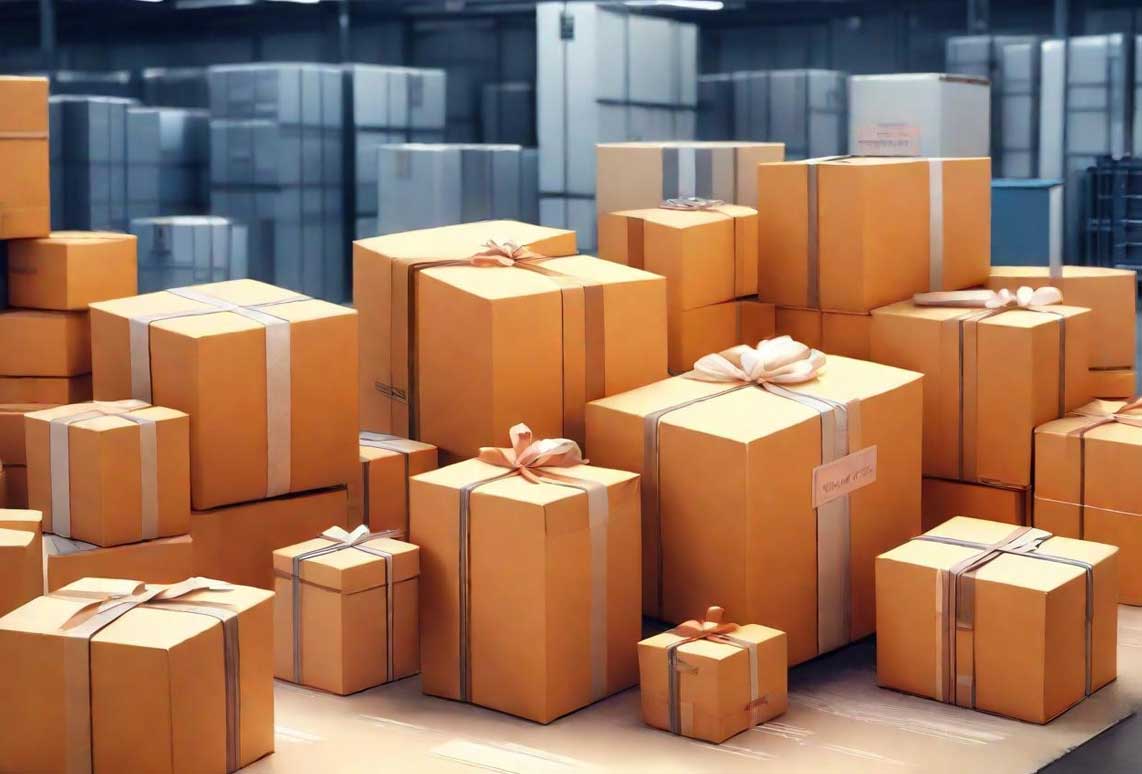
In recent years, the explosive growth of cross-border e-commerce has made these two terms - overseas warehouses and cloud warehouses - increasingly frequent in the sight of cross-border trade sellers.
Newcomers just entering the industry may be confused: What exactly are overseas warehouses? What is cloud warehousing for? What are the differences between them? Is it necessary to use both?
In fact, these warehousing models not only affect shipping efficiency and operating costs, but also directly relate to the buyer's experience and platform ratings. Sellers must understand this.
In the early days of cross-border shipping methods, they were all from domestic warehouses and sent directly to buyers through international logistics. But as the order volume increased and buyers' requirements for delivery time became higher and higher, this method gradually exposed problems such as low efficiency, high loss rates, and difficult after-sales handling.
Therefore, overseas warehouses and cloud warehouses emerged. Their appearance was precisely to solve the logistics and warehousing needs at different stages.
What are overseas warehouses? They refer to the warehousing facilities set up in the target market of sales. For example, Chinese sellers set up warehouses in the United States. Sellers transport a portion of goods to overseas warehouses in advance. When there are orders, the warehouse can ship nearby, greatly shortening the logistics time and also enhancing the trust of local buyers.
You should know that this fast shipping and delivery service is very important for platforms like Amazon and Walmart that value delivery experience. Using overseas warehouses can improve exposure and conversion rates and is a core part of stable operation.
Cloud warehouses for cross-border trade are more often a relative warehouse and distribution solution for the domestic segment. It is actually a shared warehousing service. Sellers do not need to rent warehouses or recruit staff themselves. Instead, they hand over goods to a third-party cloud warehouse service provider, who completes operations such as warehousing, sorting, labeling, quality inspection, and outbound.
In the context of multi-platform and multi-channel operations, cloud warehouses provide sellers with flexible and lightweight warehousing options, especially suitable for those merchants with unstable initial orders, many product SKUs, but still hoping for more standardized operations.
The two are not opposed to each other; they are upstream and downstream in the cross-border chain. For example, an independent website seller can concentrate different SKU products in cloud warehouses and complete quality checks, classification, and listing through the system, and then be uniformly packaged for the headway shipment to the overseas warehouse in the United States.
When local orders in the United States are generated, the overseas warehouse will handle the one-stop shipment. This combination of cloud warehouses and overseas warehouses not only improves efficiency but also reduces costs and human error rates.
Take Taigay Cloud Warehouse as an example. It has intelligent cloud warehouses in places like Shenzhen, which can provide services such as quantity counting during goods entry, outer packaging inspection, abnormal feedback, and classification listing for sellers.
Through WMS system integration, sellers can view inventory and outbox status in real time, avoiding problems such as wrong delivery and insufficient delivery. At the same time, Taigay has multiple overseas warehouse locations in Los Angeles and New Jersey in the United States, supporting one-stop shipment, local returns, label replacement, and re-listing operations, greatly improving the efficiency of after-sales handling. It is very practical for sellers operating Amazon FBM or Shopify independent websites.
Whether you are a new seller just entering the industry or a mature merchant operating on multiple platforms, understanding and using overseas warehouses and cloud warehouses will save you more time and energy in the future competition.
SERVICE
Copyright © 2026 TakeSendShip. All rights reserved


