

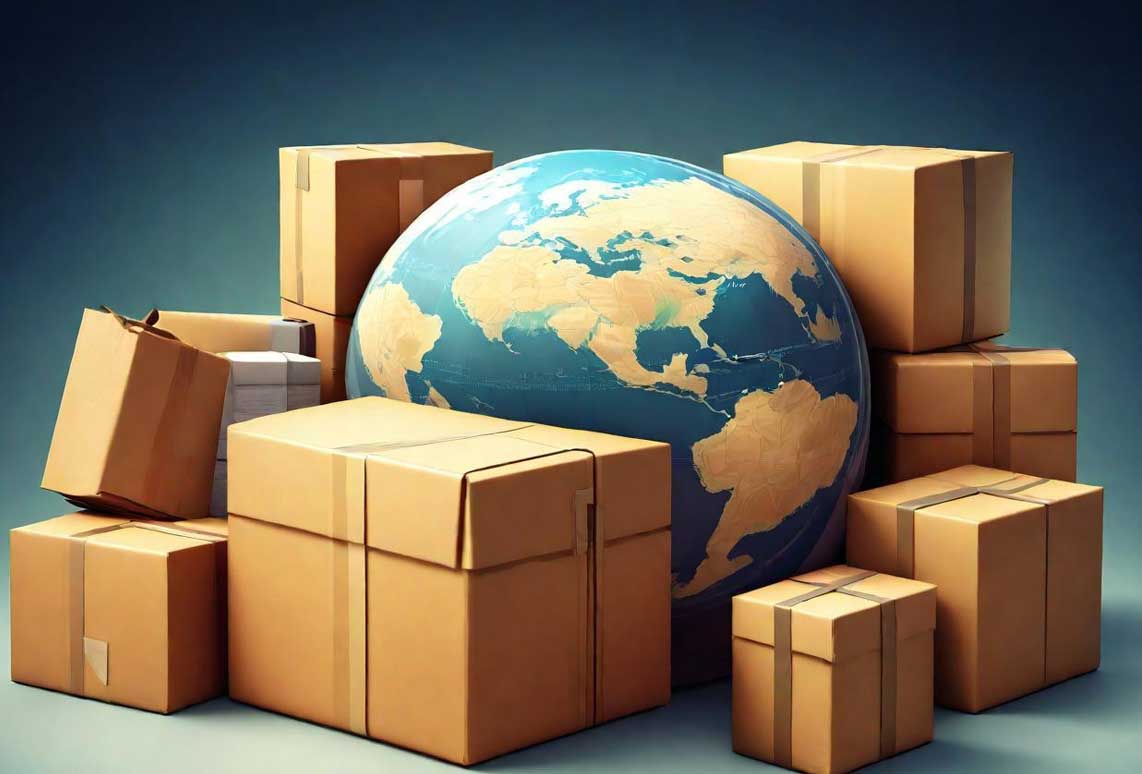
From exhibition sites to platform live broadcasts, from industrial park promotional brochures to peer communication groups, almost every cross-border seller has heard of cloud warehouse models, cloud warehouse delivery, overseas cloud warehouses, and other terms.
Some people are confused and don't know what the difference is between this and the traditional third-party warehouse. Some sellers have already tasted the benefits in actual operations and have taken the lead in planning.
From 2024 to 2025, the changes in the cross-border e-commerce market are multifaceted. On the one hand, the European and American markets have continuously raised requirements for logistics efficiency and after-sales experience, and platforms have become increasingly strict in their assessment of delayed shipments and loss compensation.
On the other hand, the efficiency bottleneck of the domestic supply chain has gradually emerged. Problems such as low packaging efficiency, chaotic SKU management, and unclear shipping routes are becoming hidden costs for many sellers on their transformation journey.
The cross-border cloud warehouse model has emerged and quickly become a new choice for many cross-border e-commerce operators. So, what exactly is a cloud warehouse? What types of cloud warehouse models are there? And how should one make a choice based on their own business needs?
Cross-border cloud warehouse is a shared warehousing and distribution service. It is different from the traditional model where one seller rents a fixed piece of warehouse space. Instead, through a platform-based system, multiple merchants share warehouse resources, system operations, and distribution networks to achieve cost reduction and efficiency improvement.
Initially, the term "cloud warehouse" was mostly used in the domestic e-commerce field, such as the warehousing and distribution services provided by merchants on Alibaba and Cainiao systems in the Ali and Cainiao ecosystems. With the explosion of cross-border business, the concept of cloud warehouse was introduced to the international logistics field and developed into more diverse models.
According to the location and function of the service, cross-border cloud warehouses are mainly divided into two types: domestic cloud warehouses and overseas cloud warehouses.
The main functions of domestic cloud warehouses are focused on pre-processing, including centralized warehousing of suppliers' products, sorting of goods, labeling, quality inspection, weighing, packaging, and pre-loading of the first leg of the journey.
Many small and medium-sized sellers do not have the ability to operate their own warehouses and instead choose to concentrate their goods in cloud warehouses such as those in Shenzhen, Yiwu, and Guangzhou for centralized processing and then send them overseas in a unified manner.
Such cloud warehouses require efficient operation, stable systems, and the ability to be compatible with different platform order requirements, as well as the ability to package on demand, one-stop shipping, and multi-platform integration.
Overseas cloud warehouses are closer to the final delivery at the last mile. Usually, sellers will ship a certain amount of goods by sea or air to overseas local warehouses, and then the warehouses will perform local picking, packaging, and delivery based on the orders.
This model can significantly improve delivery efficiency and reduce tail-end logistics costs, especially suitable for scenarios with strict platform requirements or high customer experience standards, such as Amazon, Walmart, and independent websites. Furthermore, some overseas cloud warehouses may also provide additional services such as return handling, re-listing, and exchange and label replacement to help sellers improve their after-sales systems.
No matter which approach you choose, it is recommended to plan the warehouse layout based on your own supply chain capabilities and operational rhythm, and combine the actual functions of the cloud warehouse to do so.
If you are an independent website seller with stable orders but many SKUs, choosing a domestic cloud warehouse combined with regular shipments to overseas warehouses can reduce the pressure of fulfillment.
If you are a platform seller with high volume and strict time requirements, prioritizing the establishment of overseas cloud warehouses may be more appropriate.
After all, in the increasingly competitive cross-border e-commerce landscape, whether you can achieve speed, stability, and cost savings is the key to determining whether you can sustain profitability.
SERVICE
Copyright © 2026 TakeSendShip. All rights reserved


