

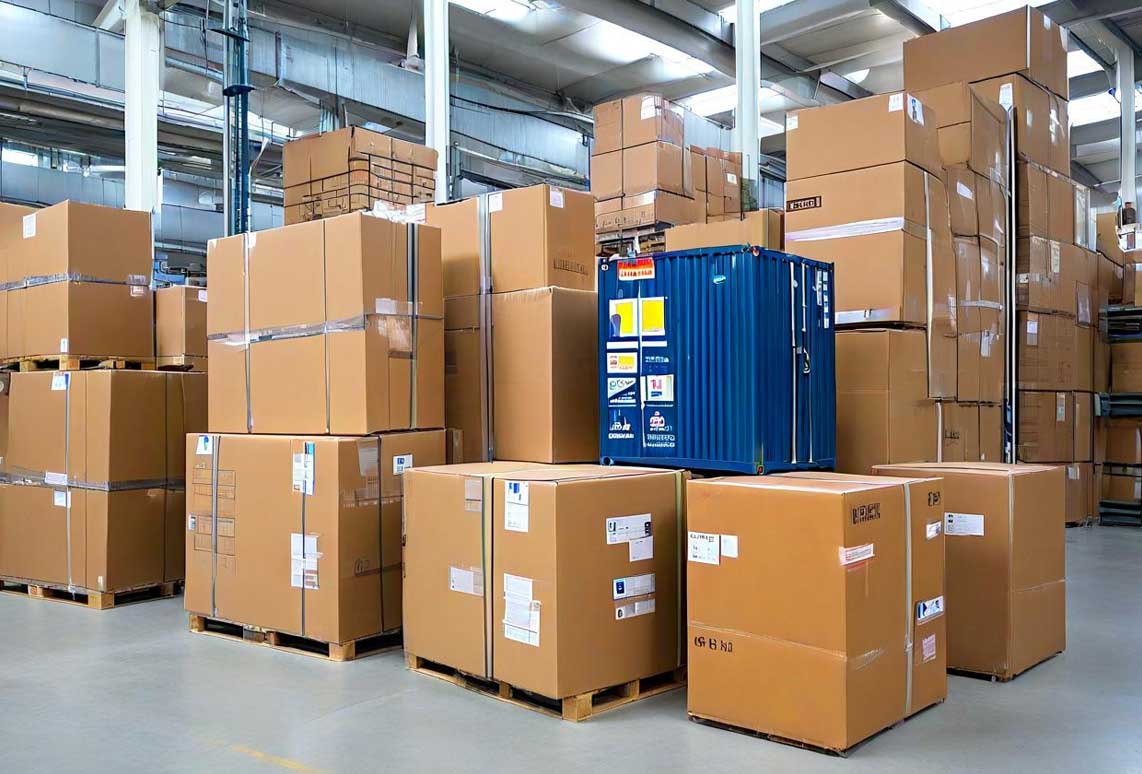
If you are also a cross-border e-commerce seller, you may have repeatedly heard a word when shipping products through various channels: cloud warehouse.
Major product suppliers are recommending it, peers are using it, platforms are encouraging it, and even the salespeople of logistics companies are constantly mentioning that we have connected with cloud warehouse for shipping. But in the end, what exactly does this cloud warehouse refer to? How is it different from traditional warehousing? Why are more and more cross-border sellers considering using cloud warehouses?
In the first half of 2025, e-commerce is still growing on the same track, but the problems faced by sellers are becoming more specific and detailed.
Price wars have reached the point where profits have bottomed out, traffic is dispersed, and customers have higher requirements for shipping timeliness and service quality. Coupled with uncontrollable factors such as fluctuations in headway freight, customs clearance delays, and various other factors, many small and medium-sized sellers are starting to think: Can we outsource the physical tasks of warehousing, packaging, and shipping, and focus only on operations and sales?
Modularizing and systematizing the traditional warehousing services and turning them into a warehousing and shipping service that cross-border merchants can use at any time is what cloud warehouse means.
You don't need to rent warehouses yourself, you don't need to build your own teams, and even label printing and packaging materials can be handled by the warehouse uniformly. Through system interfaces such as ERP and API, the seller's platform orders can be directly synchronized to the warehouse, and the warehouse operations can be completed by dedicated personnel, achieving one-stop shipping, shared warehouses across multiple platforms, and unified tracking.
For sellers with many SKUs, platform stocking, unstable daily shipment volume, or those in the early stages of business, the biggest problem that cloud warehouses solve is flexibility and efficiency.
Currently, cloud warehouses on the market can be roughly divided into two types: domestic cloud warehouses and overseas cloud warehouses.
Domestic cloud warehouses are more focused on the warehousing and shipping process within China. With core locations in places like Shenzhen, Yiwu, and Guangzhou, some specialized cloud warehouses not only provide warehousing and packaging services but also can handle procurement, quality inspection, label replacement, printing of platform labels, box consolidation, and palletizing.
Sellers only need to send their goods to the designated warehouse, and the remaining processes are all handled by the warehouse system. For sellers who operate on multiple platforms or in multiple countries, domestic cloud warehouses can reduce duplicate packaging and labor costs and improve the efficiency of pre-processing.
Overseas cloud warehouses focus on the destination country, shipping a certain inventory there by sea or air to achieve local shipping. Local delivery, return and exchange handling, and customer timeliness experience can all be improved, making it suitable for sellers with stable orders, concentrated product categories, and customers with requirements for timeliness.
However, not all sellers are suitable to start with an overseas warehouse, especially when the judgment of product popularity is inaccurate and the flexibility of inventory preparation is high. In such cases, cooperating with a reliable domestic cloud warehouse can help you test and iterate more effectively while moving forward.
Some well-established cloud warehouses, such as Taigya Cloud Warehouse operating in Shenzhen for a long time, will provide one-on-one packaging suggestions and channel combinations based on the seller's product category, packaging preferences, and platform rules, achieving full transparency in the entire chain from warehousing—packaging—shipping—tail-end tracking, helping sellers find a balance between inventory turnover and fulfillment experience.
The future of cross-border e-commerce lies not only in product selection and traffic, but also in a set of efficient, stable, and capable of responding quickly supply chain system.
SERVICE
Copyright © 2026 TakeSendShip. All rights reserved


