

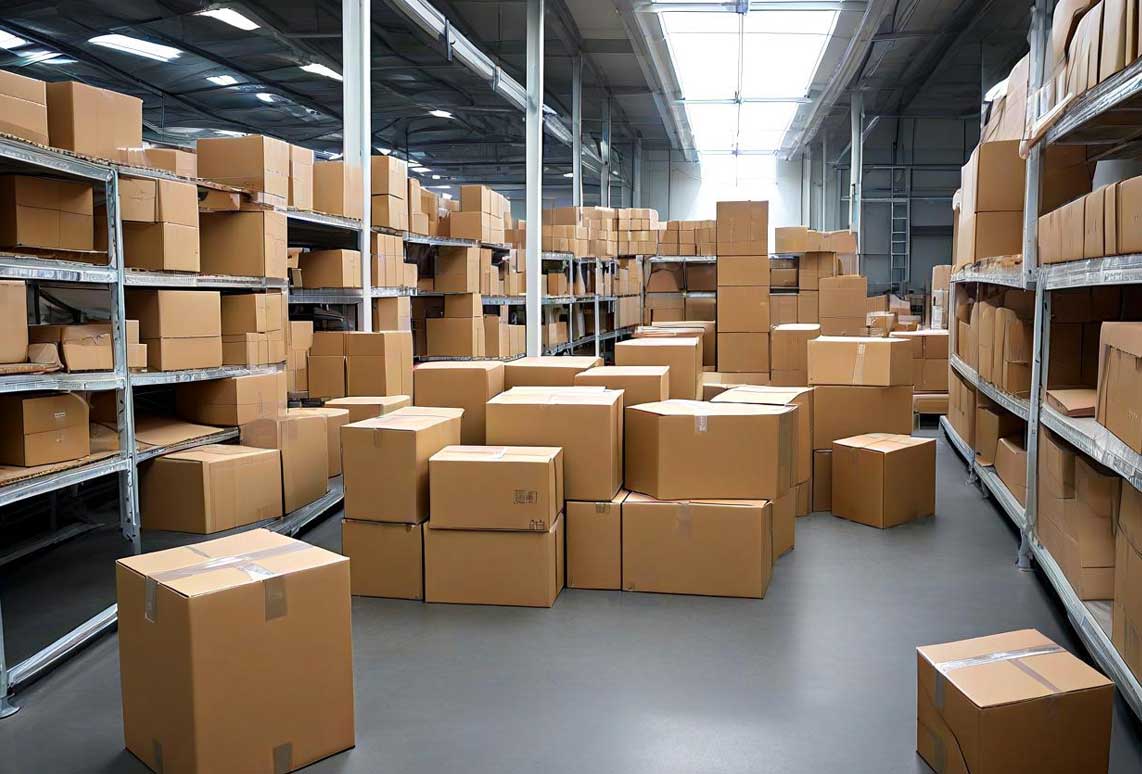
More and more friends engaged in foreign trade have discovered that: customers have become increasingly demanding regarding the delivery time, after-sales service and logistics. If the target market is in Europe or America, relying solely on domestic shipping has long been unable to meet the frequent and small-batch order requirements.
Many small B-end customers have clearly stated: without local warehousing, cooperation is basically not considered.
The term "overseas cloud warehouse" frequently appears in the field of foreign trade. But what actual problems can it solve? Is it only suitable for big brands? Is the cost expensive? Is the shipping process complex? These are the points that everyone wants to figure out most.
Don't be intimidated by the word "cloud". In fact, an overseas cloud warehouse, in simple terms, is a local warehousing platform shared by a group of cross-border sellers. The difference is that it not only has physical warehouses but also connects to the ERP order management system. Sellers can remotely manage inventory, handle orders, and once a customer places an order, the system automatically notifies the warehouse to prepare, pack, and dispatch, completing local delivery.
The operation logic is similar to self-shipping on the platform, but the warehouse is moved overseas. For foreign trade merchants, the benefits of using overseas cloud warehouses are very obvious.
First, it shortens the delivery cycle. In the past, shipping from the domestic side took at least 7-15 days, but now shipping from the local side can be delivered within 3 days without a problem.
Second, it enhances customer trust. Being able to ship locally in the United States, in their eyes, you are a reliable merchant, and it is easier to win orders in some B-to-B collaborations.
Third, the cost is more controllable. Although there are fees for renting warehouses, listing, and outloading overseas warehouses, the single-ticket logistics cost is actually much lower than frequent international express shipping after centralized shipping and warehousing.
There are many overseas cloud warehouse service providers on the market, but not every one can provide truly suitable services for foreign trade merchants. For example, some warehouses are only suitable for platform e-commerce and do not accept B-end self-shipping. Some have unstable system connections, and if there are problems with the orders, they still have to rely on manual communication. Some even claim to be cloud warehouses but are essentially just drop-off points for collection and delivery, with rather loose warehouse management.
Taigay Cloud Warehouse has overseas warehouses in the East Coast, New Jersey, and Los Angeles of the United States. It has a dedicated local shipping process for B-end sellers. The system supports independent websites, Shopify, and ERP synchronization. Even if you use a manual table, you can quickly arrange for shipping, and you won't be hindered by technical barriers.
It is suitable for scenarios such as wholesale sample sending, cross-border one-stop shipping, and brand self-built website inventory preparation. The East Warehouse of TakeSend can cover the eastern part of the United States within 3-5 days of delivery, and the West Warehouse in the West Coast is even connected to the local courier network, suitable for small and medium-sized batch shipments in the central and western regions.
Before warehousing, the system will check SKUs, labels, and quantities to avoid errors. After shipping, there will also be clear logistics nodes and abnormal alerts, which will be an additional advantage for time-sensitive foreign trade customers.
SERVICE
Copyright © 2026 TakeSendShip. All rights reserved


