

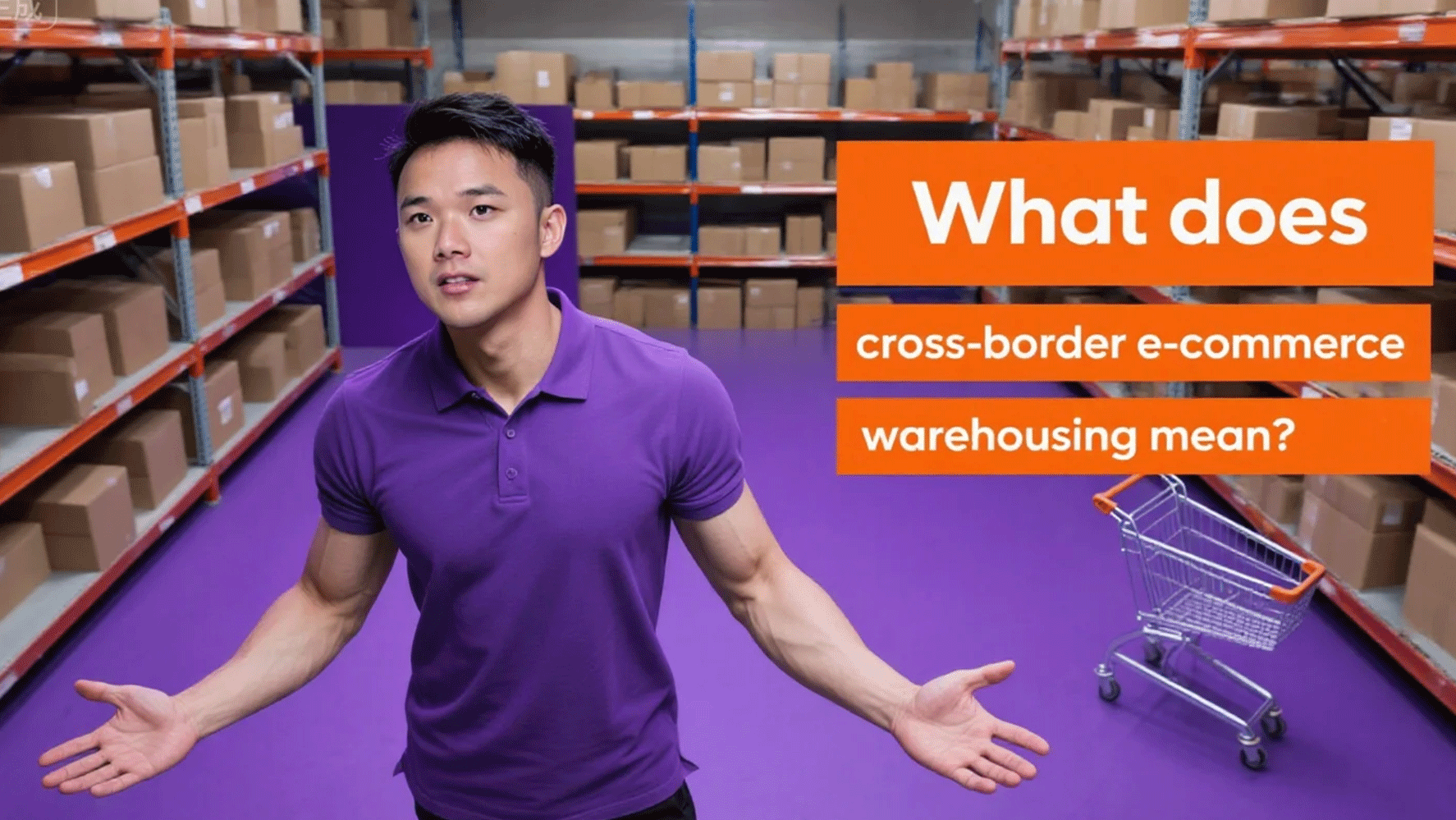
Let's reveal the answer now: Cross-border e-commerce warehousing provides services for cross-border sellers, including storage, management, and shipping processing of goods.
Unlike traditional warehousing, it is not merely a space for storing goods; it also serves as a link between the supply chain and the e-commerce platforms. For cross-border sellers, warehousing is not only about solving the problem of inventory storage, but also relates to the speed of order fulfillment, logistics costs, and customer experience.
Under the cross-border e-commerce model, sellers usually need to reserve goods in different countries or regions to shorten the delivery time and reduce logistics costs.
Such warehousing not only has storage functions but also provides operations such as sorting, packaging, and shipping. Sellers only need to send the goods to the warehouse in advance. When an order is generated, the warehousing system will automatically synchronize the information of the e-commerce platform, complete the picking, packaging, and arrange the delivery, significantly shortening the time for buyers to receive the goods.
For overseas online buyers, this experience is closer to local shopping, significantly enhancing satisfaction.
Cross-border e-commerce warehousing is generally divided into two modes: domestic warehousing and overseas warehousing. Domestic warehousing mainly handles the centralized storage of goods and international shipping, serving as the starting point for sellers' cross-border logistics. Overseas warehousing is located in the target consumer market country, providing end support for order delivery.
The two complement each other: Domestic warehousing helps sellers unify inventory preparation, quality inspection, and packaging, reducing shipping costs. Overseas warehousing is responsible for quickly responding to orders and reducing international transportation links. By reasonably combining domestic warehousing and overseas warehousing, sellers can balance costs and timeliness, and flexibly respond to demand fluctuations in different markets.
In practical operations, the connotation of cross-border e-commerce warehousing services is no longer limited to inventory storage.
A mature warehousing system usually comes equipped with a WMS (Warehouse Management System) storage management system, connecting with the e-commerce platform's backend to achieve visualized inventory management. Sellers can monitor inventory quantities, entry and exit status, and order fulfillment situations in real time, avoiding shortages or overstocking due to inaccurate inventory.
In addition, many warehousing service providers also offer functions such as label printing, return handling, and value-added quality inspection, allowing sellers to focus on running their stores while entrusting complex warehousing and logistics affairs to professional teams.
For example, Taigayun Warehousing's domestic warehouse provides full-process support covering warehousing, sorting, quality inspection, packaging, and shipping. All links are controlled by an AI digital system to ensure orderly and efficient goods management.
Such services bring cross-border sellers not only storage space but also order fulfillment guarantees. Sellers can use the system's visual operations to keep track of inventory status at any time and reduce the burden of manual management.
From inventory handling to order shipment, the core value of cross-border e-commerce warehousing lies in simplifying supply chain processes and improving fulfillment efficiency. With the continuous expansion of cross-border business, stable warehousing services not only reduce logistics costs but also improve buyers' shopping experience, helping sellers stand out in the competition.
SERVICE
Copyright © 2026 TakeSendShip. All rights reserved


