

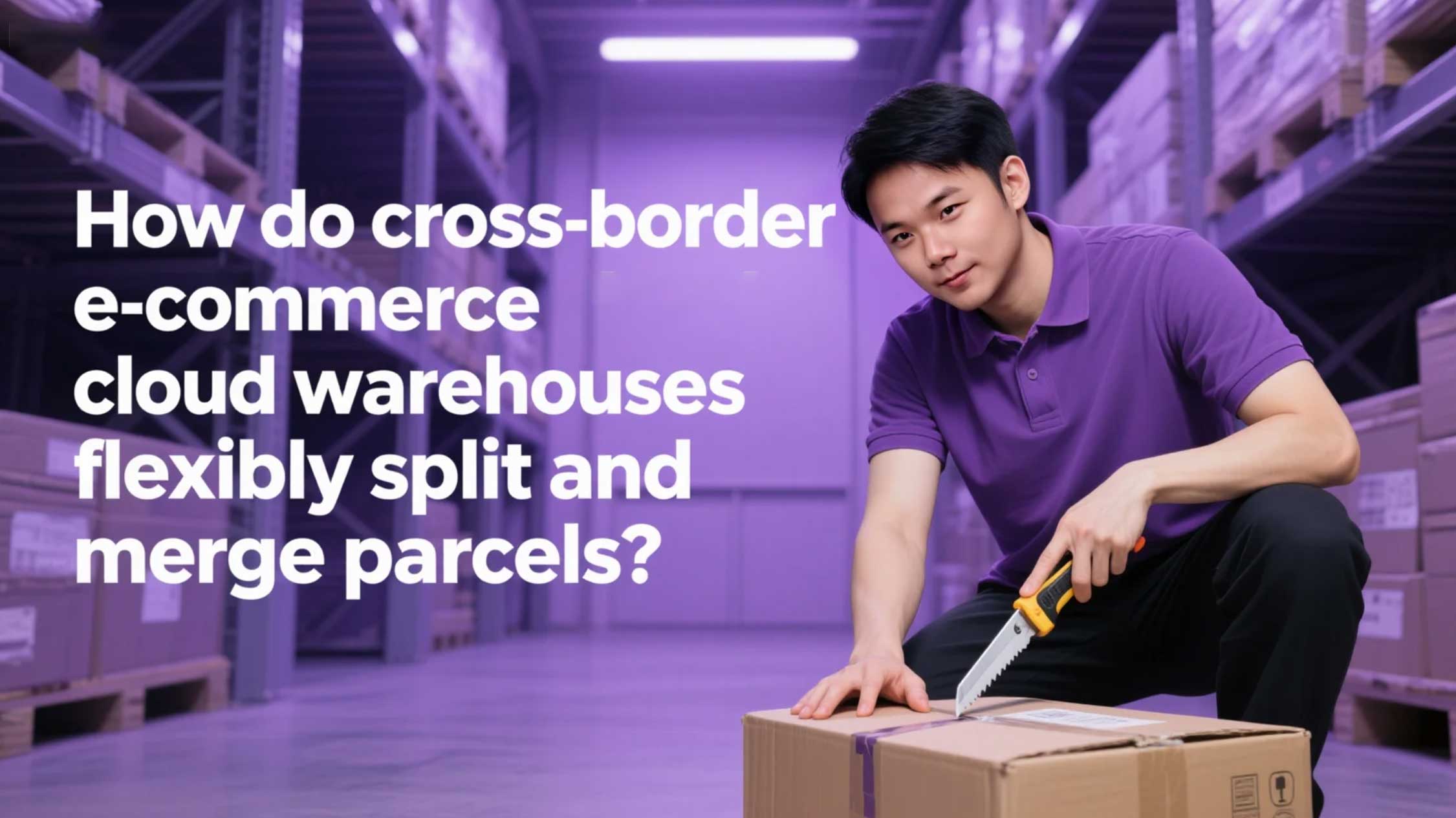
In the increasingly competitive environment of cross-border e-commerce, sellers' demand for warehousing and logistics is no longer limited to just being able to deliver goods. How to make inventory management more flexible and shipping modes more efficient has become a concern for more and more foreign traders and cross-border e-commerce sellers.
For sellers who need to ship to FBA warehouses and overseas warehouses, the splitting and merging of different SKUs within the package often determines operating costs and delivery time.
The emergence of cross-border e-commerce cloud warehouses has solved this pain point for sellers. One of its core advantages is the ability to provide flexible splitting and merging services based on different order requirements.
For example, when a seller purchases goods directly from a supplier, they can first send a large quantity of goods to a cloud warehouse, and then split the packages according to the platform's order situation, and send them to different FBA warehouses or overseas warehouses separately; On the contrary, if multiple orders come from the same region, they can also be combined and packaged in the warehouse for one-time shipment, reducing transportation costs.
Taking sending to Amazon FBA as an example, the Amazon platform has strict requirements for warehousing, and sellers must split and deliver their goods according to warehouse instructions. If the seller operates on their own, they may face uneven distribution and increased costs.
The splitting service of cloud warehouse can easily divide large quantities of goods into multiple small batches, directly corresponding to the platform's warehousing rules, saving manpower and avoiding duplicate costs in the logistics process.
On the other hand, consolidated shipments also play an irreplaceable role in many scenarios. For example, if a seller receives orders on different platforms simultaneously and processes them separately, each order will incur a shipping fee.
But in the operation of cloud warehouse, these orders can be merged, packaged and delivered to the buyer's location. This not only reduces the cost of express delivery, but also shortens the delivery time, allowing buyers to experience a faster delivery process. For sellers expanding into North American or European markets, the ability to consolidate shipments often enhances overall profit margins.
In addition to reducing transportation costs, splitting and merging also make inventory management more flexible. Many sellers may worry about inventory buildup and financial pressure, but through the flexible management of cloud warehouses, they can initially store their goods in a centralized manner and then flexibly arrange for partial shipments based on sales performance. This approach not only reduces the risk of stockpiling, but also allows for quick replenishment of goods during peak demand periods, making store operations more adaptable.
A more unexpected possibility is that the package operation of the cloud warehouse can be directly connected to the supplier.
Sellers do not need to spend time on complex packaging and splitting themselves, they only need to have the supplier directly send the bulk goods to the warehouse, which will then complete the subsequent splitting, merging, and delivery. This greatly simplifies the operational process for cross-border sellers, allowing them to focus more on product selection, marketing, and customer maintenance rather than getting stuck in tedious logistics details.
At present, cross-border e-commerce cloud warehouse services in the market have gradually matured and can cover the needs of mainstream platforms including Amazon, Walmart, eBay, Shopify, etc. Whether it is connecting to FBA warehousing or sending to third-party overseas warehouses, sellers can use the cloud warehouse's splitting and merging services to make order processing smoother. Especially for sellers who operate in parallel across multiple channels and platforms, this support is almost indispensable.
Taijia Cloud Warehouse's flexible operation in package splitting and merging allows sellers to freely adjust their shipping strategies based on actual order situations, while meeting the dual requirements of platform policies and buyer experience. This service model not only saves operating costs, but also helps cross-border sellers maintain a competitive advantage in the fierce market.
SERVICE
Copyright © 2026 TakeSendShip. All rights reserved


