

In recent years, the cross-border e-commerce market has been continuously heating up. Whether it's Temu, SHEIN's rapid expansion overseas, or Amazon eBay, The steady growth of traditional platforms such as AliExpress has prompted more Chinese sellers to try to layout on multiple platforms simultaneously. Under this trend, order management and shipping efficiency have become key issues.
The seller self shipping model not only consumes manpower, but also easily leads to label discrepancies, delayed delivery, and other situations. The emergence of cross-border cloud warehouses provides sellers with a more flexible solution. So whether cloud warehouse dropshipping can achieve separate shipment of orders from different platforms has become a concern for everyone.
1, Why do cross-border sellers need to ship independently on multiple platforms
I believe that most sellers will not rely solely on a single platform, but will expand their products to multiple markets. For example, a seller who operates both Amazon and eBay stores, and even has stores on emerging platforms such as Temu or Shopee. If all orders are processed together, it can easily lead to:
The label does not match, and the platform cannot enter the warehouse.
The inventory is chaotic and it is impossible to track the sales situation of different stores.
Difficulty in after-sales handling, affecting ratings and buyer experience.
Therefore, multi platform sellers must ensure that each platform order can be shipped independently and strictly follow their respective rules.
2, How to implement separate shipment of platform orders in cloud warehouse
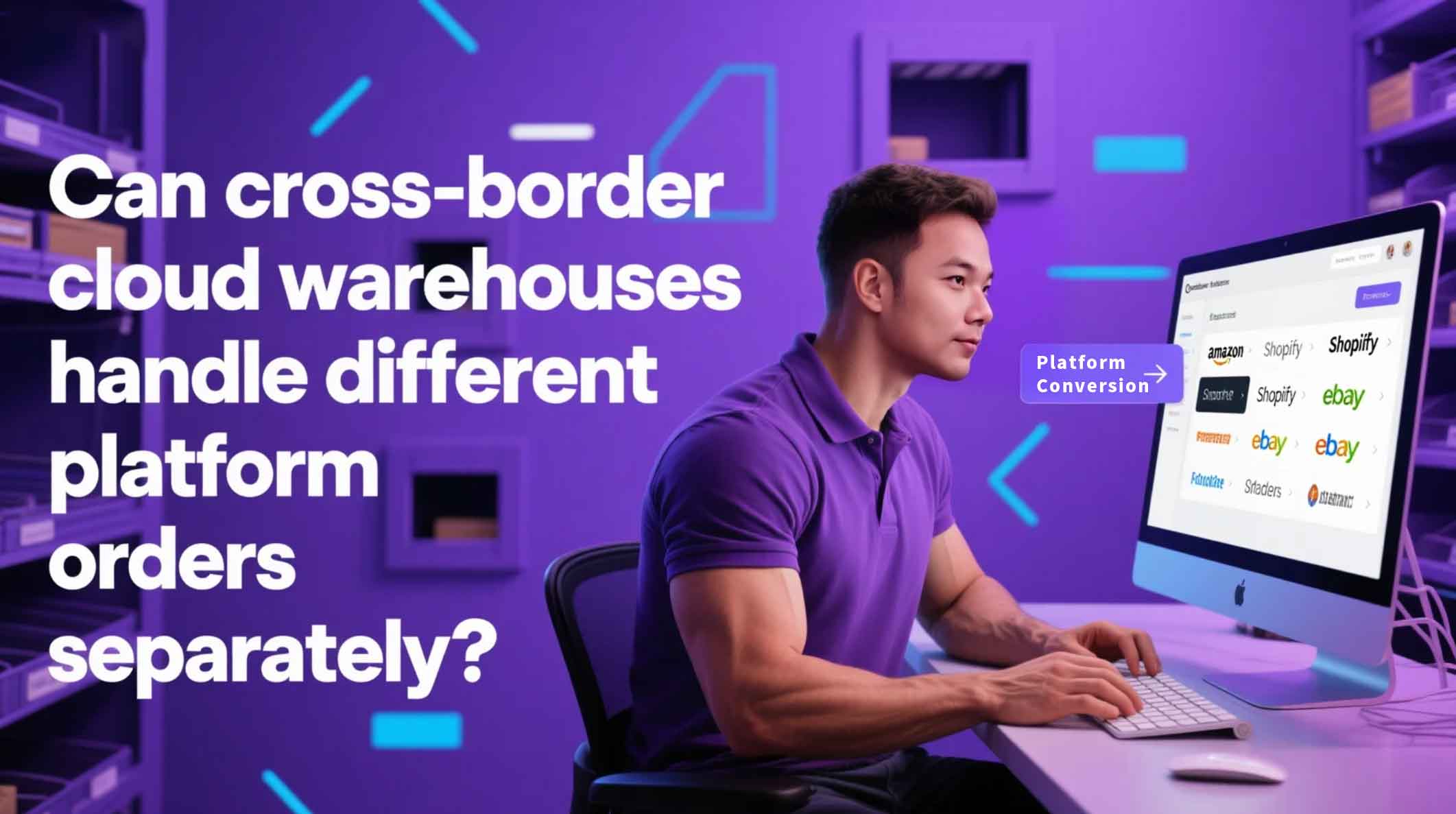
Cross border cloud warehouse service providers have achieved automatic synchronization of order information by integrating with e-commerce platform APIs. Sellers only need to store the goods in the warehouse, and the system can distinguish orders based on the platform, generate different labels and logistics waybills. For example:
Amazon orders will automatically generate FBA labels.
AliExpress orders are shipped through overseas parcel channels.
Temu or Shopee orders will generate corresponding logistics documents directly according to platform requirements.
This approach allows orders from different platforms to be managed separately in the same warehouse, avoiding confusion and errors.
3, New opportunities and bottlenecks for multi platform sellers in recent times
One of the hot topics in the cross-border community recently is the continuous expansion of Temu and SHEIN, which has driven a large number of factory sellers to enter the market. At the same time, Amazon still maintains stable traffic and user stickiness, while eBay also occupies a place in the European and American markets. The challenge that sellers face when simultaneously deploying these platforms is how to achieve efficient inventory management and shipping.
The advantages of cloud warehouse dropshipping are becoming increasingly apparent. It can not only meet the requirements of multiple platforms for separate shipments, but also provide services such as splitting, merging, quality inspection, and order placement. For sellers, this is a way to maintain stable operations in the fiercely competitive market.
4, The practical application and service extension of cloud warehouse outsourcing
For sellers, using cloud warehouses is not just about shipping, but also a way to optimize the supply chain. for example
After being stored, automatic order placement can be achieved on different platforms.
Inventory can be divided by platform and sales can be checked at any time.
After sales returns can be directly returned to the cloud warehouse for re inspection and re listing.
Like Taijia Cloud Warehouse, it provides dropshipping and multi-channel intelligent selection services, supporting platforms such as eBay, AliExpress, Shopee, Mercado, Temu, etc. Sellers can easily solve order processing problems when operating in different locations, making cross-border logistics more worry free.
Cross border e-commerce is gradually evolving from single platform operation to multi platform layout, and the shipping mode is also changing accordingly. Cloud warehouse enables orders from different platforms to be shipped separately through systematic order management and specialized operations, which not only complies with platform rules but also allows sellers to maintain efficiency and flexibility in competition.
For cross-border sellers, this is not only a choice for logistics and shipping, but also an inevitable trend for long-term development.
SERVICE
Copyright © 2026 TakeSendShip. All rights reserved


